REVIEW · ROME
Private Jubilee Tour: 3 Papal Basilicas with Santa Maria Maggiore
Book on Viator →Operated by LivTours · Bookable on Viator
Three basilicas, one Jubilee thread. This private tour is interesting because you get a clear, spiritual route across Holy Doors in Rome during Jubilee 2025, with prebooked basilica access that keeps things moving. What I like most is the calm, guided pace inside the big churches—plus special ticketed time for the Papal Loggia at Santa Maria Maggiore. One drawback: St. Peter’s Basilica is not included, so you’ll need a separate plan if that’s a must-do for you.
You meet in the Rome neighborhood of San Giovanni in Laterano, then you’re driven back toward the city center at the end. Since it’s private, you’re not stuck in a loud shuffle; the best part is that the guide can answer your questions as you go, and people have praised guides by name like Barbara, Massimo, Chiara, Ribal, and Giulia for making the route feel like a real pilgrimage rather than a checklist.
In This Review
- Key things to know before you go
- Jubilee 2025: why these three doors matter (and how the tour feels)
- Stop 1: St. John Lateran at Piazza San Giovanni in Laterano and the Holy Staircase
- Stop 2: St. Paul Outside the Walls and the rebuilt marble after the fire
- Stop 3: Santa Maria Maggiore, golden mosaics, and Papal Loggia access
- The guides and the pacing: why private feels different
- Tickets, entry, and what you’re actually paying for
- Who this tour suits best (and who might want a different plan)
- Should you book this Private Jubilee Tour of the Three Papal Basilicas?
- FAQ
- FAQ
- Which basilicas are included on this tour?
- Do I get to see Holy Doors during Jubilee 2025?
- Is St. Peter’s Basilica included?
- How long is the tour?
- Is the tour private?
- Are tickets included?
- What about the Papal Loggia at Santa Maria Maggiore?
- What should I wear for entry into the churches?
- Where do I meet and where does the tour end?
- What language is the tour offered in?
Key things to know before you go
- Three Papal Basilicas in one focused route without the hassle of stitching together tickets and timing.
- Jubilee Holy Door access across the three sites during Rome Jubilee 2025.
- Prebooked entry at St. John Lateran and St. Paul Outside the Walls so you’re not waiting around.
- Exclusive Papal Loggia access at Santa Maria Maggiore, handled with a special ticket.
- A private format with your own group only, so you can go at worship pace, not crowd pace.
- Short stop times (about 45 minutes each) that still feel unrushed when the guide keeps you pointed at what matters.
Jubilee 2025: why these three doors matter (and how the tour feels)
Rome during Jubilee has a special energy. The idea isn’t just to see famous buildings; it’s to walk a sacred route with meaning behind every threshold. On this tour, you’re guided through three of the Papal basilicas that tie directly into the Jubilee Holy Door experience, with explanations that help you understand what you’re looking at before you look.
What you’ll feel, if the guide is doing their job well, is a shift from sightseeing mode to prayer mode. You’re given time to absorb the art and the symbols, not just race through them. And because the experience is private, you can pause longer if your attention lands somewhere specific—like a mosaic, a tomb, or a relic case—without the group pressure.
The other piece I appreciate is the practical structure. Each stop is long enough for the big moments, but short enough to keep the day from turning into church fatigue. This is ideal if you want a meaningful Jubilee experience but don’t want to spend your whole day trapped in lines or switching between tickets.
You can also read our reviews of more tours and experiences in Rome.
Stop 1: St. John Lateran at Piazza San Giovanni in Laterano and the Holy Staircase
You start at Piazza San Giovanni in Laterano, and your first stop is the Arcibasilica di San Giovanni in Laterano—St. John Lateran, the cathedral tied to the Pope’s role as Bishop of Rome. This basilica is called the Head and Mother of all Churches, and your guide will connect the title to two big realities: it’s the site of the first legal Christian church in the world and it is the seat of the Pope.
Inside, you’ll get a clear sense of why this place feels important even when it’s not the most crowded. The nave is lined with statues of the apostles, and the apse mosaics catch the eye with their golden warmth. Then your guide points out details that most visitors miss unless someone directs their attention: the giant bronze doors (the original doors of the Roman Senate) and the world’s largest, oldest Egyptian obelisk standing outside.
There’s also the Holy Staircase, which is where the tour turns emotionally serious. Brought from the Holy Land by Saint Helena, it’s famously protected now, and pilgrims can only climb it on their knees. Even if you don’t climb, you’ll understand the significance of why people do—because the guide explains what the staircase represents in the Christian story and why access is restricted.
What to watch for here:
The basilica has a “quiet confidence” that’s different from other Rome churches. You’ll likely notice how the space holds stillness, especially once the guide helps you locate the right sightlines—nave statues, apse mosaics, and the key exterior monuments.
Practical note: dress code matters. You’ll need shoulders and knees covered, no tank tops or short dresses. If you’re comfortable and covered, the experience feels smoother because you won’t have to worry about entry rules mid-tour.
Stop 2: St. Paul Outside the Walls and the rebuilt marble after the fire
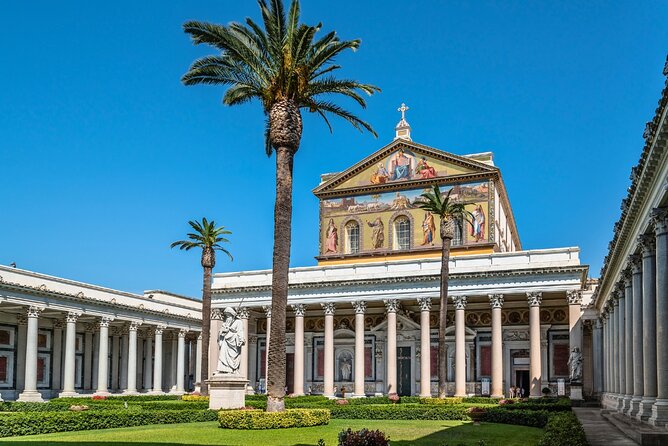
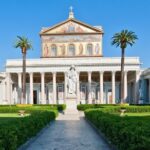
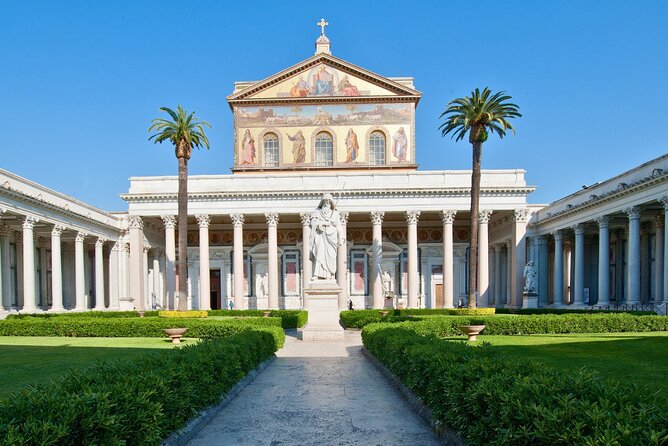
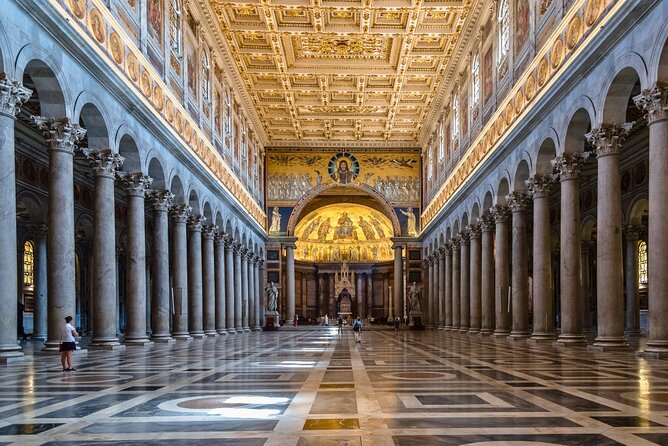
Next you move on to Basilica Papale San Paolo Fuori le Mura (St. Paul Outside the Walls). This basilica is built over the tomb of Saint Paul of Tarsus, martyred in the same area. Your guide will ground the visit in that link—so you’re not just admiring architecture, you’re standing near a site with deep historical weight.
One of the best parts of this stop is the story of survival and rebuilding. A massive fire in the 1800s destroyed about 90% of the marble basilica, but the church was rebuilt along its original dimensions, with donations of marble and money coming from Egypt, Russia, and Greece. That detail adds meaning when you look at the scale again; you’re seeing a restored structure, not just an old one.
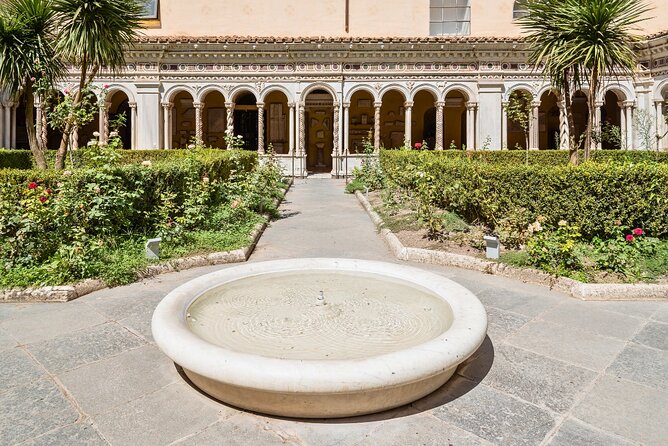
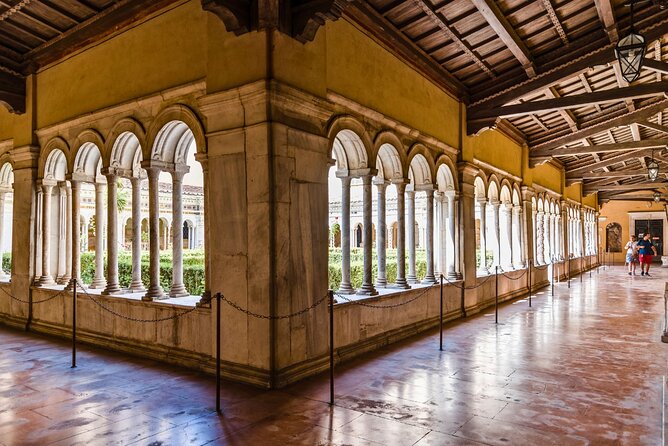
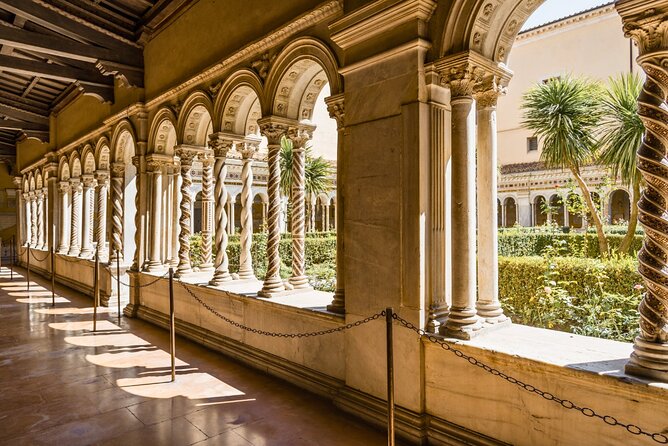
Inside, you’ll start with the cloister area for quiet contemplation before stepping into the nave. From there, you see 80 columns lined in a way that matters to the church’s memory: they connect to portraits of every pope since St. Peter. Again, the guide’s job is to point you toward what you’re seeing so it clicks fast.
At the altar, the baldachin of porphyry stone covers the altar and the grave of Saint Paul below. And you’ll also be shown a giant marble Easter candle dating to the 13th century that survived the fire. These are the kinds of details you could walk past without explanation—so having a guide turns a normal visit into a focused one.
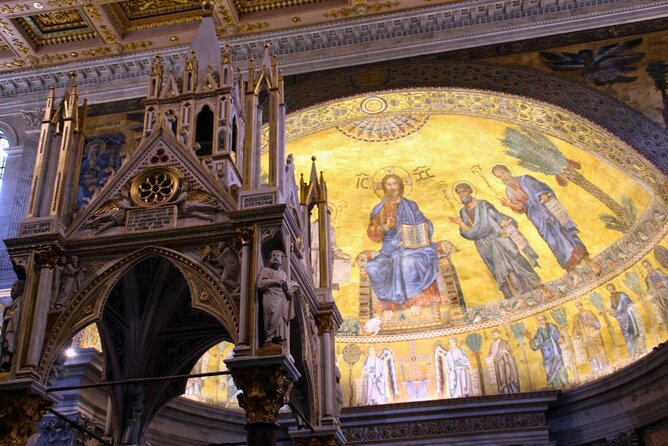
Then there’s the big visual signature: a massive, solid gold mosaic of Christ crowns the basilica. It’s the sort of artwork that makes you stop talking for a moment, because the brightness and the symbolism do the work.
Outside the basilica: there’s a Vatican post office, a souvenir shop, and even a café. That’s useful, because after the heavier symbolism, you’ll likely want a quick reset—coffee, water, or just a minute to breathe before you head onward.
Stop 3: Santa Maria Maggiore, golden mosaics, and Papal Loggia access
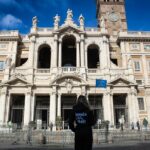
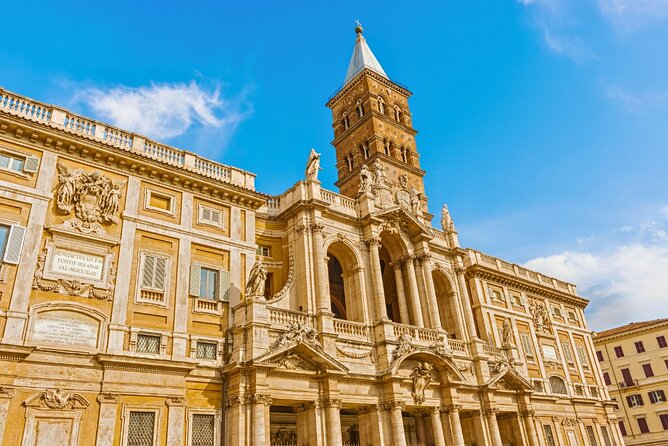
Your final stop is Santa Maria Maggiore, one of the most important Marian churches in Rome. It was built in the 5th century, but it doesn’t feel like a museum-only relic; it feels active, full of layered art and devotion.
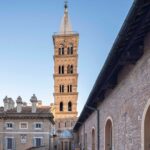
The highlights here are the golden Byzantine mosaics from the 13th century. You’ll also notice the tallest bell-tower in Rome rising above the site. Your guide will connect the building’s age with its ongoing importance, and they’ll steer you toward the key features: tombs of Paulina Borghese (sister of Napoleon) and the Baroque genius Bernini, plus the relic of the Holy Manger held in a porphyry casket beneath the altar.
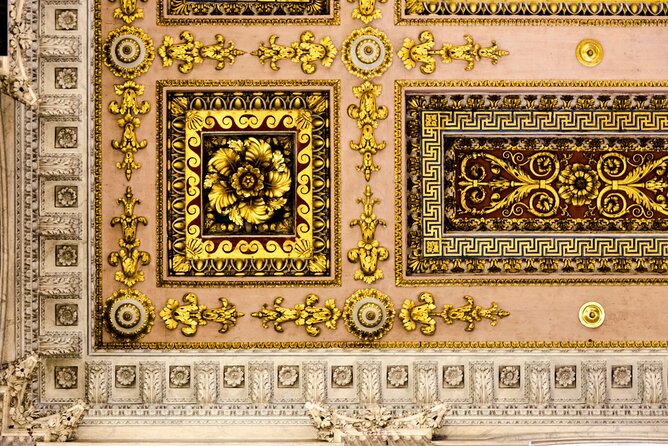
Then there’s the ceiling detail that adds a fun, surprising historical connection. It’s reputed to include Inca gold donated by Spanish monarchs Ferdinand and Isabella. Even if you treat that claim with the right amount of skepticism, it still shows you how Rome churches collect stories like magnets—politics, empire, faith, and art all tangled together.
The standout tour advantage at this stop is your exclusive ticketed access to the Papal Loggia. That matters because it changes the angle of your experience. You’re not only looking at art from the general areas; you get time in a more special viewing space, and your guide can explain what makes that perspective meaningful.
What to watch for here:
Look for how the guide ties the relic and mosaics into the church’s bigger religious message. When you understand what you’re seeing, the place feels less like a collection of famous names and more like a coherent worship space.
The guides and the pacing: why private feels different
This tour’s star, in the real world, is the guide. The feedback includes multiple guides—Barbara, Massimo, Chiara, Ribal, and Giulia—with a consistent theme: they explain without rushing, and they adapt to the audience.
That matters in three Papal basilicas, where the temptation is to march forward and hope you remember everything later. With a private guide, the pacing becomes something you can actually feel: you get pointed questions, the right amount of story, and time to stand and look.
It also helps that the stops are set for about 45 minutes each. That’s enough to take in major art and monuments, but it avoids the common problem of a long day where your feet and attention both quit. If you’re traveling with someone who prays quietly, want slow looking, or has trouble with crowds, the private format is a real advantage.
One more note: access can be limited during religious ceremonies. This can happen in active worship spaces. A good guide will work with you around that reality, but you should still expect that not every corner is always open in the same way.
Tickets, entry, and what you’re actually paying for
The price is $392.22 per person, and it’s not a low-cost add-on. So I recommend you judge value based on what you avoid: ticket friction, time spent figuring things out, and waiting you can’t control.
Here’s what you get for the money, in practical terms:
- Private transportation to keep the route manageable.
- An expert private guide who helps you understand what you’re seeing.
- Prebooked entrance to St. John Lateran and St. Paul Outside the Walls ahead of time.
- Special loggia access at Santa Maria Maggiore, which is the kind of ticketed privilege that usually takes extra effort to arrange on your own.
- A mobile ticket, so you’re not scrambling for paper.
Also, St. Peter’s Basilica is not included. For many first-timers, that’s either a letdown or a planning cue. If St. Peter’s is your top priority, you’ll likely want to add it separately. If you’re more interested in a Jubilee pilgrimage route across the other Papal sites, this tour does exactly that—without pulling you into the Peter’s Basilica orbit.
Who this tour suits best (and who might want a different plan)
This tour fits best if you:
- Want a Jubilee-focused visit with Holy Door context, not just general sightseeing.
- Appreciate art and symbolism but also prefer a guide to point out the meaningful details.
- Are planning for worship pace—especially if you want quieter time inside the basilicas.
- Care about efficient entry through prebooked tickets and a smooth route.
It may feel less ideal if you:
- Must see St. Peter’s Basilica during this trip window.
- Prefer a very self-guided experience where you don’t want to follow a set route.
- Want longer stop times than about 45 minutes per site.
Should you book this Private Jubilee Tour of the Three Papal Basilicas?
If you’re doing Rome in Jubilee 2025 and you want a pilgrimage route that makes sense, this is a strong match. The combination of Holy Doors, prebooked access, and the special Papal Loggia time at Santa Maria Maggiore is where the value really lands. Add private transportation and an expert guide, and you get a day that feels guided, calm, and intentional.
I’d especially recommend it if your goal is spiritual and historical meaning, with practical comfort. You’ll spend less energy coordinating and more energy looking at the things that actually matter—bronze doors, mosaics, relics, and the quiet power of places that have drawn pilgrims for centuries.
FAQ
FAQ
Which basilicas are included on this tour?
You’ll visit three papal basilicas: St. John in Lateran, St. Paul Outside the Walls, and Santa Maria Maggiore.
Do I get to see Holy Doors during Jubilee 2025?
Yes. The tour highlights seeing three of the Holy Doors during Rome Jubilee 2025.
Is St. Peter’s Basilica included?
No. St. Peter’s Basilica is not included on this tour.
How long is the tour?
The duration is about 3 hours.
Is the tour private?
Yes. It’s a private tour/activity, and only your group participates.
Are tickets included?
Admission tickets are included for St. John in Lateran and St. Paul Outside the Walls. Santa Maria Maggiore includes basilica access and special loggia access.
What about the Papal Loggia at Santa Maria Maggiore?
You’ll have exclusive ticketed access to the Papal Loggia during the Santa Maria Maggiore stop.
What should I wear for entry into the churches?
You need shoulders and knees covered. That means no tank tops or short dresses.
Where do I meet and where does the tour end?
You meet at Piazza San Giovanni in Laterano and the tour ends at Piazza Venezia, with driving back toward the city center.
What language is the tour offered in?
The tour is offered in English.