
REVIEW · RIO DE JANEIRO
Centro Historico and Lapa – Santa Teresa Walking, Historical and Bohemian Tour
Book on Viator →Operated by Good Guide In Rio · Bookable on Viator
Rio changes fast when you walk.
This day strings together Centro Historico landmarks and the art-and-views world of Santa Teresa, so you go from grand squares to colorful street corners without needing to plan a thing. I love how the pace keeps each place short and useful, plus you get real context for what you’re seeing—churches, civic buildings, and the city’s dramatic geography around the bay. One heads-up: it’s a long day built around walking and stairs, so comfortable shoes matter.
You also have a built-in rhythm: coffee and iconic interiors in the Centro, then a tram ride up the hill, then more walking down and around Lapa and the Selarón steps. I like that it’s a small group (up to 12), which makes it easier to ask questions and hear the guide clearly. The main drawback is that lunch isn’t included, so you’ll want to eat well before or plan for an easy meal on your own afterward.
In This Review
- Key highlights worth planning for
- Centro Historico to Santa Teresa: the day’s rhythm (and why it works)
- Cinelandia’s grand buildings: start big, get your bearings fast
- Inside the Metropolitan Cathedral of Saint Sebastian: stained glass with a point
- Largo da Carioca: two baroque churches and a terrace payoff
- Confeitaria Colombo and old Rio pedestrian lanes
- Praça Quinze de Novembro: republic-era landmarks and the bay’s edge
- Praça Pio X and the church-and-cultural corridor
- Mosteiro de São Bento: a church visit that feels like a destination
- Mauá Square and the bay-view mindset (Museum of Tomorrow seen from the right angle)
- Etnias mural by Eduardo Kobra: street art with a specific story
- Food, drinks, and a good guide moment
- Santa Teresa Tram: the yellow Bonde ride you’ll remember
- Largo dos Guimarães: old houses, modern hangouts
- Parque das Ruínas: a gazebo viewpoint over Centro, Lapa, and more
- Escadaria Selaron: the multicolored staircase and why it took decades
- Arcos da Lapa: the aqueduct arches and the graffiti wall
- Price and value: what you’re really paying for
- Who should book this walk (and who might want a different plan)
- Should you book: my decision checklist
- FAQ
- FAQ
- How long is the Centro Historico and Lapa – Santa Teresa walking tour?
- What time does the tour start and where do I meet?
- Is the Santa Teresa tram ride included?
- Is lunch included?
- Are entrance tickets included for the stops?
- How many people are on the tour?
- What drinks are included during the tour?
- What if I need to cancel?
Key highlights worth planning for
- Small group size (max 12): better questions, easier pace.
- Santa Teresa Tram (Bonde): a scenic yellow ride included in the experience.
- Street art stop at Etnias (Eduardo Kobra): big-scale mural tied to the Olympic legacy.
- Iconic sights in compact time: Cinelandia, cathedral, São Bento, Lapa arches, Selarón.
- Great views through multiple angles: terraces in the Centro and viewpoints in Santa Teresa.
Centro Historico to Santa Teresa: the day’s rhythm (and why it works)
This tour is built like a guided walk through Rio’s “different Rios” in one shot. You start in the big, formal squares near Copacabana’s side of town, then you work your way through historic neighborhoods, and finally you climb into the hill-and-staircase energy of Santa Teresa. The best part is that you’re not just collecting photos. You’re connecting the dots between civic power, religious architecture, and the bohemian streets where art found room to grow.
The time balance is what makes it feel enjoyable instead of exhausting. Most stops are around 10–25 minutes. That’s enough for orientation and a quick story about why the place matters. Then you’re back on your feet moving toward the next scene.
If you like travel days that feel efficient but still human—like you could keep talking to your guide even after the tour ends—this is a good match. And because the day ends back at the starting area, you don’t need to re-orient yourself mid-trip.
You can also read our reviews of more tours and experiences in Rio de Janeiro.


Cinelandia’s grand buildings: start big, get your bearings fast
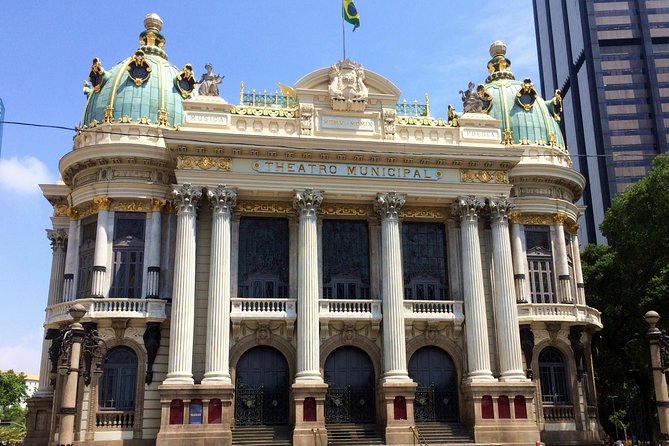
You begin at Cinelandia, a square that acts like a Rio “intro page.” The guide points out the major landmarks clustered here, including Teatro Municipal and Museu das Bellas Artes. You’ll also see La Camara Municipal and the Biblioteca Nacional called out as part of the civic sweep of the area, along with Le Teatro Odeon, still operating.
Why this stop is worth your time: it sets the tone. Rio’s Centro can look like a blur if you only glance at facades. Here, you learn what you’re looking at and why it was built to signal importance—opera-house grandeur, cultural institutions, and public buildings grouped like a statement.
The practical angle: it’s an early anchor. Once you understand Cinelandia, the later churches and squares feel less random.
Inside the Metropolitan Cathedral of Saint Sebastian: stained glass with a point
Next comes the Metropolitan Cathedral of Saint Sebastian, where you actually enter the cathedral. You’ll focus on architecture, its history, and the standout feature: monumental stained-glass windows. This is the kind of stop that rewards attention, because the structure and artwork are meant to be seen up close.
A consideration: cathedral visits can involve areas with rules about photography or quiet. The tour is short here, so just follow your guide and don’t plan to linger longer than the group.
Largo da Carioca: two baroque churches and a terrace payoff
At Largo da Carioca, you pass by São Antonio church and São Francisco da Penitência. The guide frames them as a tight pair—especially since São Francisco da Penitência is described as one of Brazil’s most beautiful baroque churches. You also get the best part: the panoramic view from the terrace of these two churches, since they sit next to each other.
This stop is valuable because it teaches you how Centro landmarks connect to viewpoints. In Rio, the city is always showing you the bay, the hills, or the dramatic scale of neighborhoods. Largo da Carioca gives you a clean “look outward” moment before you move deeper into street level.
Confeitaria Colombo and old Rio pedestrian lanes
Then you head through the pedestrian streets toward Confeitaria Colombo, one of the oldest cafes in Rio. You’ll see its art deco style, and you’ll learn why it remains an iconic Centro stop rather than just a pretty room with pastries.
Even if you’re not a café person, this works. It’s a reset. You’re still in the historic center, but now you can feel the older Rio vibe that’s tied to everyday life—people moving through, meeting up, grabbing coffee, and lingering in a landmark interior.
Quick practical thought: it’s not “lunch,” so don’t expect a full meal plan to be solved here.


Praça Quinze de Novembro: republic-era landmarks and the bay’s edge
Your walk continues to Praça Quinze de Novembro, tied to the proclamation of the Republic. Here, the guide introduces multiple highlights: the Church of Our Lady of the Carmelites, the Paço Imperial, the Equestrian Statue of General Osorio, and Tax Island. You also get the ferry pier view toward Niterói and Paquetá Island in Guanabara Bay.
This is one of the stops where the tour feels like more than sightseeing. It gives you an understanding of how the city organized itself—politics, empire-era buildings, and then the harbor access that shaped Rio’s life. When you later look at the bay or see bridges and ferry routes from other angles, you’ll understand what you’re seeing.
Praça Pio X and the church-and-cultural corridor
At Praça Pio X, the vibe shifts again. You pass by the Candelária church and the Olympic boulevard, and you’re pointed toward key cultural stops like CentrO Cultural do Banco do Brasil and casa França Brasil.
The benefit here is variety. This part of the day shows you that Centro isn’t only churches and colonial facades. It’s also institutions and modern cultural footprints—built right into the same walkable zone.
If you’re visiting in hotter parts of the year, this is also a good moment to pay attention to shade and pacing, because the day is outdoors for most of it.
Mosteiro de São Bento: a church visit that feels like a destination
Next is Mosteiro de São Bento, with a visit to Saint Benoit monastery, described as one of Rio’s most beautiful churches. The guide shares the story of the monastery and what makes this site special.
Short tour note: you don’t get hours here. But the intention is clear—this stop is about architectural and historical impact more than “quick photo, next.”
If you like religious architecture, this is one of the most satisfying moments of the whole schedule. If you’re not that into churches, focus on the interior feeling and the guide’s explanation; it turns the visit from time-filler into context.
Mauá Square and the bay-view mindset (Museum of Tomorrow seen from the right angle)
At Mauá Square, you’re in a place that connects Rio’s modern architecture with the bay landscape. The Museum of Tomorrow is noted, but you don’t visit it. Still, you’ll learn why its architecture is interesting right from the surrounding area.
You’ll also be shown the Art Museum of Rio and its panoramic terrace on the top floor, where you can get incredible views of Mauá Square, the Niterói Bridge, the Museum of Tomorrow area, and the wider bay.
Why it matters: Rio’s big moments often come from vantage points. This stop helps you train your eyes to look for where the city gives you a view, not just a building.
Etnias mural by Eduardo Kobra: street art with a specific story
Then you reach Etnias – Mural de Graffiti (Estúdio Kobra), identified as the largest mural in the world. The guide explains that it represents five ethnic groups and was produced by Eduardo Kobra for the Olympic Games.
This stop is a smart break from “stone and history” because it shows a different kind of Rio identity—public art meant to be read, not locked away. It’s also a reminder that street art here isn’t random tagging. It’s tied to events and identity.
Food, drinks, and a good guide moment
You’ll get a drink during the tour, with options that include caipirinha, beer, soda, fruit juice, or water. That’s a small detail that actually helps a lot on a long walk day. Even when you’re moving constantly, hydration and a quick taste of local flavor make the day feel more comfortable.
And you should know something important about the human factor: this tour shines when your guide is a story-teller. I’ve seen this tour credited with guides like Ivan (also spelled Yvan) for making Rio’s history feel like a narrative instead of a list of dates. That kind of guide energy is the difference between seeing landmarks and understanding why they’re there.
Santa Teresa Tram: the yellow Bonde ride you’ll remember
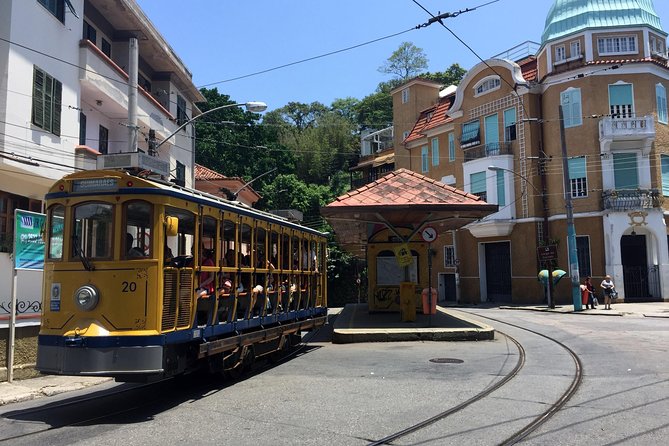
Midway through the day, you return to the Santa Teresa tram station to take the famous yellow Bonde tram up to Santa Teresa. This ride is described as a panoramic walk of about thirty minutes, and it’s included.
Here’s why it’s more than transport: it changes the physical feel of the neighborhood. You don’t just arrive at Santa Teresa. You travel into it with views and a sense of ascent. The tram also sets you up for what comes next—stairs, viewpoints, and the bohemian character of the hill.
Practical tip: keep your camera ready, but also keep your eyes on your footing when you get off. Santa Teresa is charming, but it’s still a neighborhood with real streets and slopes.
Largo dos Guimarães: old houses, modern hangouts
Once you’re in Santa Teresa, you explore Largo dos Guimarães, in the heart of the district. You’ll walk around to see houses from the late 1800s into the early 1900s, plus the restaurants and bars that make the area famous.
This stop works because it’s a “life” stop, not just a “monument” stop. You’re seeing how the architecture connects to today’s social street culture. It’s also a chance to slow slightly after the tram ride.
If you’re the type who likes to wander and imagine what a neighborhood looked like a hundred years ago, this is where your brain gets fun.
Parque das Ruínas: a gazebo viewpoint over Centro, Lapa, and more
Then you reach the Centro Cultural Municipal Parque das Ruínas, a former home of Laurinda Santos Lobo turned into a gazebo with an incredible view. From here, you can see the Centro, the arches of Lapa, Christ, and Botafogo.
This is one of those viewpoints that makes all the earlier stops click. Now you can see the city’s pieces arranged in one frame. The tour keeps feeding you “where are we in relation to everything” moments, and Parque das Ruínas is a big one.
Escadaria Selaron: the multicolored staircase and why it took decades
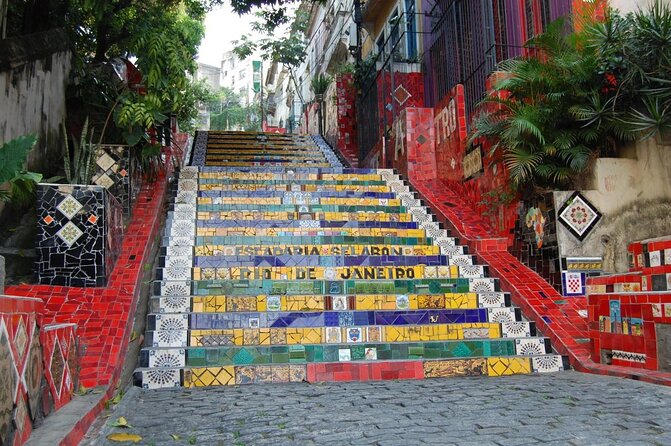
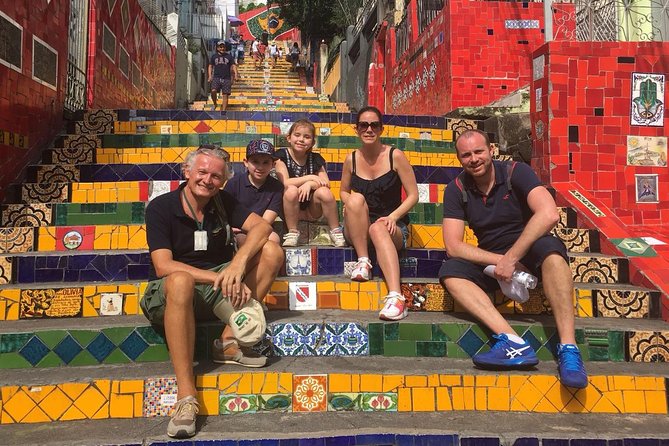
Moving from Santa Teresa down toward Lapa, you hit the Escadaria Selaron. It’s the famous multicolored staircase created by Chilean artist George Selaron, with a timeline of around twenty years.
Even if you’ve seen photos before, it hits differently in person. The stairs aren’t just colorful—they feel like a long project, built over time, and it shows in the way it’s patched, layered, and lived with.
A consideration: expect steps. This is not the time for fancy shoes.
Arcos da Lapa: the aqueduct arches and the graffiti wall
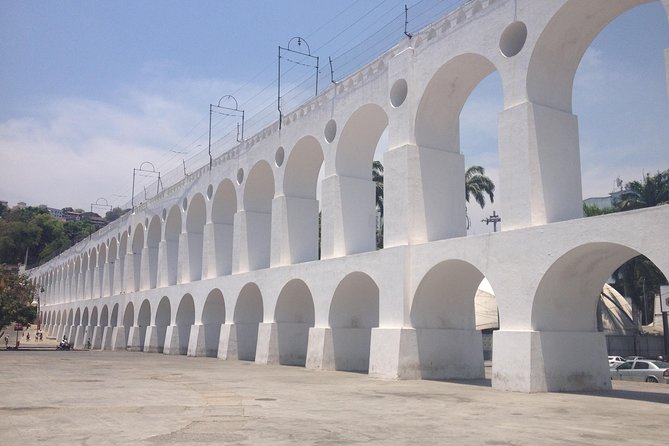
Finally, you reach Arcos da Lapa, the old Rio aqueduct dating from the 18th century. It supplied water to the city until the end of the 19th century, and the area today is covered with graffiti and colorful mural artwork.
Your guide explains the arches’ history and also notes that the tram passes through the aqueduct to access Santa Teresa. That detail helps you connect two parts of the day—the tram ride you took up, and the waterway infrastructure that originally mattered for the city’s survival.
This stop is your “wow” closing scene. You get the grandeur of infrastructure plus the messy beauty of street art—Rio’s two moods in one place.
Price and value: what you’re really paying for
At $137.80 per person for about 7–8 hours, the value comes from how the day is structured. You’re paying for guided context across many stops, plus a mix of entry needs and included moments. Most attractions along the way are free, while a couple of key experiences include admission—like Largo da Carioca and the Santa Teresa tram ride.
There’s also the small-group setup (maximum 12), which matters because the itinerary includes multiple sites where the guide’s explanation changes how you experience the building or viewpoint.
Not included: lunch. That’s the one cost gap you’ll want to plan for. If you eat a real meal before you start and then follow up after, this cost feels more reasonable. If you arrive hungry and then hope lunch magically fits in, you may end the day annoyed.
Who should book this walk (and who might want a different plan)
This tour is a strong fit if you want:
- a guided overview of Centro Historico + Lapa + Santa Teresa
- a day that mixes architecture with street art and city viewpoints
- a small group pace that stays interactive
It’s less ideal if:
- you have limited tolerance for walking and steps
- you want a slower, sit-down sightseeing day with long time at a single museum
- you need lunch fully handled by the tour (since it isn’t included)
One more practical point: the tour is commonly booked around 18 days in advance, so if you’re traveling in a busy season, booking earlier helps you get the departure that matches your schedule.
Should you book: my decision checklist
If you want one “best effort” day that covers a lot of Rio without feeling like you’re sprinting from place to place, I’d say book it. The combination of civic squares, major churches, the Santa Teresa yellow tram, and the end scenes at Selaron + Lapa arches is a winning mix.
I’d especially recommend it if you care about context—because the strongest feedback tied to this tour is the way guides turn Rio’s history into something you can picture while you’re standing in front of it. If you’re less into explanations and more into free time, consider booking a different option that gives you more independent wandering.
FAQ
FAQ
How long is the Centro Historico and Lapa – Santa Teresa walking tour?
It lasts about 7 to 8 hours.
What time does the tour start and where do I meet?
It starts at 9:00 am at Copacabana Palace, A Belmond Hotel, Rio de Janeiro (Av. Atlântica, 1702, Copacabana).
Is the Santa Teresa tram ride included?
Yes. The tour includes the ride from the Station of Santa Teresa trams to Santa Teresa, and it’s listed as admission included.
Is lunch included?
No. Lunch is not included.
Are entrance tickets included for the stops?
Many stops are listed as free. Largo da Carioca has admission included, and the tram ride to Santa Teresa is also included.
How many people are on the tour?
The tour has a maximum of 12 travelers.
What drinks are included during the tour?
You can receive a caipirinha, beer, soda, fruit juice, or water during the experience.
What if I need to cancel?
This experience is non-refundable and cannot be changed for any reason.