REVIEW · FLORENCE
Private Guided Visit Florence’s Santa Croce Basilica and Ancient Leather School
Book on Viator →Operated by CAF Tour and Travel · Bookable on Viator
Marble and leather in one Florence visit. This private tour pairs Santa Croce’s big-ticket art with a real workshop look at the Scuola del Cuoio, where leather work goes back to Franciscan monks. Two things I really like: the guide-led walking through art you’d otherwise miss, and the change of pace at the leather school, where you watch artisans make everyday goods by hand. The main consideration is that the Leather School is closed on Saturday and Sunday, and its stop is shorter than the time spent inside Santa Croce.
In This Review
- Key highlights at Santa Croce and the Leather School
- Why Santa Croce feels different from other big Florence churches
- The value of a private guided visit (and what you actually gain)
- Picking a morning or afternoon departure that fits your rhythm
- Meeting at Piazza Santa Croce: simple start, easy orientation
- Stop 1: Santa Croce Basilica like an art detective
- The exterior moment you shouldn’t skip
- Frescoes and sculpted religion in the chapels
- The tombs: Michelangelo, Galileo, Machiavelli, and more
- Brunelleschi Cloister and the quieter kind of beauty
- What can feel limiting about the basilica portion
- Stop 2: The Ancient Leather School and the Arno-water advantage
- Why Franciscan monks worked leather here
- What you’ll see artisans doing by hand
- The one big drawback: weekend closure
- Price and logistics: when $124.82 feels fair
- Who this tour is best for (and who might want more time)
- Small details that improve your visit fast
- Should you book this private Santa Croce and Leather School tour?
- FAQ
- Is the Basilica of Santa Croce admission included?
- How long is the tour?
- Where do we meet the private guide?
- Is the Leather School included, and is there an admission fee?
- What language is the tour offered in?
- Is this tour private?
- Can I cancel for a full refund?
Key highlights at Santa Croce and the Leather School
- Private guide, small-group feel for a more personal pace and plenty of room for questions
- World-class Santa Croce art stops, including major tombs and fresco cycles
- Cloisters you can actually slow down in, from the Brunelleschi Cloister to the Pazzi Chapel
- 13th-century leather tradition tied to water access near the Arno River
- Artisans at work creating bags, purses, and belts using time-honored methods
- Leather School timing matters since it’s closed on weekends (except for other days)
Why Santa Croce feels different from other big Florence churches
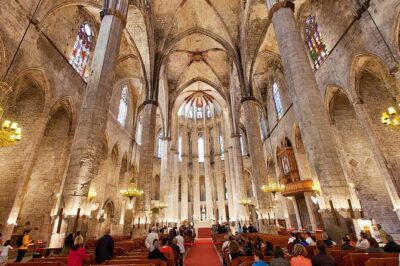
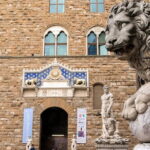
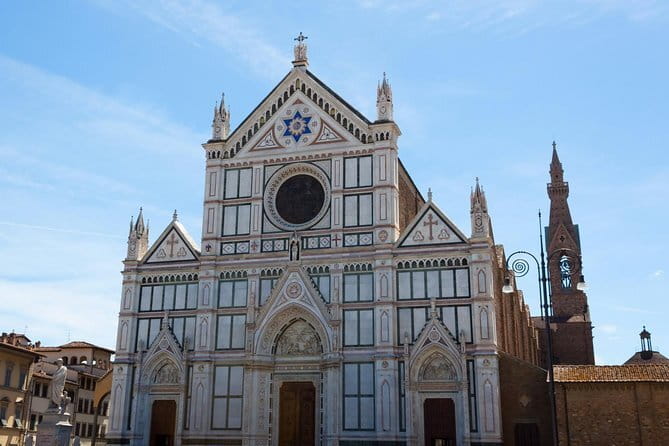
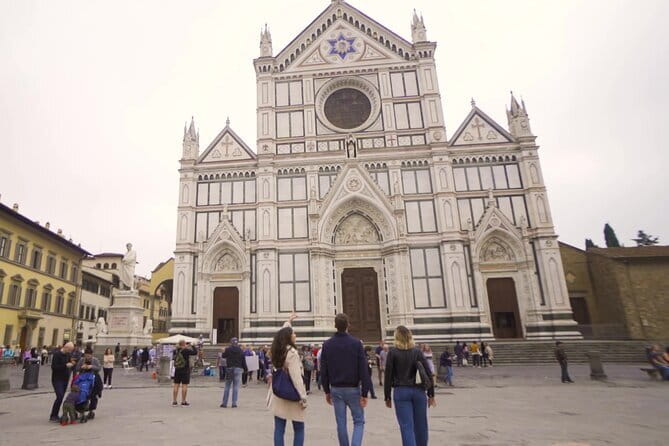
Santa Croce is one of those places that looks impressive from the outside, then gets better the deeper you go. The façade is neo-Gothic and clad in polychrome marble, and inside it shifts into a quieter, chapel-by-chapel world where art and ideas share the same space.
What I like about doing Santa Croce with a private guide is that you stop seeing it as a long, empty church room. You start seeing it as a carefully layered timeline: frescoes, patrons, and funerary monuments all stacked together, so it feels like Florence’s brain and its workshop habits live in the same building.
You can also read our reviews of more tours and experiences in Florence.
The value of a private guided visit (and what you actually gain)
This is priced around $124.82 per person for about 1 hour 30 minutes (approx.), and the structure is simple: you get a guide for Santa Croce first, then the leather workshop. That timing matters because Santa Croce can be the kind of visit where you rush through and later wish you’d spent more time at the details.
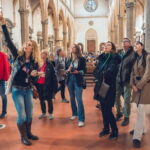
You’ll be meeting your guide near the basilica entrance at Piazza Santa Croce, and because this is private, your time stays focused on your group. In some cases where there are more people, earphones are provided, but with your own guide you still get the benefit of direct explanations and on-the-spot questions.
One practical note: the basilica entrance fee is not included (listed as €8.00 per person), while the leather school admission is free. That’s a good reason to budget a little extra for Santa Croce itself.
Picking a morning or afternoon departure that fits your rhythm
You can choose a morning or afternoon departure, which is handy because Santa Croce is easier to enjoy when you can match it to your day. If you tend to do museums when you’re sharpest, mornings usually feel better for art reading and close looking.
Afternoons can work well too, especially if your morning is booked with other Florence classics. Either way, keep in mind you’re doing both the basilica and the adjacent workshop experience, so wear comfortable shoes and don’t stack another timed stop right after.
Meeting at Piazza Santa Croce: simple start, easy orientation
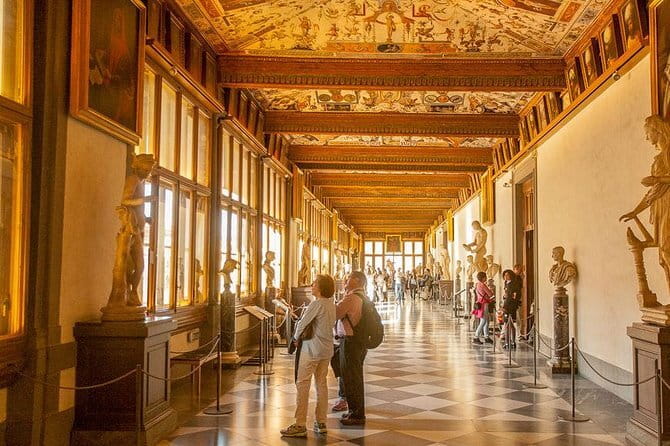
The meeting point is right by Santa Croce at Piazza di Santa Croce, 16. This is one of the perks of doing it this way: you don’t need a complicated shuttle plan or extra transit steps before you even start looking.
Also, being near public transportation is a quiet win. Florence has plenty of walkable neighborhoods, but having a meeting spot that’s practical makes your day smoother.
Stop 1: Santa Croce Basilica like an art detective
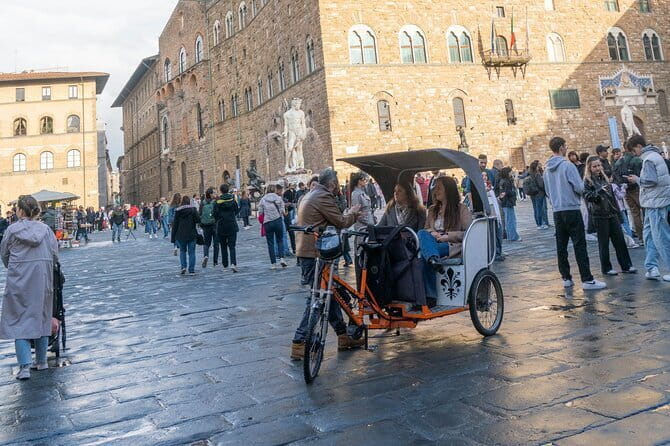
Santa Croce is often described as an art and architecture powerhouse, but the real gift is how much of it becomes understandable when someone points to what you should notice. The tour begins with the basilica’s striking outside and then moves inward to the works and spaces that define the church.
The exterior moment you shouldn’t skip
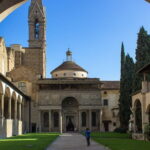
Even before you buy your ticket and enter, you’ll take in that neo-Gothic façade with polychrome marble. It’s a good warm-up: once you notice the decorative patterning on the outside, the interior feels more intentional, not random.
Frescoes and sculpted religion in the chapels
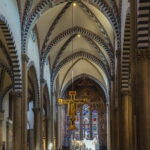
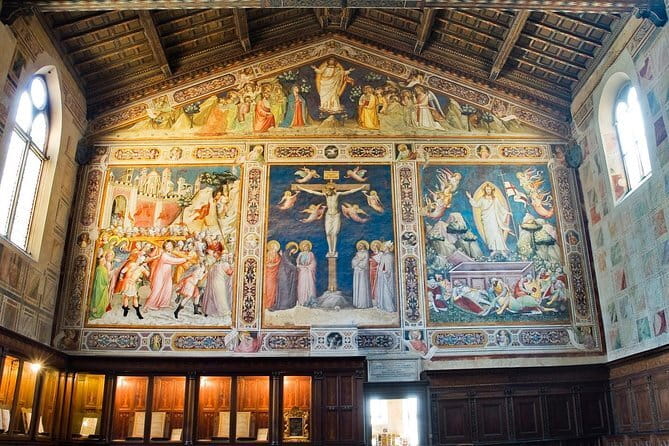
Inside, the guide explains Santa Croce’s nearly 700-year history and walks you through chapels adorned with frescoes by Renaissance masters including Giotto and Agnolo Gaddi. If you don’t have a background in church art, this is still a friendly way to learn—your guide can translate what you’re looking at into stories you can actually hold onto.
You’ll also see Donatello’s famous works, including the Crucifix and the Annunciation. These pieces are powerful on their own, but they land differently once you understand why Santa Croce mattered to the Franciscan community and the artists connected to Florence.
The tombs: Michelangelo, Galileo, Machiavelli, and more
One of the big reasons Santa Croce sells out in spirit is its funerary monuments. Your route includes tombs and memorials of notable figures such as Michelangelo, Galileo, Machiavelli, and Ghiberti.
What I like here is the way your guide connects the art with the city’s thinking. You’re not just seeing names on marble—you’re seeing why Florence chose to honor thinkers and makers in the same religious space.
Brunelleschi Cloister and the quieter kind of beauty
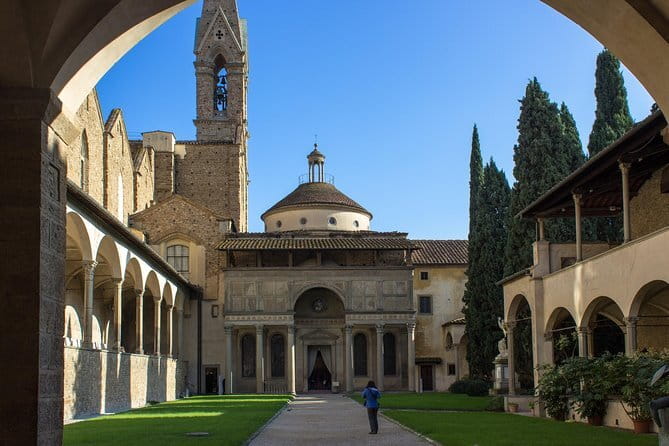
After the main basilica areas, you pass through the solid marble pillars of the Brunelleschi Cloister. This is where Santa Croce starts to breathe. The stonework gives you a natural slowdown, and it’s an ideal place to notice how architecture shapes your eye.
Then you move into the Ancient Cloister, where you’ll reach the Pazzi Chapel. It’s described as a sublime example of Renaissance harmony and it’s the kind of spot that rewards even a short pause—especially when your guide explains the design logic rather than just pointing at what’s pretty.
What can feel limiting about the basilica portion
The basilica stop runs about 1 hour, and admission to Santa Croce is extra. That’s enough time to hit the major highlights without turning the experience into a marathon. If you’re a super-enthusiast who wants long, quiet time in only one chapel, you might still want extra free time after the tour.
Stop 2: The Ancient Leather School and the Arno-water advantage
After Santa Croce and the cloisters, you’ll head to the adjacent Leather School (Scuola del Cuoio) for about 30 minutes. This is the part that makes the tour feel different from a typical church-only visit, because you’re switching from painted and carved art to living craft.
Why Franciscan monks worked leather here
The story starts in the 13th century when Franciscan monks settled in this area near the banks of the Arno River. The reason matters: early leatherworking needed large amounts of water, and being close to the river supported that process.
Your guide explains the workshop’s setting and how the craft tradition continued over time. You’re not just watching someone make a product—you’re seeing how location shaped a trade.
What you’ll see artisans doing by hand
You’ll watch skilled artisans at work, and the workshop produces items like purses, bags, and belts by hand using time-honored methods. Even if you don’t buy anything, it’s worth paying attention to the rhythm and the process, because that’s the real education.
Also, the Leather School admission is listed as free, so your paid tour time is doing most of the heavy lifting: guiding your understanding of how the craft developed and connecting the history to what’s happening right now.
The one big drawback: weekend closure
Here’s the key practical catch: the Leather School is closed on Saturday and Sunday. If your trip lands on a weekend, you’ll need to choose a different day or adjust your plans so you don’t lose the workshop part of the experience.
Price and logistics: when $124.82 feels fair
At about $124.82 per person for roughly 1.5 hours, you’re paying mainly for a private guide and a tight route through high-impact stops. The Santa Croce entrance fee is €8.00 per person, not included, so add that when you budget.
What makes this good value is the contrast: one paid guided block gets you both Santa Croce’s major art and the workshop experience. If you were to do the church with a self-guided audio app and then attempt the leather workshop on your own, you’d likely spend more time guessing what matters and when to look.
Another small advantage is the mobile ticket. You’ll still need to show up ready for the basilica ticket payment, but having a mobile process can reduce friction once you’re standing there.
Who this tour is best for (and who might want more time)
This tour is a strong match for four kinds of travelers:
- First-timers to Santa Croce who want the highlights without the confusion
- Art-curious beginners who don’t want to feel lost among tombs and frescoes
- People who enjoy crafts and product-making, not just museum rooms
- Buyers who might want to see how leather goods are made before committing
If your priority is only the basilica at a slow pace, you may want to add extra independent time after the tour. The leather stop is brief by design, so it’s best as a taste of the workshop culture rather than a long masterclass.
Small details that improve your visit fast
A few practical things will make a difference:
- Bring comfortable shoes. Santa Croce plus cloisters plus workshop time adds up.
- Have your phone ready for the mobile ticket experience.
- Plan around the Leather School weekday schedule so you don’t get shut out on weekends.
- Go in expecting stories, not just facts. With a private guide, the strongest moments are usually the ones where someone connects an artwork, a tomb, and a specific Florentine idea.
One more tip: Santa Croce can tempt you to look everywhere at once. If you lean into your guide’s callouts, you’ll see more with the same time—and you’ll walk away with clearer mental pictures.
Should you book this private Santa Croce and Leather School tour?
Yes, I’d book it if you want a focused, human-scale way to see Santa Croce and still get a real look at Florence’s craft tradition. It’s especially worth it when you value explanations that help you understand what you’re seeing—chapels, tombs, and architecture don’t have to stay confusing.
I’d skip or adjust it if your dates fall on Saturday or Sunday, because the Leather School is closed. And if you’re the kind of traveler who wants a long, slow, chapel-by-chapel retreat, you’ll probably want extra independent time after the tour to stretch out.
If your goal is to leave with both the big art moments and the hands-on craft story, this is a smart use of 1 hour 30 minutes in Florence.
FAQ
Is the Basilica of Santa Croce admission included?
No. The basilica entrance fee is €8.00 per person and is listed as not included.
How long is the tour?
It runs about 1 hour 30 minutes approximately, with Santa Croce at about 1 hour and the Leather School at about 30 minutes.
Where do we meet the private guide?
Meet your guide at Basilica of Santa Croce in Florence, Piazza di Santa Croce, 16, 50122 Firenze FI, Italy.
Is the Leather School included, and is there an admission fee?
The Leather School visit is included and the admission ticket is listed as free, but it is closed on Saturday and Sunday.
What language is the tour offered in?
The tour is offered in English.
Is this tour private?
Yes. It’s a private tour/activity, meaning only your group participates.
Can I cancel for a full refund?
Yes. Free cancellation is available up to 24 hours in advance for a full refund.