REVIEW · FLORENCE
Basilica Santa Croce: Walking Among the Masters of Florence
Book on Viator →Operated by Star Florence · Bookable on Viator
Florence packs its biggest art hits into small steps, and Santa Croce is one of them. This 1-hour tour pairs the basilica’s major artworks and tombs with the stories that explain what you’re actually looking at. You start in Piazza di Santa Croce and end back at the square, having walked the church’s inside world, crypt, bell tower area, and the cemetery grounds.
What I like most is how fast the guide turns a normal visit into a clear “who made what and why it matters” experience. You also get a certified guide with a radio system, so even if the group gets a little chatty, you can still catch details.
One thing to think about: the dress code is strict, and if you show up with bare shoulders or uncovered knees, you risk being turned away without a redo.
In This Review
- Key highlights to look for on this Santa Croce tour
- Santa Croce starts in the square, not the doorway
- Inside Santa Croce: frescoes you can finally place
- Donatello, Brunelleschi, and the best kind of art trivia
- Tombs of the famous: what’s underneath the marble
- The cemetery and the 1966 flood restoration story
- Bell tower, crypt, and the 16 chapels circuit
- Price and value: what $58.05 buys you in one hour
- Who should book this Santa Croce tour
- A note on guides: you might get one of several strong storytellers
- Should you book Basilica Santa Croce: Walking Among the Masters of Florence?
- FAQ
- How long is the Basilica Santa Croce tour?
- Is the tour offered in English?
- What’s included in the price?
- What is the dress code for entering?
- Where do I meet the tour?
- What happens if I arrive late?
Key highlights to look for on this Santa Croce tour
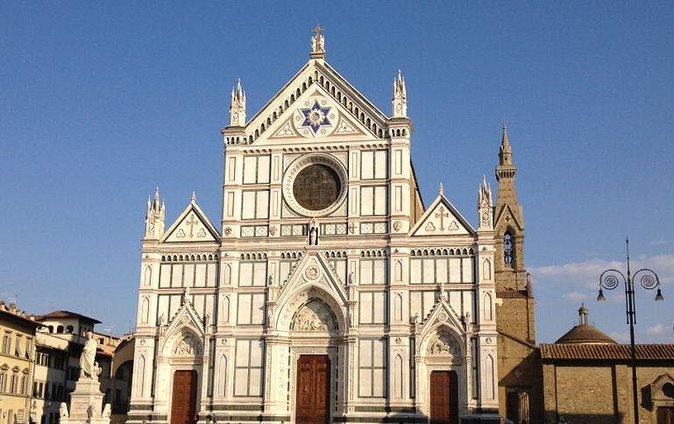
- Giotto and Gaddi fresco storytelling: you’ll see major chapel paintings tied to the saints and the church’s identity.
- Donatello’s crucifix and Renaissance links: art details you might miss on your own get explained in plain terms.
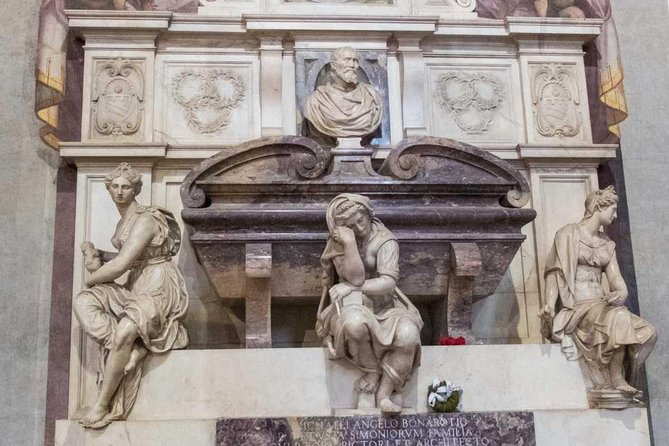
- Michelangelo, Galileo, Machiavelli, and more: famous tombs are only the start; the guide gives the context.
- 1966 flood damage, then restoration: the basilica’s survival story becomes part of what you’re seeing.
- Crypt, bell tower area, and 16 chapels: you get a structured route through the “extra layers.”
- Small group up to 20, timed to fit real days: about an hour, with time to revisit what catches your eye.
Santa Croce starts in the square, not the doorway
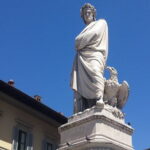
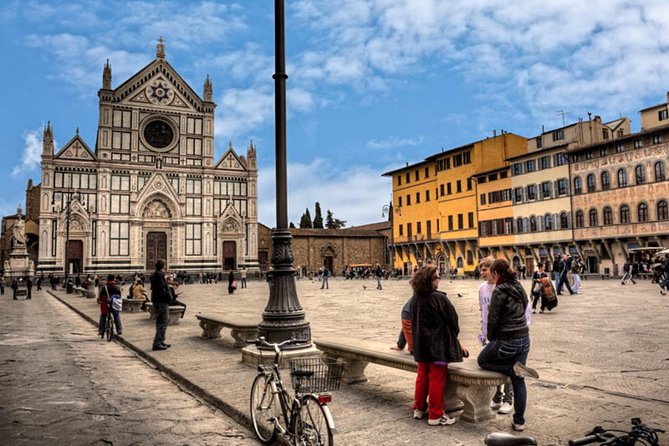
The tour meets at the Monument to Dante Alighieri in Piazza di Santa Croce. That’s smart, because you’re already in the basilica’s orbit before you even step inside. This square isn’t just pretty. In June, it’s the stage for Calcio Storico Florentino, the famous medieval-costume soccer tradition.
Before you go in, your guide connects the basilica to the wider Florence around it. One neat detail: the memorial of Giovanni Battista Niccolini sits near the entrance area and is tied to inspiration for the Statue of Liberty. It’s the kind of “Wait, that’s connected?” moment that makes the whole visit feel less like museum time and more like real city history.
Tip: arrive a little early. If you show up after the tour start time, you can’t join and you won’t get a refund or a reschedule.
You can also read our reviews of more tours and experiences in Florence.
Inside Santa Croce: frescoes you can finally place
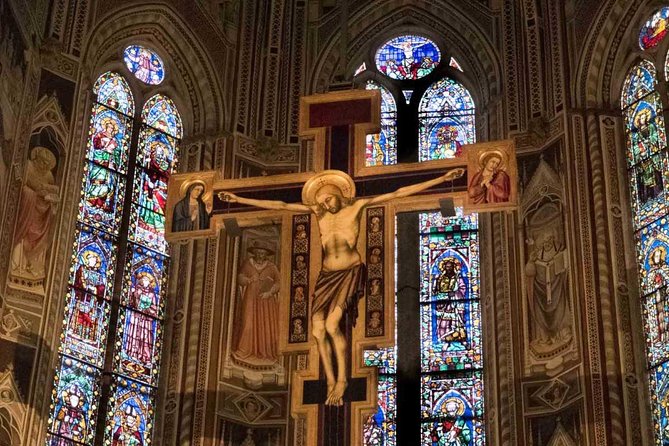
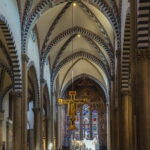
Once you enter, the basilica becomes a giant visual syllabus. You’re not just looking at art—you’re learning where it sits and what it’s meant to say.
A big focus is the Cappella Maggiore, where frescoes by Gaddi (listed as 1380) tell the story of Santa Croce itself. Even if you’ve read about Florence’s religious art before, the guide’s approach makes the paintings feel like a narrative instead of a wall of color.
You’ll also be guided through key fresco work by Giotto, especially in the Bardi and Peruzzi Chapels. Giotto’s scenes of the life of St. Francis and St. John the Evangelist give you a concrete “this is what people believed and valued” picture. Without guidance, it’s easy to admire the art and forget what the scenes are about. With the tour structure, the meaning lands.
Why this matters: Santa Croce can feel overwhelming if you wander. The art is extraordinary, but your brain needs anchors—names, locations, and the thread that connects one chapel to the next.
Donatello, Brunelleschi, and the best kind of art trivia
Santa Croce is packed with Renaissance highlights, and the tour points you to the ones that reward attention.
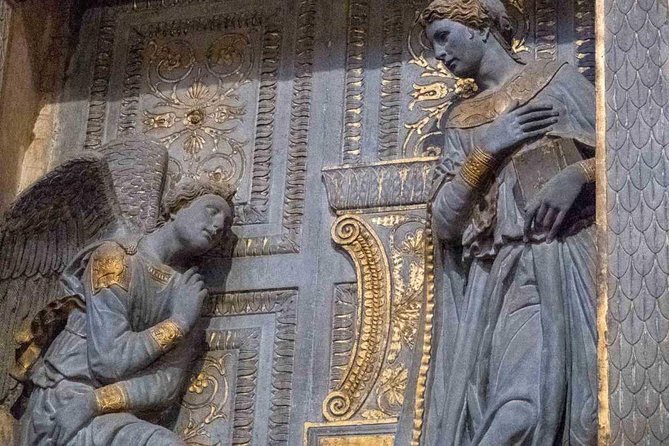
On your way through the interior, you’ll learn about Donatello and his crucifix, described as one of the Renaissance jewels. This is exactly the sort of piece that can slip by if you’re rushing. The guide’s framing helps you notice the details you’d otherwise gloss over because you don’t know what to look for.
You’ll also hear about Brunelleschi, including the architectural harmony of his Chapel of Fools. Whether you’re an architecture person or just like good proportions, the guide’s explanation gives you a way to interpret what you’re seeing. You stop thinking of it as random chapel design and start noticing how structure supports the vibe and the message.
Bonus: the tour includes time at spots that people tend to miss when they self-tour. If you’re trying to see as much as possible in Florence without feeling like you’re collecting photos, this tour helps you get there faster.
Tombs of the famous: what’s underneath the marble
Santa Croce is famous for burial sites, but the tour makes the tombs more than a sightseeing checklist.
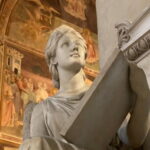
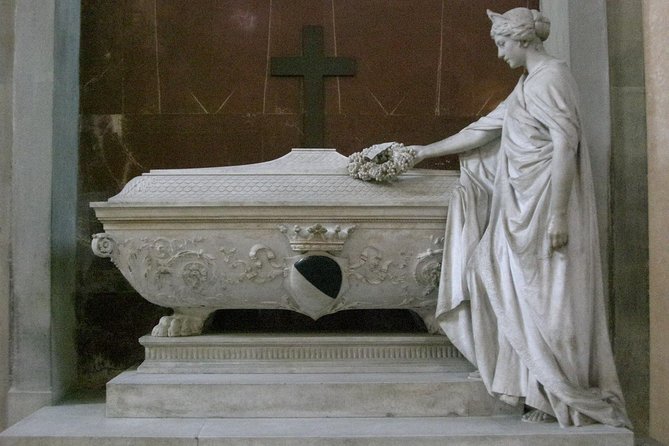
You’ll learn about the significance of major resting places, including tombs of Michelangelo, Galileo, Machiavelli, and Rossini. Those names are already enough to make many people stop dead. But the real value of a guide is that you learn what the burial choices meant, not just that someone famous is there.
And because the tour keeps you moving through the most important parts of the church, you don’t waste time trying to figure out where to go next. You also get “why this person belongs here” context, which turns a quick glance into a memorable moment.
If you like learning human stories behind art and architecture, this is where the tour pays off. The basilica stops being only a building and becomes a public record of Florence’s identity.
The cemetery and the 1966 flood restoration story
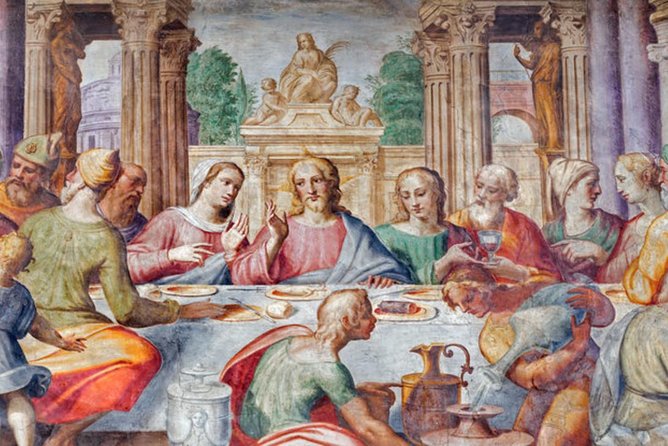
After the core interior viewing, the tour shifts outward—first to the monumental cemetery area. This part is surprisingly moving. It adds a quiet, real-world sense of the church as a living place tied to generations, not just a stage for masterworks.
The tour also addresses the 1966 Florence flood. Some paintings were damaged during that tragedy and were later restored. Your guide helps you understand what restoration means here, so you can recognize the idea of survival inside the basilica rather than treating it like a sealed-off, untouched masterpiece.
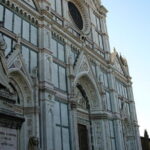
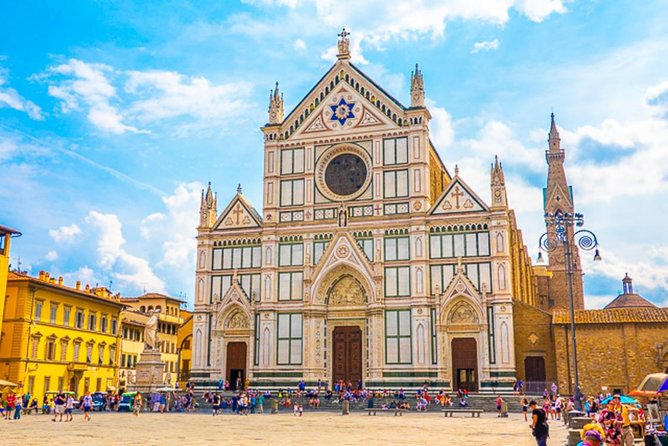
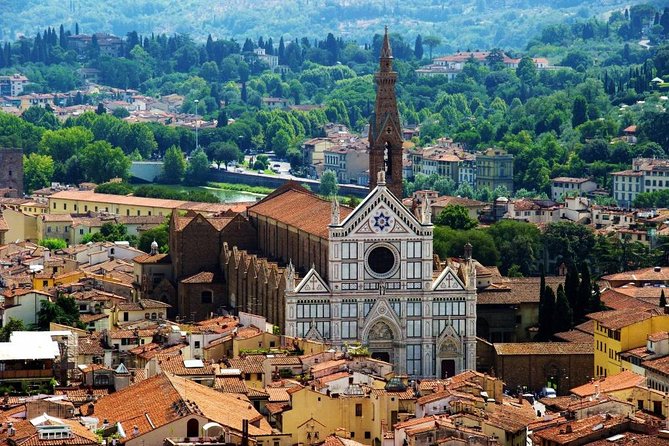
Then you move to the exterior viewpoint concepts. The basilica’s polychrome marble façade is part of what makes Santa Croce so visually striking from the outside. The guide ties those materials back to the church’s status and design choices, so you don’t just see beautiful stone—you learn how it fits the bigger picture.
If you’re the type of person who hates hearing about history only in dates, you’ll like this: the flood story is a real interruption in the basilica’s life, and it makes your visit feel anchored to the city’s actual ups and downs.

Bell tower, crypt, and the 16 chapels circuit
After the cemetery and exterior notes, the tour continues with the bell tower area, the crypt, and the 16 chapels. This is where guided routing matters most.
A self-guided visit can work if you already know what you want. But if you don’t, the risk is spending your time wandering and missing the stops that give the full Santa Croce picture. The guide’s order helps you see the church as layers: surface art, deeper spiritual spaces, then the surrounding sacred complex.
The crypt and the bell tower area are especially helpful if you’re curious how the church feels from different angles. It’s not just “more rooms.” It’s a change in atmosphere, lighting, and how your body experiences the space.
One practical plus: the radio system helps you keep up, especially if the group pauses frequently at key artworks.
Also, the tour is designed so you can return to anything you want to see again once the official route ends.
Price and value: what $58.05 buys you in one hour
At $58.05 per person for about 1 hour, the price works best if you care about context, not just access. The tour includes entrance tickets with reservations, plus a certified guide and a radio system.
That matters more than it sounds. Santa Croce is too big for most people to “learn it” on their own in one short sitting. A guide compresses the information into a route you can follow while you’re physically standing in the exact spot.
It’s also booked on a steady schedule—on average 42 days in advance—which is often a sign that people want a quick, high-impact church visit without planning a mini research project on the spot.
When might it feel pricey? If you mainly want photos and don’t care about tomb and fresco context. For that style of visit, you might be happier doing a self-guided pass. But if you want the church to make sense fast, the guide is the product.
Who should book this Santa Croce tour
I think this tour fits best if you fall into one of these groups:
- You want to understand frescoes and tombs, not just see them.
- You like being guided to specific masterpieces like Giotto’s chapel scenes and Donatello’s crucifix.
- You’re on a tight Florence schedule and want the best route through the basilica, crypt, and chapels without indecision.
It may be less satisfying if you:
- Need long, slow contemplation time. This is a structured hour.
- Are uncomfortable with dress code requirements in churches (shoulders and knees must be covered).
- Get anxious about strict timing. If you arrive late, you can’t join.
Good to know: groups are capped at 20 travelers, so you’re not fighting a crowd trying to listen.
A note on guides: you might get one of several strong storytellers
English is offered, and the guide makes a big difference in how the art lands. Names that have shown up as tour leads include Chiara Conti, Raphael, Jenny, Mateo, Elena, Marcello, Sarah, Hilary, and Guido.
That’s not a guarantee for any specific booking, but it’s a helpful sign: the tour tends to run with guides who can connect art, religion, and Florence street-level details in a way that keeps people engaged.
Should you book Basilica Santa Croce: Walking Among the Masters of Florence?
If you want Santa Croce to feel understandable in one hour, I’d book it. The combination of reserved entry, a certified guide, and a tight route through fresco highlights, major tombs, and the crypt/chapels circuit is exactly the kind of value that makes church visits actually memorable.
I’d skip it only if you’re doing Florence as a mostly photo-first trip and you don’t want explanations. Also skip if you’re likely to show up out of dress code. In places of worship, getting turned away ruins the day.
My best advice: wear something easy to cover (especially knees and shoulders), arrive on time for the group, and go in ready to learn what you’re seeing. You’ll leave with names, scenes, and stories that make the basilica’s art stick.
FAQ
How long is the Basilica Santa Croce tour?
It lasts about 1 hour.
Is the tour offered in English?
Yes, it is offered in English.
What’s included in the price?
The tour includes a certified guide, a radio system to hear the guide, and entrance tickets with reservations.
What is the dress code for entering?
You must cover your knees and shoulders. No shorts or sleeveless tops. If you don’t follow the dress requirements, entry refusal is possible and the tour will not be rescheduled or refunded.
Where do I meet the tour?
The meeting point is the Monument to Dante Alighieri, Piazza di Santa Croce, 50122 Firenze FI, Italy. The tour ends back at the meeting point.
What happens if I arrive late?
If you arrive after the tour start time, you won’t be able to join and you won’t be refunded or rescheduled.