Symbols hide in plain sight in Florence. This private, 90-minute visit to Santa Maria Novella turns famous artworks into a kind of visual puzzle, guided by an official art historian. I like that it’s not just about what you see, but about what symbols were doing in the minds of people back then.
I also really enjoy the way Sonia Sànchez connects big-name artists and chapels into one clear story, so the church feels coherent instead of a random museum stop. One catch: the main church complex admission is not included, so you’ll add the listed ticket cost on top of the tour price.
In This Review
- Key highlights if you like symbols, not just sightseeing
- Florence’s Santa Maria Novella, decoded like a puzzle
- Where you meet (and how to plan for a smooth 3:30 start)
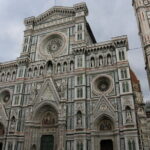
- Facade first: Leon Battista Alberti and the symbol story kickoff
- Inside Santa Maria Novella: Masaccio and Giotto, but with a purpose
- Strozzi and Tornabuoni chapels: where symbolism meets ambition
- The Green Cloister and the Spanish Chapel: meaning beyond the main nave
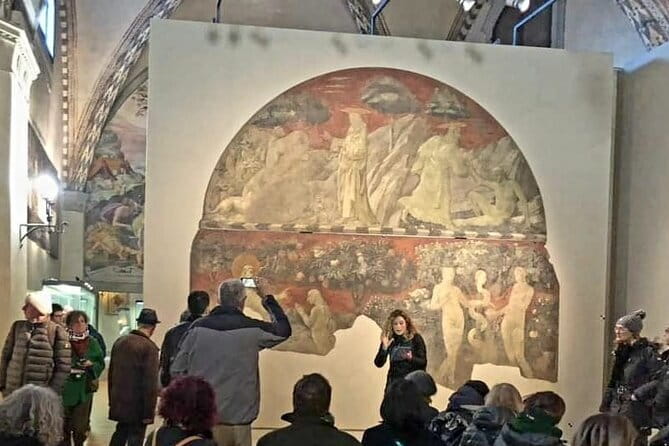
- Paolo Uccello frescoes in the museum: what to look for before you stare
- Price and value: $201.67 for up to 10 (plus tickets you pay separately)
- Who should book this tour (and who might want a different style)
- Book it or skip it? My practical call
- FAQ
- How long is the Private guided tour of Hidden Symbols in Santa Maria Novella?
- What time does the tour start?
- Where is the meeting point?
- Is the tour admission ticket included?
- How much is the admission ticket?
- What is the group size limit?
- Is this a private tour?
- What’s included in the price?
- Is a mobile ticket used?
- Is free cancellation available?
Key highlights if you like symbols, not just sightseeing
- Official art historian guide who specializes in hidden symbolism in art
- Leon Battista Alberti’s facade as the starting point for the whole symbol story
- Iconic artworks inside like Masaccio’s Trinity and Giotto’s Crucifix, explained through symbols
- Strozzi and Tornabuoni chapels with lots of coded visual meaning to unpack
- Green Cloister and the Spanish Chapel for symbolism beyond the main nave
- Paolo Uccello frescoes in the museum area, where details matter
Florence’s Santa Maria Novella, decoded like a puzzle
If you’ve ever stared at a Renaissance church and thought, I know this is important… but why, exactly? This tour is built for you. The theme is hidden symbols, and the approach is practical: you learn what to look for, then you see it with new eyes.
You’ll start in the right place—at Santa Maria Novella itself—so you’re not just hearing symbolism in the abstract. It’s tied directly to what’s on the facade and inside the church complex. And because it’s private, you can ask follow-up questions without worrying about keeping pace with a larger group.
There’s also a “human” side to the experience. Sonia Sànchez is repeatedly praised for clarity and for being patient when people need an explanation again. If your brain is the type that asks why a detail is there, you’ll feel right at home.
You can also read our reviews of more tours and experiences in Florence.
Where you meet (and how to plan for a smooth 3:30 start)
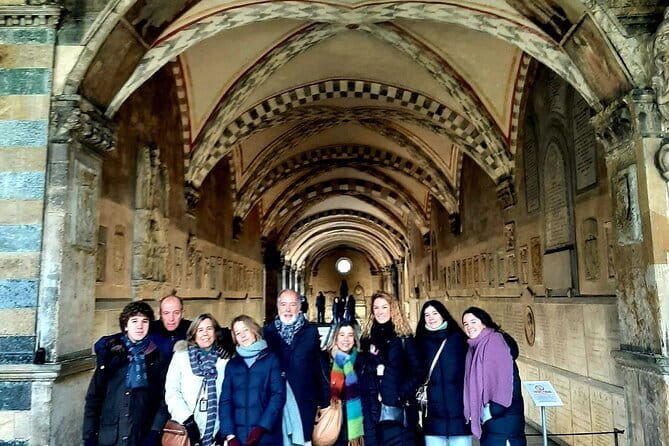
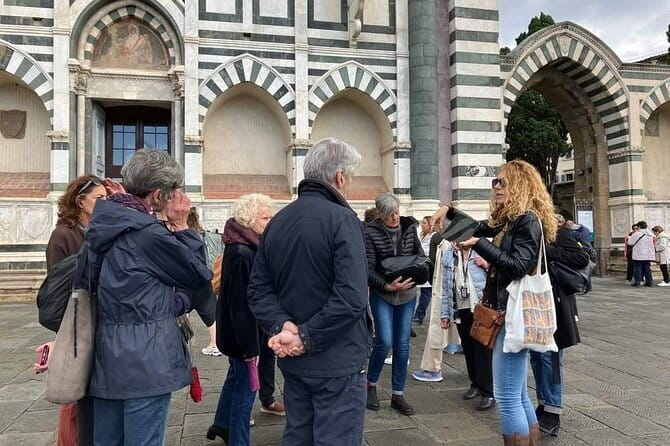
Your tour starts at P.za di Santa Maria Novella, 18/A in Florence at 3:30 pm. It ends back at the meeting point. That loop matters: you’re not bouncing across the city. Most of your time stays inside the Santa Maria Novella complex, moving between church areas, chapels, cloister-like spaces, and the museum room for frescoes.
Since the duration is about 1 hour 30 minutes, plan your day so you’re not rushing dinner immediately afterward. You’ll want a little time to process what you just learned, because symbol explanations land better when you can think for a minute.
Also note the practical details: you’ll receive confirmation at booking time, there’s a mobile ticket, and the meeting point is near public transportation. Service animals are allowed, and the tour is designed so most travelers can participate.
Facade first: Leon Battista Alberti and the symbol story kickoff
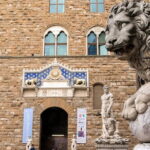
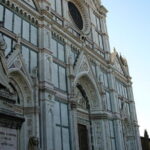
The tour begins with the facade of Leon Battista Alberti, which is a smart move. Front facades can look like decoration until someone explains the logic. Here, the point is to get you trained to see patterns: how design choices can guide meaning, not just style.
For a lot of people, the temptation inside a church is to wait until you’re “in” to start paying attention. This flips that. You begin outside, where architecture and visual structure set up expectations for what you’ll encounter once the door opens.
If you’re the kind of traveler who likes the first 10 minutes to feel like the payoff to the whole tour, this start helps. It gives you a framework you can reuse while you’re looking at chapels and artworks.
Inside Santa Maria Novella: Masaccio and Giotto, but with a purpose
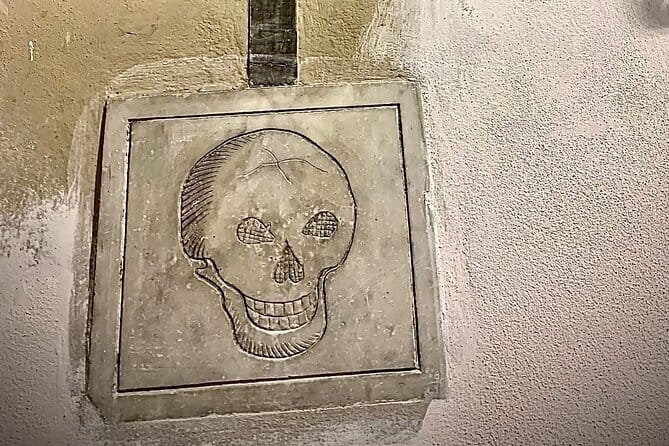
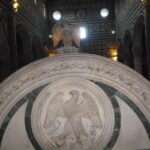
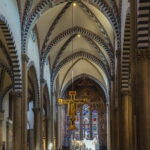
Once you step inside, the tour keeps moving through major highlights—starting with Masaccio’s Trinity and Giotto’s Crucifix. These are famous works, yes. But here’s the key difference: you’re not just admiring them as masterpieces. You’re looking for the symbolic layer that connects art to belief, education, and the way people read images in that period.
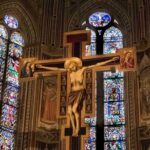
Masaccio’s Trinity is often noticed for its visual power, but symbol-focused guiding helps you slow down just enough to see how composition can signal meaning. Giotto’s Crucifix brings another kind of charge: it’s emotional, but it also communicates ideas through the way the scene is presented.
This is where I think the tour earns its reputation. You don’t leave feeling like you saw famous art “in passing.” You leave feeling like you learned a method for reading it.
Strozzi and Tornabuoni chapels: where symbolism meets ambition
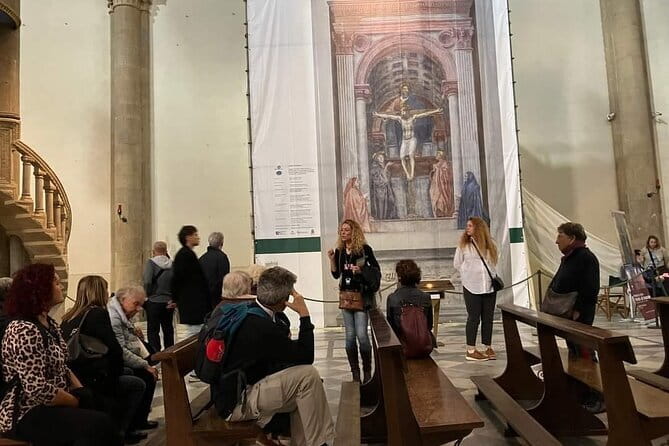
Next up are the Strozzi Chapel and the Tornabuoni Chapel. Chapels in Florence weren’t only religious spaces; they were also about identity—who funded what, who wanted remembrance, and what messages they wanted to broadcast.
That’s why symbol interpretation works so well in these locations. The art isn’t floating in a vacuum. It’s placed, selected, and framed. When you understand that, details stop feeling random.
One intriguing element in the tour content is the inclusion of the Strozzi Chapel in Mantua as part of the symbol discussion. Even though Mantua is not the location of where you’re standing, covering it in the explanation helps you see how families and artistic choices could echo across places. In other words, the symbols aren’t only local; they can travel through style and patron choices.
Practical note: chapels can be visually busy. The guide’s job is to help you notice what matters, then explain why it matters, without turning the visit into a lecture you can’t absorb.
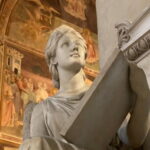
The Green Cloister and the Spanish Chapel: meaning beyond the main nave
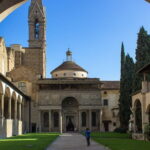
After the big church stops, you move into areas that many first-time visitors treat like breaks—spaces like the Green Cloister and the Spanish Chapel. But symbolism tours are exactly where these areas shine, because they’re often filled with visual cues people miss when they’re rushing.
The Green Cloister is a good example of how a space’s mood and details can support the overall message of the complex. It’s not the same type of artwork as a main nave panel or a large fresco wall, so the symbolism can be more about patterns, layout, and how the visitor is guided through the site.
Then comes the Spanish Chapel, which gives you another shift in tone and meaning. Spain-related patronage and naming usually comes with its own context, so the symbolism isn’t only religious; it can also reflect cultural identity and connections.
If you like the idea that meaning can show up in “side” spaces, you’ll likely enjoy this part more than you expect. It’s where the tour starts to feel less like a checklist and more like a story you can follow.
Paolo Uccello frescoes in the museum: what to look for before you stare
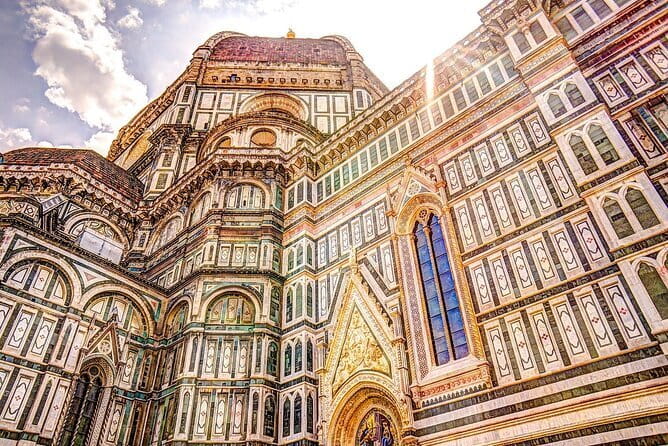
The last major artistic stop is the museum with frescoes of Paolo Uccello. Uccello’s fresco work can feel different from what you just saw in the church spaces, and that’s good for your learning curve. Different artists often bring different ways of handling space, form, and visual emphasis.
This is another reason I like this tour format: it doesn’t only rely on the most famous names. It uses a sequence of locations so your eyes adjust as you go. By the time you’re in the museum area, you’re already trained to ask: What’s being emphasized, and what symbol logic might be hiding there?
The museum part is also where you’ll likely slow down naturally. Frescoes reward close attention. A symbol-focused guide helps you avoid wandering by on vibes alone.
Price and value: $201.67 for up to 10 (plus tickets you pay separately)
The tour price is $201.67 per group, for up to 10 people. That pricing structure can be a deal if you’re traveling with friends or family who want the same kind of experience. For solo travelers, it’s usually best viewed as buying expert guidance rather than buying “a ticket to a place.”
Admission is not included. You’ll pay €7.50 for adults and €5 for ages 11 to 17. So your total cost depends on group size and who’s in your party, but the math usually works out best when you share the guide fee across multiple people.
For me, the value comes from what’s included: an official art historian guide specialized in hidden symbols. If you’re the type who wants explanations that connect architecture, patronage, and artworks into one readable set of ideas, you’re getting exactly that—without having to piece it together yourself from several sources.
Who should book this tour (and who might want a different style)
This experience fits best if you:
- like art with an interpretive angle, not just photo spots
- enjoy myth and symbolism, including how people in Florence “read” images
- want a private setting where your questions don’t get cut off
It may be less ideal if you prefer very general, fast-paced sightseeing with minimal interpretation. This tour is focused. It’s not trying to cover everything in the complex; it’s trying to make the symbolic meanings click in the places that matter most to the theme.
One more small consideration: because admission isn’t included, budget for that extra ticket cost ahead of time. It’s not scary, just annoying if you forget.
Book it or skip it? My practical call
I’d book this tour if you want Santa Maria Novella to feel like more than a stop on the way to somewhere else. The private format, the specialized symbolism focus, and Sonia Sànchez’s reputation for clear, patient explanations make it the kind of guided visit that leaves you with real takeaway moments.
If your travel style is pure sightseeing and you don’t want to think about symbols at all, you might prefer a lighter tour. But if you like seeing the same artwork twice—once with your eyes, once with meaning—this is a strong choice.
FAQ
How long is the Private guided tour of Hidden Symbols in Santa Maria Novella?
It lasts about 1 hour 30 minutes.
What time does the tour start?
The start time is 3:30 pm.
Where is the meeting point?
Meet at P.za di Santa Maria Novella, 18/A, 50123 Firenze FI, Italy.
Is the tour admission ticket included?
No. Admission tickets are not included.
How much is the admission ticket?
Admission is €7.50 for adults and €5 for ages 11 to 17.
What is the group size limit?
It’s up to 10 people per group.
Is this a private tour?
Yes. Only your group participates.
What’s included in the price?
An official art historian guide specialized in hidden symbols in art.
Is a mobile ticket used?
Yes, the tour features a mobile ticket.
Is free cancellation available?
Yes. You can cancel up to 24 hours in advance for a full refund.