REVIEW · YPRES
From Ypres, The Christmas Truce to Passchendaele Ypres Based WW1 private tour
Book on Viator →Operated by A Foreign Field WW1 Tours · Bookable on Viator
WWI comes into focus on a private route. I love the fully customizable format and the way the guide ties major sites to real stories as you move across the Ypres Salient. You’ll spend an 8-hour day hitting the moments people remember most, from the Battle of Messines to Tyne Cot and the Menin Gate.
The practical win for me is the pace: you’re not just driving from stop to stop, you’re getting context at each one, with free bottled water keeping the day comfortable. One thing to consider: lunch is not included, so plan around that and expect a long, emotionally heavy day built around cemeteries and memorials.
In This Review
- Key highlights at a glance
- Why a private Ypres WW1 day beats self-driving
- Messines Ridge: mine craters, the Christmas Truce moment, and the Hitler crypt
- Hooge Crater Cemetery and the Menin Road gun pits you can stand beside
- Black Watch: Australian HQ in September 1917 and earlier actions from Nov 1914
- Polygon Wood: concrete bunkers, a cemetery, and the Australian 5th Division monument
- Hill 60: the tunnelling mine, 3.10am on June 7, 1917, and Captain Woodward
- Broodseinde and Zonnebeke: driving the advance line (so you understand the map)
- Tyne Cot: the Commonwealth War Graves Commission cemetery and the weight of names
- John McCrae’s hospital site and the Menin Gate memorial wall of the missing
- Sanctuary Wood Museum: original trenches plus a small trench-museum style stop
- Price and logistics: what $420.49 buys you for a full WW1 day
- Who should book this Ypres to Passchendaele private tour?
- Should you book it: my straight call
- FAQ
- How long is the Ypres WW1 private tour?
- What does the tour cost per person?
- Is this tour private?
- Do I need to buy admission tickets for the stops?
- Is bottled water provided?
- Is lunch included?
- What time does the tour start?
- Where is pickup available?
- Can I cancel for a full refund?
Key highlights at a glance
- A truly private day: just your group, and the route can be tailored to what you care about most
- Søren’s stop-by-stop storytelling: you’ll get context that’s hard to piece together alone
- Messines Ridge in depth: mine craters, the Christmas Truce scene, and the crypt linked to Adolf Hitler’s treatment
- Tyne Cot’s scale: the Commonwealth cemetery, 12,000 buried, and only 3,000 with names
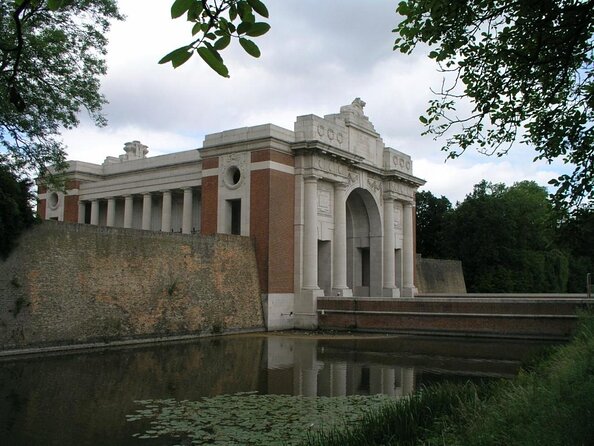
- Menin Gate’s missing roll call: a guided run through the 55,000 names listed as missing
- Sanctuary Wood Museum included: original trenches plus a small WW1 museum, with the trench museum stop paid for
Why a private Ypres WW1 day beats self-driving
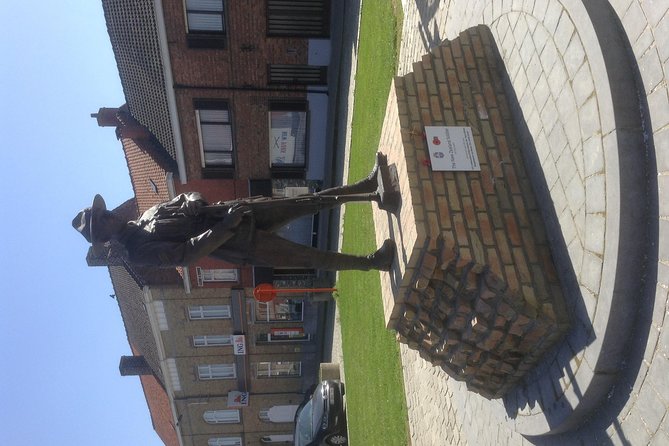
This kind of tour works because it’s not just about locations. The Ypres Salient can feel confusing fast once you start walking the ground—trenches, cemeteries, memorial walls, and reconstructed sites all blur together if you’re on your own.
On this tour, you’re with a professional guide for the full arc of the day, and that changes everything. You get what to look for, why certain places matter, and how battles connect to the ground you’re standing on. It’s also flexible: you’re not locked into one “script.” If you’re chasing family connections or focusing on a specific angle, the day can be shaped to match.
And you’ll stay comfortable. Free bottled water is included, which sounds small until you’re out for hours in the field.
Messines Ridge: mine craters, the Christmas Truce moment, and the Hitler crypt
Messines Ridge is a strong way to start because it hits several emotional and historical notes in one concentrated stretch. You’ll hear the story of the Battle of Messines, then visit the mine craters—places where the ground itself becomes part of the narrative.
This stop also includes a Christmas Truce scene. If you only know the truce as an idea, you’ll likely leave with a clearer sense of what it represented on the ground where soldiers lived and fought.
Then comes the crypt where Adolf Hitler was treated for his wounds. It’s a jarring detail, and the guide’s job is to keep it grounded in the surrounding events so it doesn’t turn into a weird side attraction.
You’ll spend about 2 hours here, and admissions are free for the included sites at this stop.
Hooge Crater Cemetery and the Menin Road gun pits you can stand beside
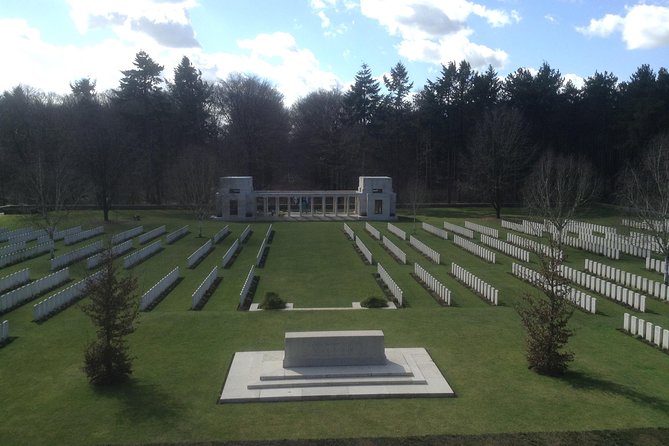
Next you head to Hooge Crater Cemetery, one of those places where the names and the terrain connect tightly. The stop is short—about 15 minutes—but it’s packed.
You’ll visit Pat Bugden VC, a 20-year-old recipient of the Victoria Cross. It’s a reminder that the war wasn’t fought by faceless figures. It was people with ages, choices, and stories.
A standout moment here is being on the Menin Road alongside where the Australian gun pits were for the assault on Passchendaele. When you’re standing there, it becomes easier to understand how attacks were set up from specific positions—how the ground directed what could happen.
Admissions for this stop are free, so you can focus on the walking and listening instead of ticket lines.
Black Watch: Australian HQ in September 1917 and earlier actions from Nov 1914
At The Black Watch site, you’ll learn what this ground looked like for the Australians in the fall of 1917. This is where the Australian HQ was in September 1917, and that detail matters because it anchors the area in how command and coordination worked.
You’ll also hear about earlier actions on the same ground in November 1914. That jump back in time helps you see the Ypres Salient as an evolving battlefield, not a single frozen moment.
A lot of self-guided visits focus on the dramatic monuments and then move on. This stop gives you a way to connect those landmarks to practical military use—where people were based, how the fight shifted over time, and why the area kept drawing attention.
Admission is free here as well.
Polygon Wood: concrete bunkers, a cemetery, and the Australian 5th Division monument
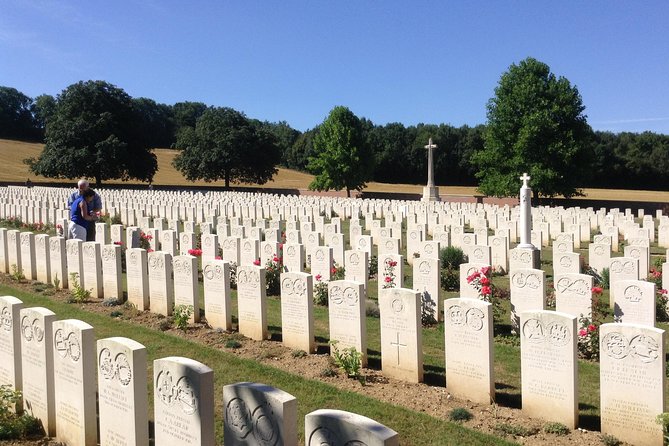
Walking into Polygon Wood is the point where you start feeling how structured the fighting was. You’ll walk through the woods and visit concrete bunkers that were there when Australian soldiers captured them during the battle.
Then you’ll move on to the cemetery and the Australian 5th Division monument. Even if you’ve seen battlefield photos before, the wood itself changes your sense of scale. It’s easier to picture how difficult movement and visibility must have been.
This stop is around 30 minutes. That’s enough time to take in the key markers without rushing you through every corner.
Admission is free for the sites included at this stop.
Hill 60: the tunnelling mine, 3.10am on June 7, 1917, and Captain Woodward
If you want one stop that feels extra “built on purpose,” it’s Hill 60. Here you’ll hear the story of Captain Woodward and the 1st Australian Tunnelling Coy, then see the crater from a massive mine blown at 3.10am on June 7, 1917.
That specific time detail sticks because it turns history into something timed and engineered, not just a broad “battle day.” The crater becomes a visual anchor for the story, and the guide’s explanation helps you read it as battlefield technique rather than just damage.
You’ll spend about 45 minutes at this stop, with free admission for what’s included.
Broodseinde and Zonnebeke: driving the advance line (so you understand the map)
Not every part of the day is heavy walking. Two stops—Broodseinde and Zonnebeke—are approached by driving along the line of the Australian advance.
Those drive-by segments are useful because they connect the major points you’ll walk to the bigger picture. You’re not only absorbing one cemetery or monument at a time; you’re learning how the front line moved and how locations relate to each other.
Both driving stops are part of the tour’s flow with admissions free.
Tyne Cot: the Commonwealth War Graves Commission cemetery and the weight of names
Tyne Cot Cemetery is one of the most powerful stops on the route, and for good reason. It’s the world’s largest Commonwealth War Graves Commission cemetery, and about 12,000 soldiers are buried there. Only 3,000 have names listed, which makes the place feel both massive and personal at the same time.
You’ll spend about 45 minutes here, and the guide also points out that two Australian Victoria Cross recipients are buried at Tyne Cot. Those details help you connect the scale to specific stories, instead of letting the numbers overwhelm you.
The tour approach matters: the guide helps you look at how the cemetery is organized and what it communicates, which is far more meaningful than just photographing stones and moving on.
Admission is free for this stop.
John McCrae’s hospital site and the Menin Gate memorial wall of the missing
After Tyne Cot, you’ll shift to sites connected to writing and remembrance.
At the John McCrae site, you’ll see the hospital site where Lt Col John McCrae composed In Flanders Fields. Even if you know the poem, it’s a different experience to hear it connected to the place where it emerged.
Then you’ll head to Menin Gate Memorial. The guide explains how it came about and shares stories tied to the 55,000 names listed there as missing. This is where your brain starts processing remembrance differently—not as a list you skim, but as a very large “we still don’t know” ledger.
This stop is about 20 minutes, so it’s best to arrive mentally ready to slow down.
Admissions are free for these stops.
Sanctuary Wood Museum: original trenches plus a small trench-museum style stop
The final substantive stop is Sanctuary Wood Museum, about 40 minutes, and it’s included in the tour.
Here you’ll see poignant original WW1 trenches and visit a quaint WW1 museum. This is a good wrap-up because it brings you back from the grand memorial walls into something more tactile: the trenches themselves, and the on-site museum material that helps you picture what everyday conditions meant.
If you want one “last dose of context” before you head back, this is it.
Price and logistics: what $420.49 buys you for a full WW1 day
At $420.49 per person, this is not a budget day—but it also isn’t just paying for a ride. You’re paying for a private, fully customizable day with a professional guide, hotel pickup from select Ieper-based locations, and the right pacing across multiple major sites.
Admissions are listed as free for the stops you’ll visit, and the one paid-in portion you should note is the trench museum at Sanctuary Wood (marked as included). You also get free bottled water, plus a mobile ticket.
Two practical points to plan around:
- Lunch isn’t included, so eat before pickup or plan something near where the day ends.
- Pickup is Ieper based only, and the tour requires a minimum of two guests.
If you’re staying in Lille, Arras, or Bruges, you’ll likely need a different setup, since this one specifies Ieper pickup.
Who should book this Ypres to Passchendaele private tour?
I’d book this if you want a guided day where the guide can connect geography to story—especially if you care about family links or specific national connections. In other words, if you’re not only there for the famous names, but you want to understand what your relatives likely faced and why certain locations matter.
It also makes sense if you’re the kind of traveler who likes asking questions. The private format means you’re not stuck waiting for the group’s pace, and you can ask where the guide can tailor focus.
This is also a good choice if you want a structured tour length of about 8 hours, without having to manage route planning yourself across multiple cemeteries and memorials.
Should you book it: my straight call
If you have one day for WW1 sites around Ypres and you want it to feel intentional, this tour is a strong pick. The big value isn’t just that you’ll see major memorials—it’s that you’ll get meaning at each stop, including the trickier details like the Christmas Truce scene and the crypt tied to Adolf Hitler’s treatment.
I’d pass or reconsider only if you’re hoping for a light, easy outing. This is long, and it’s built around war sites and remembrance. Also, because lunch isn’t included, you’ll want to plan your meals so the day doesn’t feel like an endurance test.
If that sounds like your kind of travel, book it.
FAQ
How long is the Ypres WW1 private tour?
It runs for about 8 hours.
What does the tour cost per person?
The price is listed as $420.49 per person.
Is this tour private?
Yes. It’s a private tour for your group only.
Do I need to buy admission tickets for the stops?
Most stops are listed as free admission, and the Sanctuary Wood Museum trench museum portion is included.
Is bottled water provided?
Yes. Free bottled water is included during the experience.
Is lunch included?
No. Lunch is not included.
What time does the tour start?
Start time is 9:00 am.
Where is pickup available?
Pickup is offered for Ieper based locations only (minimum X 2 guests applies).
Can I cancel for a full refund?
You can cancel for a full refund up to 24 hours before the experience’s start time.