
REVIEW · YPRES
From Ypres 4hr Christmas Truce and Monster Mines of Messines PRIVATE Tour
Book on Viator →Operated by A Foreign Field WW1 Tours · Bookable on Viator
Christmas 1914 starts with a walk. On this private WW1 tour out of Ypres, I love how smoothly the sites connect, and how you can steer the day toward what matters to you, including family history. You also avoid the hassle of piecing together transport between battlefield points.
Two things make it feel personal fast: the private guide sets the pace around your questions, and the stop choices trace a clear emotional arc from siege damage to the holiday moment. One consideration: the day is built around a handful of key places, so if you want hours of free roaming across dozens of locations, you may wish you had more time.
Key takeaways before you go
- Pickup that meets you at Ypres train station or your hotel/B&B
- A private, up-to-4 group where your questions lead
- A tight route of six major WW1 sites, with free admission at each stop
- Short, focused visits with time to ask questions, not a strict rush-through
- A day that moves from trench warfare sites to the Christmas Truce on the same route
- Ends at a CWGC cemetery where personal details hit hardest
In This Review
- How a Private Ypres WW1 Tour Feels Different
- Price and What You’re Really Buying for $532.32
- Where Pickup in Ypres Saves Your Day
- Hill 60 and the Caterpillar Crater: 8,000 Soldiers in the Earth
- Spanbroekmolen Mine Crater: 91,000 Pounds and the Tunnellers
- Messines Ridge (N.Z.) Memorial: How National Stories Fit Together
- Island of Ireland Peace Park: Irish Contribution and a Shift in Tone
- Christmas Truce Memorial: Where the Moment Happened
- Hyde Park Corner CWGC Cemetery: Personal Details That Don’t Let Go
- The Time Structure: Short Stops, Real Room for Questions
- How Soren’s Style Makes the Battle Easy to Follow
- Who This Tour Is Best For
- Should You Book This Ypres Christmas Truce and Messines Private Tour?
- FAQ
- How long is the Ypres Christmas Truce and Messines private tour?
- Is this tour private?
- What language is the tour offered in?
- Where does pickup happen?
- Do I need paid admission tickets for the stops?
- What is the cancellation policy?
How a Private Ypres WW1 Tour Feels Different
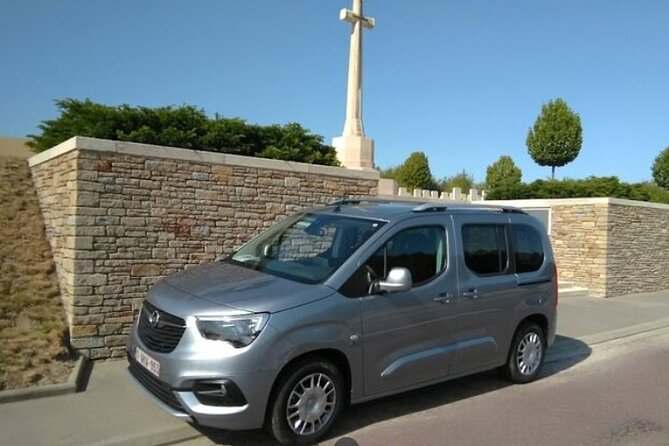
Ypres battlefield days can go two ways: you either spend time planning and driving, or you show up ready to learn and let the route do the work. This experience leans hard into the second option. With pickup offered in Ypres, you’re not left figuring out how to reach spread-out memorial points. You get to sit back, look out the window, and focus on the story.
The other big difference is the guide. In the comments I kept seeing the same theme: the guide, Soren, doesn’t just recite dates. He’s described as a walking encyclopedia of the Battle of Ypres, and that matters because the battle is complex. When the explanation is clear, you start seeing connections—between mines, ridge fighting, and how the landscape was marked for the living and the dead.
The day is private, up to four people, so you can actually ask the follow-up questions that pop into your head. That’s also where family research can take center stage. If you have ancestors who fought in the Ypres area (or if you’re tracking a unit or nationality), you can shape what you pay attention to during the stop at each memorial.
Price and What You’re Really Buying for $532.32
$532.32 is per group, up to four people. That framing is important because you’re not paying a per-person group fare that assumes you’re happy to be one voice among many. A private format means you’re paying for a focused day with a guide and a route that hits the right spots without you doing the logistics.
If you fill all four seats, the cost works out to roughly $133 per person. If it’s just one or two of you, the per-person figure is higher—but you’re still buying something that’s hard to replicate alone in the same day: an organized route plus a guide who can interpret what you’re seeing as you go.
Also, each stop is listed with free admission tickets. That doesn’t mean the experience is free—guiding is the value here—but it does mean you’re not stacking venue costs on top of the guide fee.
You can also read our reviews of more tours and experiences in Ypres.
Where Pickup in Ypres Saves Your Day

The tour is built for real life. You can meet the guide at IEPER TRAIN STATION if you’re arriving by train. If you’re staying in town, you can also arrange pickup at IEPER hotels and B&Bs (and if your place isn’t listed, you message the name and get matched up).
This matters because Ypres is small enough that you can walk some places, but battlefield sites can still feel scattered. Pickup reduces that “time tax.” You start the day with momentum instead of losing the first hour hunting down directions.
The tour window shows opening hours from 9:00 AM to 1:30 PM (Monday through Sunday). Plan to arrive earlier rather than later so you’re not thinking about timing while you’re trying to absorb heavy stories.
Hill 60 and the Caterpillar Crater: 8,000 Soldiers in the Earth
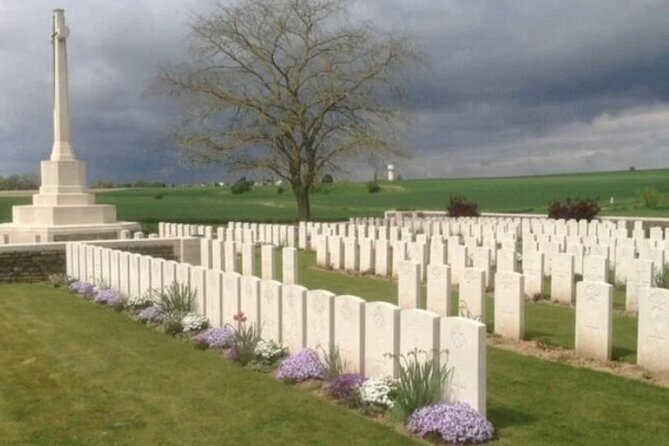
Stop one is Hill 60, with 35 minutes on site. This is one of those places where the story isn’t just about fighting—it’s about what the ground remembers. You’ll hear about Hill 60 and the Caterpillar Crater, and you’ll also learn about a cemetery without headstones connected to this location, including the detail that 8,000 soldiers were encased in the earth.
That phrasing changes how you look at the site. It’s not about finding one named person. It’s about imagining what it means when so many have no individual marker you can point to. A “cemetery without headstones” can be emotionally hard, but it’s also honest. It reflects how war erased identities as well as lives.
Practical tip: give yourself permission to pause. This stop is long enough that you don’t have to sprint to the next thing. If you’re taking photos, slow down first and then shoot second—this is the kind of place where your eyes should do more than your camera.
Potential drawback to note: if you’re the kind of person who needs constant movement, Hill 60 can feel heavy and slow. That’s not a problem with the tour; it’s the subject matter. If you want lighter stops earlier, you might want to discuss your pacing preferences with the guide.
Spanbroekmolen Mine Crater: 91,000 Pounds and the Tunnellers
Next comes Spanbroekmolen Mine Crater for about 10 minutes. You’ll see the mine crater and learn about the tunnellers of WW1, with a specific detail that stands out: the crater is described as 91,000 lb.
Ten minutes is short for a battlefield site. The good news is that Spanbroekmolen works as a “quick shock” stop—just enough time to understand what happened and why this place matters, without turning the day into one long lecture. If you like visual learning, this is a stop that helps you connect the abstract idea of mines to the physical reality you can stand in front of.
This is also a good place for questions because tunnelling is often less in the spotlight than trenches. The guide can help you connect the underground work to the surface chaos you hear about later in WW1 stories.
Practical tip: wear shoes you trust. Even short stops involve uneven ground at battlefield points.
Messines Ridge (N.Z.) Memorial: How National Stories Fit Together
Then you head to Messines Ridge (N.Z.) Memorial for about 15 minutes. Here you’ll hear about the New Zealand contribution to the battle.
This is where the tour does something smart: it balances major sites with memorials that keep nationality and sacrifice visible. A memorial isn’t only about names—it’s about belonging. When you learn how one country’s forces contributed, you start reading the wider battlefield landscape with more human context.
If you have family ties to New Zealand, this stop becomes more than a stop. It becomes a check-in point for your research. Even if you don’t, it helps you understand that the Ypres battles weren’t just one national story. They were international, and the memorials reflect that.
Practical tip: bring a notebook. After a few stops, the details can blur. A quick note at each memorial helps you remember what you learned when you get home and look up more.
Island of Ireland Peace Park: Irish Contribution and a Shift in Tone

Stop four is Island of Ireland Peace Park for 15 minutes. You’ll hear the story of the Irish contribution to the battle of Messines.
A peace park on a battlefield route can feel like a tonal jump, but that shift is part of what makes this whole tour stand out. It signals that the landscape isn’t only a battlefield record. It’s also a place where people try to live with what happened.
Even in a short visit, you can treat this as a mental reset. After the New Zealand memorial, the Irish focus broadens your understanding of who fought, how they were connected, and why remembrance matters across identities.
Christmas Truce Memorial: Where the Moment Happened
Then you get to the heart of the tour theme: the Christmas Truce Memorial for about 15 minutes. Here you’ll hear the story and see the ground where the moment took place, when soldiers forgot their differences and met in No Man’s Land in Christmas 1914.
This stop can hit hard because it introduces a human scale in the middle of mechanized war. The words are simple, but the idea is enormous: enemies meeting across a line they were trained not to cross. Even if you’ve read about the Christmas Truce before, seeing the ground makes it feel less like a story and more like a question: what were they thinking in that instant?
Practical tip: keep your expectations grounded. You’re not going to get a “warm and fuzzy” tour. This moment exists because of the surrounding horror. Let the guide set the tone and give you space to process it.
Hyde Park Corner CWGC Cemetery: Personal Details That Don’t Let Go
The final stop is Hyde Park Corner Commonwealth War Graves Commission cemetery for about 15 minutes. You’ll see the Hyde Park Corner Memorial, plus details that make this cemetery feel personal: the resting place of an England rugby captain and twin brothers buried side by side.
This is where the tour’s structure pays off. Earlier stops explained what happened to bodies and land. Here you get the other side of remembrance: named memorials and relationships preserved as much as possible.
The twin brothers point matters. It’s one of those details that turns statistics into a family image. Even if you don’t know the names in advance, the guide’s explanation helps you look at the cemetery with care instead of speed.
And because it’s a Commonwealth War Graves site, you’re also seeing how remembrance is standardized—clean, ordered, and designed to last. That can be comforting, even when the subject is not.
The Time Structure: Short Stops, Real Room for Questions
The stop lengths range from 10 to 35 minutes. That design has pros and cons.
Pros:
- You cover key points without burning the whole day in one site.
- The day doesn’t become one long lecture. Each stop has its own focus.
- A private guide can shift emphasis if your questions take you somewhere specific.
Cons:
- Some people want more time to walk slowly and read everything they can. If you’re that person, you’ll rely on the guide to manage pacing wisely.
- You may need to choose between taking photos and absorbing the story, especially at the memorials.
The best way to work around this is to go in with two or three questions ready. For example:
- Are there specific national memorials you care about most?
- Do you have a family name or unit you’re trying to connect to?
- Do you want more time at the truce memorial, or do you prefer the underground warfare sites?
Because the guide is private, those choices aren’t a problem. They just help shape the day.
How Soren’s Style Makes the Battle Easy to Follow
One theme in the feedback is that Soren takes his time with explanations and treats the tour like a conversation, not a script. He’s also mentioned as engaging and Canadian. That combination tends to work well on battlefield tours because you need both clarity and sensitivity.
Battlefield history can feel chaotic if you only get dates. What I like about this kind of guiding is that it helps you build a mental map. Hill 60 becomes “why the ground mattered.” Spanbroekmolen becomes “why the underground mattered.” Then Messines Ridge and peace memorials become “how people remembered it.”
And then Christmas Truce shifts the whole mood, so you end the day with a memory that isn’t only about what war does, but also about what people did when they could.
Who This Tour Is Best For
This private route is a strong match if you:
- want a focused battlefield day without handling transport on your own
- care about memorials tied to specific countries (New Zealand, Ireland, England)
- have family history questions and want to bring them to the guide
- like short, purposeful stops rather than long unstructured wandering
It also works well if you’re traveling with limited time. Four hours is enough to cover a meaningful slice of Ypres battlefield terrain while still feeling like you learned something real.
If you’re the type who wants every site in the area, you might feel the route is selective. But that’s also the point: you get interpretation for the most “story-rich” stops in a compact window.
Should You Book This Ypres Christmas Truce and Messines Private Tour?
I’d book it if you want a private guide, a tight route, and a day that connects major battlefield sites with the Christmas Truce memorial and the CWGC cemetery at the end. The value is strongest when you’re traveling in a group of up to four, because you get the private format without stretching the budget too far.
I wouldn’t book it if you want a slow, open-ended exploration with lots of extra stops. This is a curated route with free admission stops and set visit times. If you like to read every stone for an extra hour, plan to add independent time in Ypres before or after.
If you’re on the fence, here’s my simple advice: email or message with your top interests—especially if you have family history or a specific memorial you don’t want to miss. A private guide can only tailor what you tell them, and this tour is built to let your questions drive the day.
FAQ
How long is the Ypres Christmas Truce and Messines private tour?
It’s about 4 hours.
Is this tour private?
Yes. It’s a private tour/activity, with only your group participating, up to 4 people.
What language is the tour offered in?
The tour is offered in English.
Where does pickup happen?
Pickup is available at IEPER TRAIN STATION. If you’re staying in an IEPER hotel or B&B, you can message the accommodation name for pickup details.
Do I need paid admission tickets for the stops?
Admission tickets are listed as free for the stops included in the tour. You’ll also receive a mobile ticket.
What is the cancellation policy?
You can cancel for a full refund up to 24 hours before the experience starts. If you cancel less than 24 hours before the start time, the amount paid is not refunded.