REVIEW · YPRES
From LIlle or Bruges, Christmas Truce to Passchendaele Ypres 1 day WW1 private
Book on Viator →Operated by A Foreign Field WW1 Tours · Bookable on Viator
Trenches make history feel painfully close. This one-day private Ypres WW1 tour follows the fighting around Passchendaele and Messines, with stops tied to the Christmas Truce and the Menin Gate roll call.
I love that you get an English-speaking private guide, and Søren’s style is built for questions and real attention to your interests, including family history connections to the region. I also like the simple logistics: hotel pickup in the area and drop-off after a full day, plus bottled water so you can stay focused on the ground-level stories.
The one possible drawback is timing: it’s about 9 hours and lunch isn’t included, so you’ll want to plan for breaks and energy if you get hungry.
In This Review
- Key things that make this tour worth your time
- Why this Ypres WW1 day tour feels personal
- Price and logistics: pickup, timing, and what you’re actually paying for
- Messines Ridge: mine craters, the truce story, and Hitler’s crypt
- Hooge Crater Cemetery and the Menin Road line: a VC story beside gun pits
- The Australian HQ ground in September 1917 (and earlier actions in 1914)
- Polygon Wood: walking the ground where concrete bunkers survive
- Hill 60 and the 3:10 am mine: tunnelling that you can still see
- Driving sections: orientation along the Australian advance
- Tyne Cot Cemetery: scale, names lost, and VC links
- John McCrae’s site and the poem that put the war into words
- Menin Gate Memorial: 55,000 missing names and the story behind it
- Sanctuary Wood Museum: original trenches where the past stays physical
- Who should book this private tour around Ypres?
- Should you book this private WW1 tour?
- FAQ
- How long is the Ypres WW1 private tour?
- What’s included in the tour price?
- Is lunch provided?
- Do they pick up from your hotel?
- Is the tour private?
- What language is the tour offered in?
- Are tickets required for the stops?
- Is the tour suitable for most travelers?
- Are there any rules on cancellation or refunds?
Key things that make this tour worth your time
- A private guide for a long, moving day: Søren can shape the pace and focus to your interests.
- Major Passchendaele-area stops, not just a drive-by: trenches, cemeteries, memorials, and key positions along the Australian advance.
- The Christmas Truce moment is built in: you’ll visit the scene during the Messines Ridge segment.
- Concrete, craters, and bunkers you can see: the tour keeps connecting maps to physical locations.
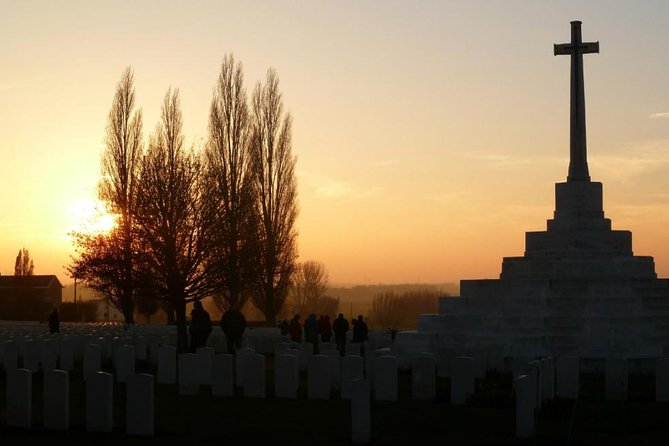
- Tyne Cot and Menin Gate hit hard in a good way: names, missing men, and scale that’s hard to forget.
- Sanctuary Wood Museum adds original trenches: admission is included, so you don’t have to manage extra tickets.
Why this Ypres WW1 day tour feels personal
Ypres is one of those places where the details matter. The ground itself did the talking long ago, and a private guide helps you read what you’re seeing instead of just taking photos and moving on.
What makes this day stand out is the mix of well-known memorial sites with specific battlefield positions tied to Australians in 1917. You’re not only standing at places of remembrance; you’re also walking through the kind of terrain that shaped the war—mine craters, ruined defensive lines, and cemetery rows that stretch farther than your brain wants to handle.
You can also read our reviews of more tours and experiences in Ypres.
Price and logistics: pickup, timing, and what you’re actually paying for
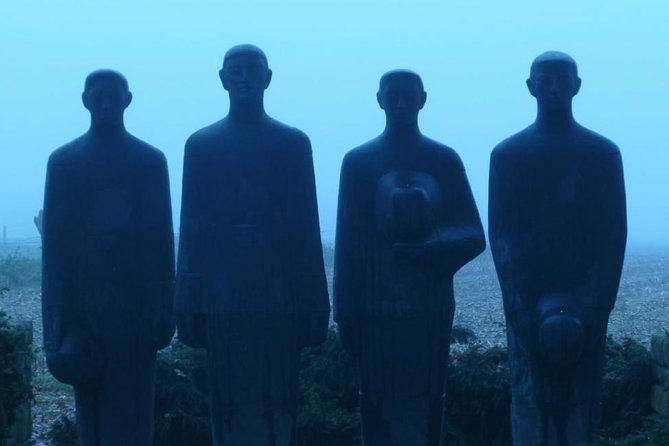
At about $532.32 per person, this is not a budget group tour. But it’s also not just a bus ride with audio. You’re paying for a private guide, and for transportation that starts with pickup from hotels or B&Bs around the Ypres area (within a 66 km radius of Ypres), including Ghent’s Dampoort Station as an option for Ghent departures. Pickup is also listed for Lille and Arras, so the tour works across the region.
The day runs about 9 hours starting at 9:00 am. Most stops list admission as free, except the Sanctuary Wood Museum, where admission is included. You also get a mobile ticket and bottled water.
Two practical notes:
- Lunch isn’t included, so plan for food on your own. If you go light, you might feel it after hours of standing and reading plaques.
- It’s a private tour, so if you’re coming as a solo traveler, the cost can feel high. If you’re a couple or part of a small group, the value often feels more balanced.
Messines Ridge: mine craters, the truce story, and Hitler’s crypt
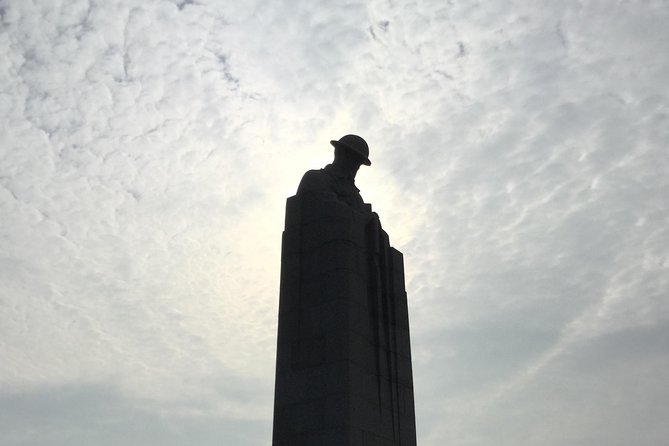
You start at Messines Ridge (about 2 hours). This stop is doing heavy lifting right away: it sets up the battle story, then anchors it in physical remains like mine craters.
Then the tour shifts gears to two very different but connected threads:
- The Christmas Truce scene is part of the visit here. You’ll hear the story in the place where that rare shared moment is remembered.
- You’ll also see the crypt where Adolf Hitler was treated for his wounds. This is historically specific, and it can be emotionally jarring. Going in with that expectation helps—you’re not there to sanitize the war, you’re there to understand how chaotic and close things were.
Why this stop works: it shows you that WW1 isn’t only trenches and artillery. It includes sudden pauses, unexpected human contact, and the way major events can end up tied to small rooms and underground spaces.
Possible consideration: because this stop covers both the truce and Hitler’s treatment site, it may not match everyone’s comfort level. If you know you prefer a strictly memorial tone, ask your guide to frame the visit in a way that fits your comfort.
Hooge Crater Cemetery and the Menin Road line: a VC story beside gun pits
Next is Hooge Crater Cemetery (about 15 minutes). Even with the short time window, this stop packs meaning.
You’ll visit Pat Bugden VC, described here as a 20-year-old Victoria Cross recipient. Then the tour situates you on the Menin Road area, directly alongside where Australian gun pits were positioned for the assault linked to Passchendaele.
This is a smart combination because you get two types of context:
- the individual story (Bugden’s VC recognition and youth),
- and the tactical geography (where the Australians were placed for an assault).
A short stop can feel rushed if you want to linger. But in my experience with WW1 days, tight timing can also prevent “cemetery fatigue,” when after a point you start skimming instead of reading.
The Australian HQ ground in September 1917 (and earlier actions in 1914)
There’s another stop in the itinerary where the site is described as where Australian HQ was in September 1917. You’ll also learn about earlier actions on the same ground in November 1914.
Even without a formal “headline” name, this kind of location matters. It helps you see continuity: the war isn’t a single chapter. It stretches, changes form, and returns to the same terrain in new ways as the front evolves.
This is also where a private guide really earns their keep. If you’re interested in understanding why this exact spot kept showing up in the war story, you’ll get more than general explanations.
Polygon Wood: walking the ground where concrete bunkers survive
Battle of Polygon Wood takes about 30 minutes. Here you’re walking through the woods and seeing concrete bunkers that were in place when Australian soldiers captured parts of the area.
You’ll also visit the cemetery and the Australian 5th Division monument.
Why this stop feels different from a purely memorial visit: woodlines and defensive works don’t read the same from every angle. Stand in a bunker position, look at how the ground drops and rises, and suddenly you understand why fighting there was brutal. The guide’s job is to connect what you’re seeing to what commanders and soldiers were trying to do—hold, advance, dig, survive.
Practical consideration: Polygon Wood is not just “look and go.” You should expect standing and short walks on uneven ground.
Hill 60 and the 3:10 am mine: tunnelling that you can still see
At Hill 60 (about 45 minutes), you get one of the most tangible WW1 engineering stories on the day.
You’ll hear about Captain Woodward and the 1st Australian Tunnelling Coy, and you’ll see a crater created by a massive mine explosion described here as 3:10 am on 7 June 1917.
This stop can be surprising if you only think of WW1 as “big guns.” The tunnelling effort turns the war into a different kind of race: hidden work underground, built under time pressure, and then released as a sudden shift on the surface.
The crater is the payoff. Once you see it, the tunnel story becomes real, not just a timeline.
Driving sections: orientation along the Australian advance
Between key stops, you’ll do short driving sections described as following the line of the Australian advance, including driving through Zonnebeke in the same general narrative thread.
You might feel like those segments are “just transit,” but they often help you keep your mental map straight. On WW1 days, the biggest risk is losing the thread when you jump from one memorial to another. These driving connections act like glue.
If you’re prone to getting carsick, bring your preferred remedy. The itinerary is tight, and these stretches are part of the pacing.
Tyne Cot Cemetery: scale, names lost, and VC links
Tyne Cot Cemetery is one of the stops most likely to stop you mid-sentence.
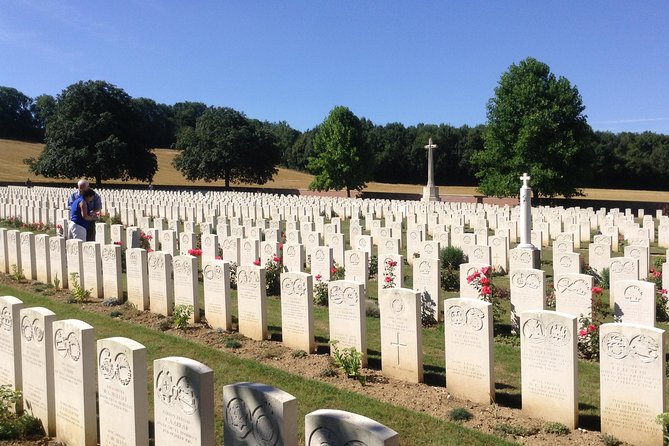
You’ll spend about 45 minutes here, at the world’s largest Commonwealth War Graves Commission cemetery (as described in the tour info). The numbers are stark: 12,000 soldiers buried, with only 3,000 names. That difference—between total burials and named graves—helps explain the scale of chaos and loss.
The day also connects the cemetery to hero stories: two Australian VC recipients are buried here.
What I like about this stop on a private tour: you aren’t just asked to feel something. You get help reading the structure—how these markers represent people who were counted, identified, and also those who weren’t.
Possible drawback: it can feel long if you’re already emotionally drained by earlier stops. But the time allotment here usually gives you space to slow down without feeling you’re “done” too fast.
John McCrae’s site and the poem that put the war into words
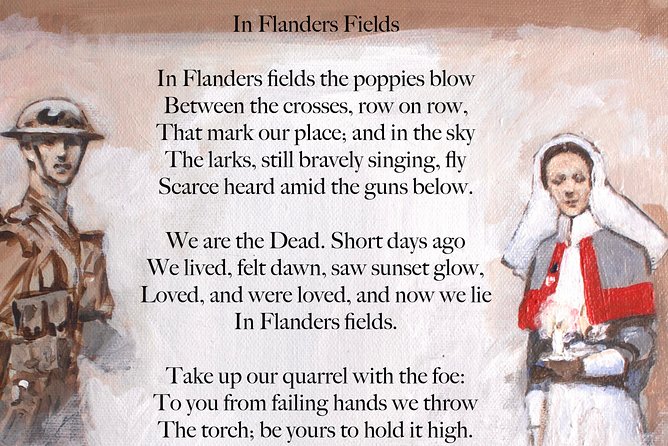
Next is the John McCrae site (about 30 minutes). You’ll see the hospital site where Lt Col John McCrae composed the poem In Flanders Fields.
This is where the memorial tone becomes literary. You’re not only looking at names and dates; you’re standing near the setting where the war found its most quoted language.
If you’re the type who likes connecting art to place, this stop often lands hard. If you’re tired of emotion by this point, it may feel like you need a pause afterward. Either way, the stop is short enough to keep the day moving.
Menin Gate Memorial: 55,000 missing names and the story behind it
You then go to the Menin Gate Memorial (about 20 minutes). Here you’ll hear how the Menin Gate came about, plus stories behind the 55,000 names listed for the missing.
This is a classic WW1 site, but the value isn’t just the size. It’s the way the guide helps you understand what the memorial represents: the gap between the men who were never recovered and the records that had to stand in for them.
A small tip: one of the reviews mentioned that if timing allows, you might be able to stay for the Last Post. Whether you can depends on how the day runs, so if that matters to you, tell your guide early and keep an eye on the schedule.
Sanctuary Wood Museum: original trenches where the past stays physical
Finally, you reach Sanctuary Wood Museum (about 40 minutes), where admission is included.
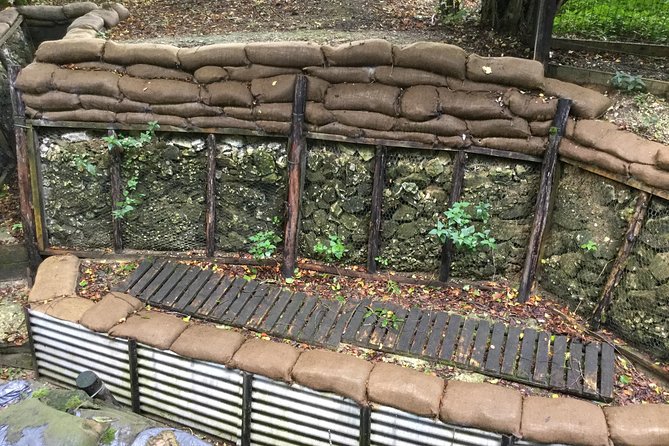
This is described as offering unique original First World War trenches. The big advantage here is that you’re not just reading about trench systems—you’re in them, looking at how the space was built for survival and control.
Museums can sometimes feel “behind glass.” In this case, the point is that the trenches themselves do the teaching. It’s also a good end to the day because it gives you a different kind of closure. After cemeteries and memorial names, you come back to the lived working spaces where people spent their days.
Who should book this private tour around Ypres?
This is a great fit if:
- you want a private guide who can tailor the day (including family history connections),
- you’re serious about understanding the WW1 story around Passchendaele and the Australian role there,
- you like battlefield sites that connect maps to real terrain—craters, bunkers, trenches, and memorial design,
- you prefer a respectful pace with time to ask questions.
It might be less ideal if:
- you’re not comfortable with heavy subject matter (this day includes cemetery visits and highly sensitive historical sites),
- you hate long days without lunch plans,
- you want a more relaxed, sightseeing-only approach.
Should you book this private WW1 tour?
If you’re going to do one big WW1 day around Ypres, this has a strong case. The itinerary focuses on specific places tied to the fighting and remembrance chain—from Messines Ridge and the Christmas Truce scene, through the Australian advance positions, to Tyne Cot and Menin Gate—and it ends with Sanctuary Wood trenches where the war becomes physical again.
The best part is the guide experience. The reviews repeatedly point to Søren as the key ingredient: deep detail, strong respect for the material, and a helpful sense of humor that doesn’t break the tone. If you book, go in with one or two questions you genuinely want answered. A private day like this rewards that.
If you’d like, tell me where you’re starting from (Ghent, Bruges, Lille, Arras, or somewhere else nearby) and whether you’re traveling solo or as a pair/family, and I’ll help you decide if the schedule and cost look like a good match.
FAQ
How long is the Ypres WW1 private tour?
It’s listed as approximately 9 hours.
What’s included in the tour price?
The tour includes bottled water, a mobile ticket, and guided visits. Admission is noted as free for most stops, and admission for Sanctuary Wood Museum is included.
Is lunch provided?
No, lunch isn’t included.
Do they pick up from your hotel?
Yes. Pickup is offered from hotels or B&Bs in a 66 km radius of Ypres, including Ghent Dampoort Station (for Ghent pickup), and pickup options are listed for Lille and Arras.
Is the tour private?
Yes. It’s a private tour/activity, and only your group participates.
What language is the tour offered in?
The tour is offered in English.
Are tickets required for the stops?
For most stops, admission is listed as free. Sanctuary Wood Museum has admission included.
Is the tour suitable for most travelers?
The information says most travelers can participate.
Are there any rules on cancellation or refunds?
Free cancellation is available up to 24 hours in advance for a full refund. If you cancel less than 24 hours before the start time, the amount paid won’t be refunded.