REVIEW · MEXICO CITY
The Best of Santa Maria de la Ribera
Book on Viator →Operated by Eat Mexico Culinary Tours · Bookable on Viator
Santa María la Ribera tastes like a secret you can share. This small-group food tour takes you into an old neighborhood with turn-of-the-century character and guides you through several working local spots, not tourist-friendly standbys. I especially like that the pace makes room for real conversations, not just scarfing food and moving on.
Two things I really like: first, you’ll build your own flavor at a local garden by making herb-infused Mexican salt, then use that kind of knowledge immediately on what you’re eating. Second, the guide experience is more than recipes. With Nico García leading, you get context that connects food to daily life and the neighborhood’s resilience.
One possible drawback: you’re not just tasting food, you’re also taking in alcohol-based drinks (like pulque and a microbrew or mezcal are included), and it’s a walking-and-snacking style tour. If you’re sensitive to strong flavors or you don’t want fermented or alcoholic drinks, plan ahead.
In This Review
- Key points worth knowing
- Santa María la Ribera: The Neighborhood Meal Tour People Miss
- Price and Food Value: How $122.46 Works Out in Real Life
- Timing and Where You’ll Start (and Finish) at 1pm
- Stop 1: Making Herb-Infused Mexican Salt in a Local Garden
- A Working Tamales Factory with 20+ Varieties Daily
- Market Stroll: How Local Markets Feel Before You Even Sit Down
- Neighborhood Cooking School and Restaurant: Food as Opportunity
- The No-Sign Pulquería with Swinging Saloon Doors
- Landmarks and Buñuelos: A Sweet Finale That Makes Sense
- Nico García’s Guidance: More Than Tasting Notes
- What You’ll Actually Eat and Drink (So You Can Plan Your Day)
- Who Should Book This Tour (and Who Might Not)
- Should You Book The Best of Santa María la Ribera?
- FAQ
- How long is The Best of Santa María la Ribera tour?
- Where does the tour start and end?
- What’s included in the price?
- What’s the group size?
- Is the tour offered in English?
- Do I need to bring anything for the tour?
- Is free cancellation available?
Key points worth knowing
- Small group limits (max 8) make it feel personal, with time for questions and proper food explanations
- Herb-infused salt making at a neighborhood garden gives you a hands-on “chef skill” you can reuse at home
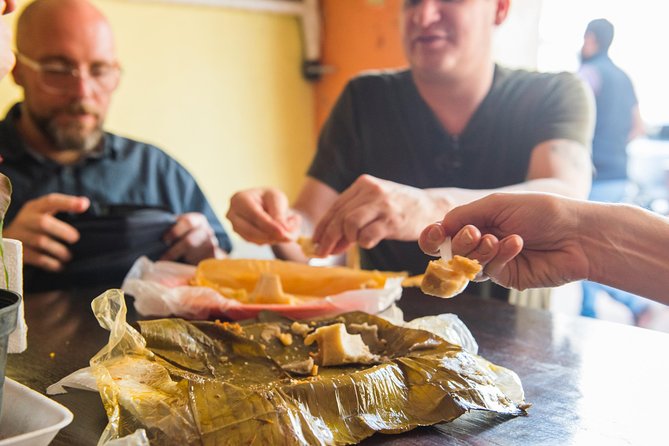
- A working tamales factory with 20+ varieties daily means you’re tasting real production, not leftovers
- A no-sign pulquería with swinging saloon doors brings you to a place that’s been part of the community for over 100 years
- You’ll finish with buñuelos plus included drinks like agua fresca and coffee or tea
Santa María la Ribera: The Neighborhood Meal Tour People Miss
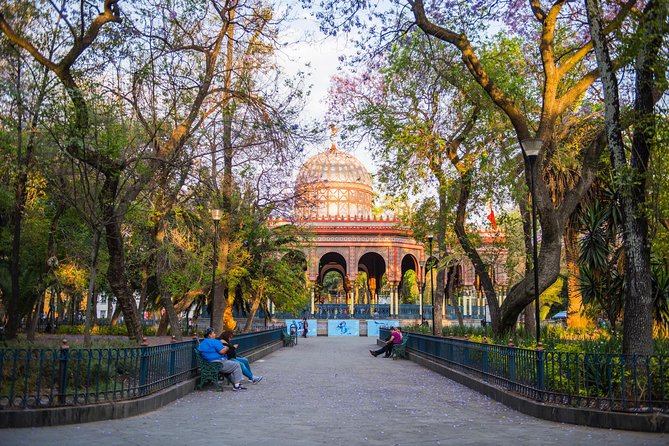
Santa María la Ribera is one of those parts of Mexico City that rewards you for slowing down. The area was founded in the 1860s and still keeps a turn-of-the-century feel, with local rhythm that’s easy to spot once you’re walking there. This matters because food tours often fail when they only show what’s already designed for visitors. Here, you’re moving through a lived-in neighborhood.
The big win is the mix of places you get access to. You’re not only eating. You’re also seeing the spaces that create the food culture: a market stroll, a cooking school with a community mission, a long-running pulque spot, and even a century-old geology museum landmark. It’s a smart way to understand how a neighborhood’s identity gets baked into what people eat and drink.
And yes, you’ll eat a lot. The tour is built around that idea, so come hungry and keep your schedule loose around the tour time.
You can also read our reviews of more tours and experiences in Mexico City.

Price and Food Value: How $122.46 Works Out in Real Life
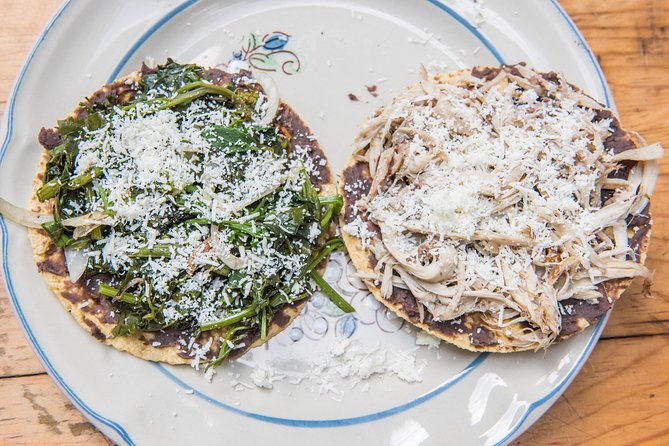
At $122.46 per person for about 3 hours 30 minutes, this is a mid-range price for a food tour. But the value comes from how much you actually receive.
Here’s what helps justify it:
- You get as much food as you can eat, designed to add up to the equivalent of a large breakfast and lunch
- Included drinks aren’t just water. You get one agua fresca plus one coffee or tea at the end
- You also get a generous taste of pulque
- And there’s one Mexican microbrew or mezcal included
So you’re paying for guided access and multiple tastings, not just a single restaurant stop. You’re also paying for somebody to translate what you’re seeing—especially around pulque and tamales, which have cultural context that’s hard to pick up on your own quickly.
One practical note: transport to and from the meeting and end points is not included. That’s normal for walking tours in Mexico City, but factor it in so you’re not surprised.
Timing and Where You’ll Start (and Finish) at 1pm
This is a 1:00 pm start, and the tour runs about 3 hours 30 minutes. The meeting point is at Alameda de Santa María, on Calle Salvador Díaz Mirón (Santa María la Ribera). The tour ends at Restaurante El Estanquillo El 32 on Dr. Enrique González Martínez 32, in the same neighborhood.
I like that the end point is a family-run restaurant/store setting. It gives you a natural “landing spot” where you can grab something extra if you want, without the awkward feeling of being dropped in the middle of nowhere. Also, it’s close to public transportation, so getting there is easier than with some more remote tours.
The tour runs as a small group (maximum of 8). In a case shared through past groups, the experience has also operated with a very small size (around four people), which is why this doesn’t feel like you’re being rushed through a checklist.
Stop 1: Making Herb-Infused Mexican Salt in a Local Garden
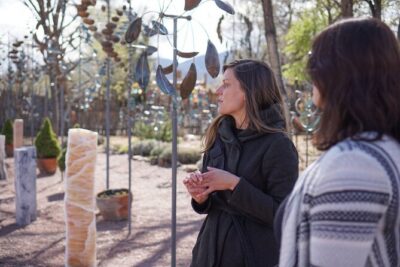
Your first tastings land you in Santa María la Ribera right away, starting with a local garden stop. Here’s the hands-on part: you’ll make your own herb-infused Mexican salt.
This is one of the best moments on a food tour because it teaches you a skill, not just a flavor. When you learn how salt can be infused and balanced with herbs, you start noticing what people are trying to do with seasoning elsewhere. Later, when you taste tamales or market bites, you’ll be more tuned into the “why,” not just the “wow.”
What to expect: a guided setup, time to make your own blend, and the kind of small-group attention that helps if you want to ask what herbs get used and how the seasoning changes the taste.
If you’re the type who takes food seriously (or just hates eating blindly), you’ll probably enjoy this part most.
A Working Tamales Factory with 20+ Varieties Daily
Next comes a working tamales factory. This isn’t a place that only sells tourists a few pretty choices. It offers more than 20 varieties daily, which is a major difference in experience. You get to taste the breadth of tamales as a real production day, not a small display.
The practical value here is simple: tamales in Mexico City can vary a lot by region, filling, and seasoning approach. When you taste multiple types in one setting, you learn faster. And because it’s a factory environment, you also get a sense of the scale and routine behind what you’re eating.
A small caution: tamales can be rich. If you have a sensitive stomach, move through the tastings at a comfortable pace and don’t force it. The tour is designed for you to eat a lot, but you still control your speed.
Market Stroll: How Local Markets Feel Before You Even Sit Down
After the tamales factory, you’ll do a quick stroll through the local market area. The point isn’t to throw you into a long shopping mission. It’s to show you how a traditional city market looks and feels in day-to-day life.
Markets are where you get the “texture” of a neighborhood: produce, small vendors, rhythms of customers, and that everyday logic of what people are buying now. Even if you don’t purchase anything, it helps you understand why certain ingredients show up repeatedly in local cooking.
I like market stops like this when they stay short and sensory. You get the grounding, then you move back into tasting.
Neighborhood Cooking School and Restaurant: Food as Opportunity
One of the more meaningful stops is a neighborhood cooking school and restaurant that helps locals who want to start their own food businesses. This is not just a feel-good story. It’s directly tied to why you’re eating what you’re eating.
When a community invests in food education and small business support, you tend to see more variety and more stability in local food culture. The result is that what you taste isn’t just a product—it’s part of a learning and livelihood system.
The drawback here is subtle: if you want pure “eat and walk” with zero human context, you might find this stop slightly more talk-heavy than other tastings. But if you enjoy understanding how food networks work, this is where the tour earns extra points.
The No-Sign Pulquería with Swinging Saloon Doors
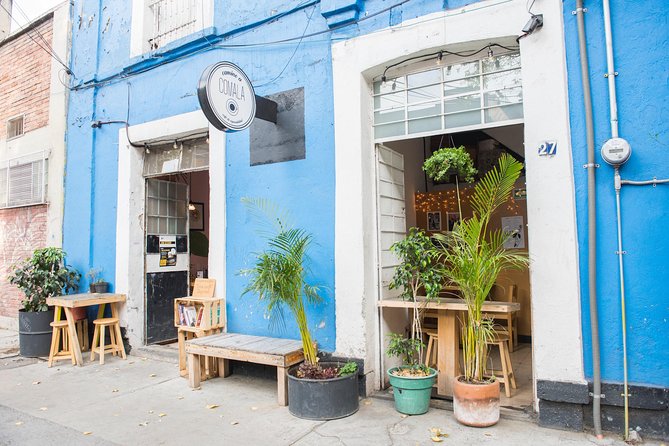
Then you hit pulque territory. The tour takes you to a hidden pulquería where there’s no sign to lead you in. You’ll notice the vibe fast: swinging saloon doors and a place that has drawn neighborhood residents for more than 100 years.
Pulque is one of those drinks people either instantly love or need time to get used to. The experience here gives you a generous taste, and it comes with context: pulque traces its roots back to prehispanic times. Even if you’ve tried it before, this is a solid chance to taste it in a setting where it’s part of everyday tradition, not a novelty.
Practical tip: pulque can taste tangy or earthy depending on the batch and how it’s served. Take small sips at first so you can adjust. And if you’re sensitive to fermentation flavors, just go slower.
Landmarks and Buñuelos: A Sweet Finale That Makes Sense
To balance all the eating, you also see neighborhood landmarks, including a century-old geology museum. That kind of stop keeps the tour from becoming a nonstop food blur. It also helps you connect food culture to place—because neighborhoods are shaped by more than taste. People live, work, and build identity in specific physical surroundings, and landmarks like this remind you the area isn’t just a backdrop.
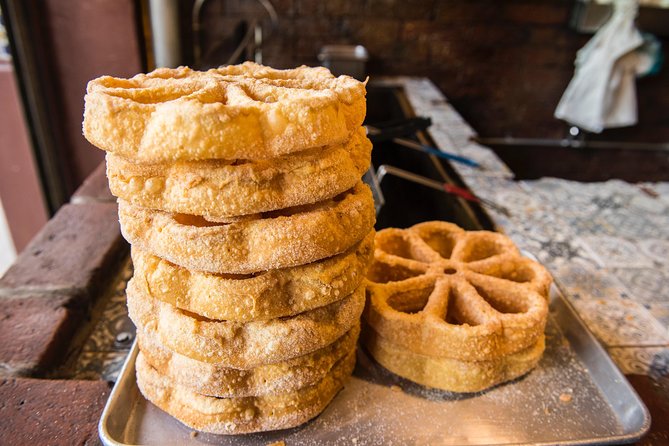
Then you finish with buñuelos—crunchy fried dough topped with sugar syrup. This is the kind of sweet that makes the last part of a food tour feel satisfying instead of heavy. It’s also a classic choice because the crunch holds up well and the sweetness feels like a proper end-of-tour treat.
If you’re the type who loves ending with something warm, crisp, and shareable, you’ll probably enjoy the buñuelos moment.
Nico García’s Guidance: More Than Tasting Notes
This tour is designed around what your guide can do with food, and Nico García is the culinary guide on this experience. The main thing you’ll notice is how he links food with history, culture, and community resilience.
That matters because many food tours stop at: Here’s what it is, here’s how it tastes. This one adds the layer of why. When you learn where ingredients fit in local routines, you start seeing the neighborhood as something more than a series of stops.
Also, the small group format supports real Q&A. With a cap of 8 (and small-group sizes like four in some runs), it’s easier to ask questions and get answers that fit what you’re actually eating.
The tour is offered in English, which is helpful if you want context without relying on translations you can’t control.
What You’ll Actually Eat and Drink (So You Can Plan Your Day)
You’re looking at an experience built around multiple tastings plus included drinks. Based on the included items, you can plan your day like this:
- Expect multiple food stops with enough portions to feel like a large breakfast and lunch combined
- You’ll get one agua fresca
- You’ll get coffee or tea at the end
- You’ll receive a generous taste of pulque
- You’ll get one Mexican microbrew or mezcal
So the tour is more like a full meal outing than a light snack crawl. If you’re coming from lunch already, adjust your expectations—or eat light beforehand.
One more thing: water between stops isn’t described as included beyond what’s listed. So if you like having water on you, bring a bit of flexibility.
Who Should Book This Tour (and Who Might Not)
This tour is a good fit if you:
- want to eat a lot and learn as you go
- like neighborhoods with lived-in character, not only major sights
- enjoy pulque and want to try it in a long-running local setting
- prefer small groups where you can ask questions and get real guidance
It may not be your best match if you:
- don’t want to taste fermented drinks or alcoholic beverages (pulque and microbrew/mezcal are included)
- prefer a mostly indoor, minimal-walking experience
- need a tour that includes transport, because getting to the meeting point and back is on you
One more reality check: it requires good weather. If conditions are poor, the tour can be canceled and you’ll be offered a different date or a full refund.
Should You Book The Best of Santa María la Ribera?
I’d book it if you want a smart mix of food, neighborhood texture, and guided context. The value is in the combination: hands-on salt making, a real tamales factory with lots of varieties, a cooking school tied to local opportunity, and a pulquería experience with real longevity.
It’s also a good choice if you’re tired of standard food-tour routes and want Santa María la Ribera, not just the usual highlights.
I’d skip it if your ideal day is “one quick meal and done,” or if you’d rather not include pulque and an alcoholic drink in your tour plan.
If you’re flexible on timing, show up hungry, and like learning through what you taste, this one is a strong bet.
FAQ
How long is The Best of Santa María la Ribera tour?
The tour runs for about 3 hours 30 minutes (approx.).
Where does the tour start and end?
It starts at Alameda de Santa María on Calle Salvador Díaz Mirón, Santa María la Ribera. It ends at Restaurante El Estanquillo El 32 on Dr. Enrique González Martínez 32, in Santa María la Ribera.
What’s included in the price?
You get as much food as you can eat (enough for a large breakfast and lunch combined), one agua fresca, one coffee or tea at the end, a generous taste of pulque, and one Mexican microbrew or mezcal.
What’s the group size?
The tour has a maximum of 8 travelers.
Is the tour offered in English?
Yes, it’s offered in English.
Do I need to bring anything for the tour?
Transport to and from the meeting and end points isn’t included, and additional personal beverages aren’t included. You may want to plan for getting to the meeting point on your own.
Is free cancellation available?
Yes. You can cancel up to 24 hours in advance for a full refund. If you cancel less than 24 hours before the start time, the amount paid is not refunded.