REVIEW · MONTREAL
Christmas Walking Tour in Old Montreal
Book on Viator →Operated by Guidatour · Bookable on Viator
Old Montreal at Christmas hits different in the cold air. This tour pairs holiday lights and decorations with real stories about how Montreal has celebrated for centuries, from French-era customs to what you can see today. I especially liked how it feels like a guided stroll through the city’s best-known winter scenes, not a rushed checklist.
I also love the stop at the World Trade Centre for its Santa Claus figurine exhibit. Seeing dozens of themed Santas in one place gives your walk a fun anchor point, and it works for kids and adults even if you’re not the type who hunts down every decoration.
One thing to keep in mind: the title says Christmas, but you’ll also spend a good chunk on Old Montreal history and architecture. If you’re hoping for a purely Christmas-only show, expect a mix, and dress for winter—sidewalks can be slippery.
Key things I’d mark on your map
- Victoria Square start puts you right in the thick of Old Montreal’s holiday mood.
- World Trade Centre Santa exhibit is a great 15-minute break and it’s free to enter.
- Bonsecours Market time lets you browse Christmas gifts and local crafts without feeling rushed.
- Small group (up to 16) helps you keep questions from getting lost in the crowd.
- Weather reality check: it’s a walking tour, so wear grippy shoes and layers.
In This Review
- Victoria Square to Old Montreal: why the timing and setting matter
- World Trade Centre Santa exhibit: a quick stop that makes the whole walk better
- Bonsecours Market at the end: shopping, gifts, and the best kind of souvenir time
- New France and European holiday traditions on real Montreal streets
- What the 1.5 hours actually feels like: pacing, weather, and the cold reality
- Group size and guide energy: why your experience can feel personal
- Price and value: $26.27 for a themed guide, free exhibits, and a market ending
- Who should book this Christmas walk in Old Montreal
- Should you book this tour? My practical take
- FAQ
- How long is the Christmas walking tour in Old Montreal?
- Where is the meeting point?
- Where does the tour end?
- What are the main stops during the tour?
- Is there an admission fee for the Santa Claus exhibit or Bonsecours Market?
- Is the tour offered in English?
- How many people are in each group?
- Is the tour mostly outside?
- Is the tour suitable for people who need accessible support?
- Can I get a full refund if I cancel?
Victoria Square to Old Montreal: why the timing and setting matter
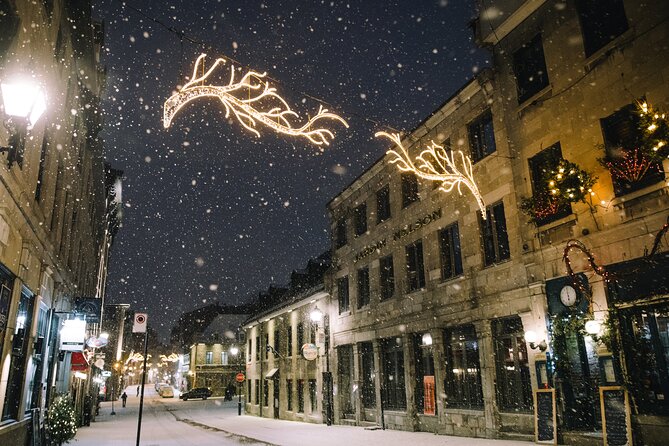
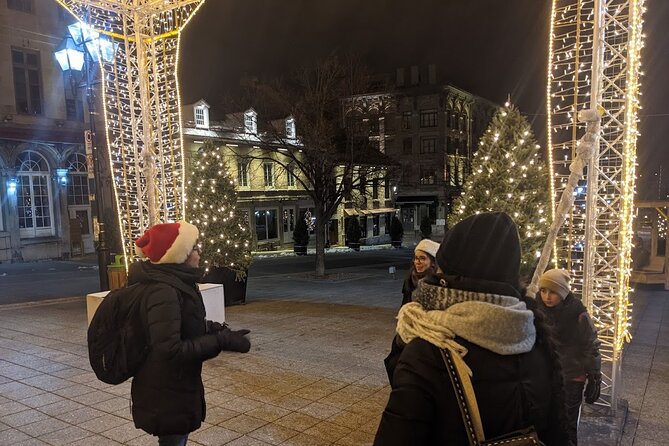
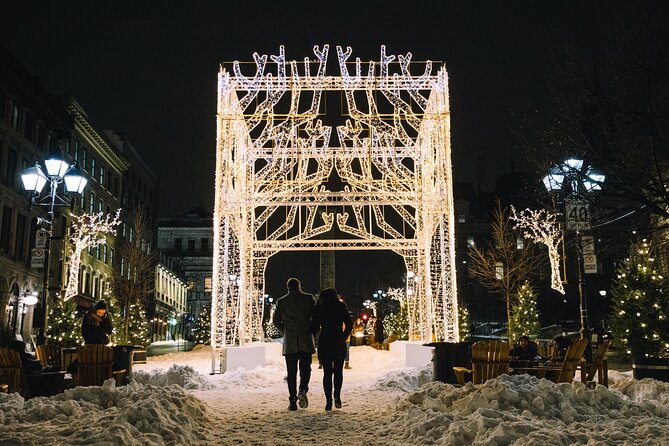
You meet in the heart of downtown at 360 Rue Saint-Jacques, where Victoria Square sets the tone fast. The area is the kind of place you instantly recognize from postcards, but at night in winter it turns into something more personal: streetlights, holiday glow, and the sense that you’re stepping into the oldest streets of the city.
This is a smart start because it gives you context before you wander. Your guide helps you make sense of what you’re seeing—why certain buildings look the way they do, and why holiday traditions in Montreal keep echoing back to European roots. And along the way, you’re not staring at decorations in isolation; you’re learning how Montreal’s “winter celebration” became its own cultural blend.
I like that the tour moves at a pace that feels conversational. You’re walking, but you’re also getting the kind of background that makes the decorations make sense, instead of just being pretty lights you pass by.
World Trade Centre Santa exhibit: a quick stop that makes the whole walk better
The tour’s first highlight is the Montreal World Trade Centre and its Santa Claus display. You’ll spend about 15 minutes, and admission is free, which is a rare win for a holiday-themed stop.
What makes this exhibit work is variety. You’re not looking at one standard Santa pose—you’re seeing lots of figurines styled differently, arranged in a way that makes you want to slow down and compare. For families, it’s an easy moment to keep everyone engaged. For couples, it’s a fun, light-hearted break from the cold while still staying on theme.
Guides have a way of turning this stop into more than photo ops. In past groups, I’ve seen guides like Matt and Matthieu bring energy and stories that connect the exhibit to the bigger idea of how traditions travel and change over time. Even if you only catch a few of the small details, it’s still a memorable centerpiece for the evening.
Practical tip: this is a short stop, so don’t try to do it like a museum visit. Take a couple of minutes to browse, then rejoin the group. You’ll get more out of the walk that follows.
You can also read our reviews of more tours and experiences in Montreal.
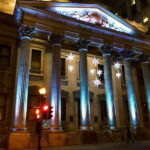
Bonsecours Market at the end: shopping, gifts, and the best kind of souvenir time
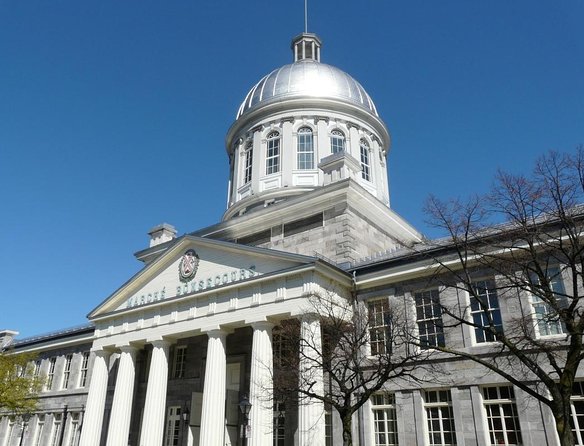
Your tour finishes at Bonsecours Market at 350 Rue Saint-Paul E, where you get around 30 minutes to browse. This matters more than you’d think. Ending here means you can convert the holiday mood into actual plans: a gift for someone, a small keepsake for yourself, or a unique local item you can’t easily order online.
Bonsecours Market has been Montreal’s public market for more than 100 years, and it’s still doing what it does best—bringing together goods, crafts, and local makers under one domed roof. During your stop, you can look through Christmas items and also pick through things like local artwork, jewelry, clothing, furniture, and kitchenware.
A fair warning: market shopping can be hit-or-miss depending on the season and day. On some occasions, you might find certain craft or shop areas closed when you reach them. It’s not the fault of the tour itself, but it is something to stay flexible about—especially if you’re traveling early in the season and expecting every holiday display to be fully running.
Still, even when you’re not buying, Bonsecours is a strong ending point. The building itself is part of the experience, and you get a warm, covered place to slow down after all the winter walking.
New France and European holiday traditions on real Montreal streets
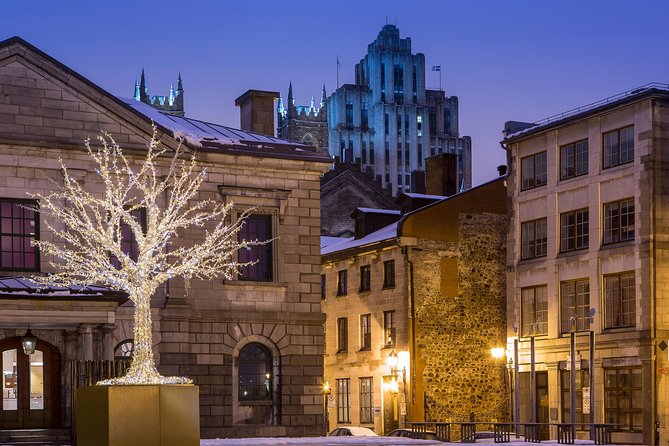
One of the most useful parts of this tour is how it connects modern Montreal to older European holiday customs. The stories center on New France, when the region was colonized by France in the 1500s, and how those practices and influences shaped what Montreal looks like today.
You don’t need a history degree to enjoy this. Your guide ties it back to visible things—streets, buildings, and the way religious and cultural traditions affected the city’s winter rhythms. Some guides are especially good at mixing humor with facts, and you may get that balance from leaders like Francois, Stamatia Kafoutis, or Dave, who have been praised for blending history with lively details.
If you like walking tours where the guide helps you interpret the scenery, this is the right style. You’ll come away knowing why the city’s holiday feel is not just imported—it’s adapted, reshaped, and still visible in the places you visited.
If your goal is strictly shopping and lights, the historical explanations might feel like extra. But if you’re the type who likes to understand what you’re seeing, the time spent learning pays off.
What the 1.5 hours actually feels like: pacing, weather, and the cold reality
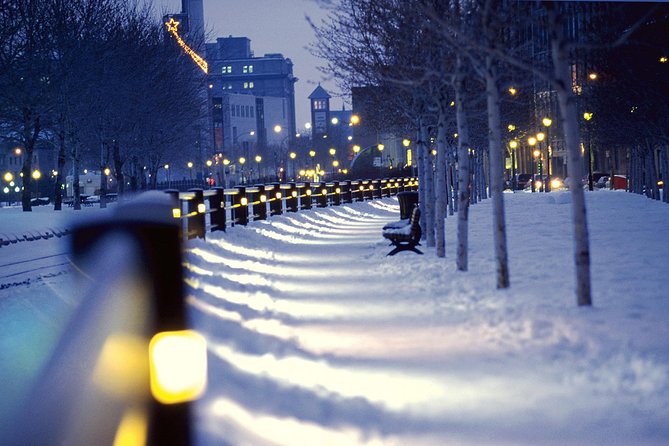
This is a 1.5-hour walking tour, and the key word is walking. Sidewalks can be slippery, especially at night in winter, so wear shoes with grip. I also recommend you treat layers like a survival plan: warm base, a mid-layer, and a coat you can move in.
The cold is not a small detail here. Reviews mention brutal wind and very low temperatures, and in those situations guides have sometimes found warmer interiors when they can. That said, you should still expect most of the experience to be outdoors for a significant stretch.
Also pay attention to pace. This kind of tour works best if you’re comfortable keeping up for the full duration. Some people have said it’s not for everyone if you want a slow stroll with long stops to linger.
My simple advice: if you’re traveling with kids, ask yourself honestly whether they can handle a steady pace for 90 minutes in winter. If not, you may prefer a more flexible, stop-and-start style tour or focus on exploring Old Montreal on your own earlier in the day.
Group size and guide energy: why your experience can feel personal
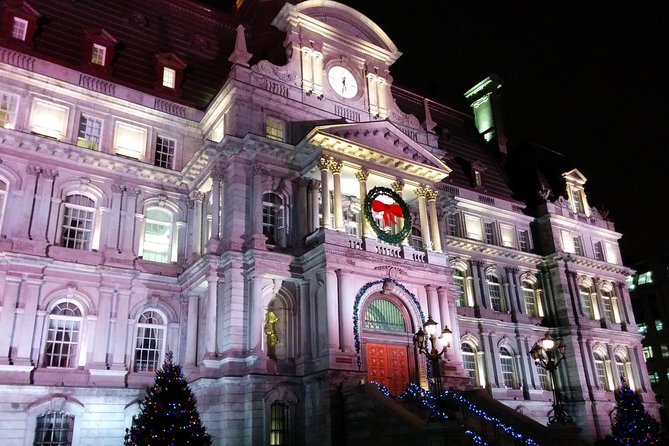
The group is capped at 16 travelers, and that’s a big deal. Smaller groups mean your guide can address questions, keep the story flowing, and notice who needs a slower moment when conditions are rough.
Guide quality is a standout theme. Past departures have included guides such as Matt, Matthieu, Francois, Dave, and Stamatia Kafoutis, and the feedback points to energy, patience, and clear storytelling. I love tours where the guide doesn’t just read facts—they shape the walk into a sequence you remember.
One more thing: meeting points matter. There’s at least one caution in the feedback about making sure you’re at the correct start location on your ticket. In Old Montreal, it’s easy to wander a block or two without realizing it, especially when you’re distracted by lights. Give yourself a few extra minutes to get settled before the group lines up.
Price and value: $26.27 for a themed guide, free exhibits, and a market ending
At $26.27 per person for about 1.5 hours, you’re paying for a structured, guided route through some of Old Montreal’s most recognizable winter sights—plus the benefit of a pro telling you what to look for.
The math improves because your Santa stop and market entry are free. You’re not paying separate admission fees to complete the core experience. And because the tour is only 90 minutes, you avoid the all-evening commitment that can feel heavy in winter.
Is it worth it? For most people who want Christmas ambiance with context, yes—especially if you’re short on time. It’s also a good deal if you’d otherwise be paying for a guided visit to one sight and still wanted to see more of the area.
If you’re expecting a pure Christmas pageant, it may not fully match your expectations. The strongest value is for people who like the mix: lights and decorations, plus an explanation of how Montreal’s holiday traditions developed and what’s still visible today.
Who should book this Christmas walk in Old Montreal
This tour is a solid fit if you want:
- A guided way to understand Old Montreal at Christmas, not just a self-guided lights hunt
- A short evening activity that doesn’t run too late—good for travelers who don’t want to freeze for hours
- Time with a themed highlight like the Santa figurine exhibit and a practical ending at Bonsecours Market
It may be less ideal if:
- You’re only interested in Christmas decorations and want minimal history talk
- You need lots of interior time or long breaks
- You strongly prefer slow, wandering pacing with frequent stops
My best guess: couples, families, and first-timers in Montreal will get the most out of it. Even if you’ve been to Old Montreal before, the Christmas framing and the Santa exhibit can make it feel new again.
Should you book this tour? My practical take
If you’re visiting Montreal during the holiday season and you want a dependable, small-group way to see Old Montreal with guidance, I’d book it. The combination of a central meeting spot, a fun Santa exhibit, and a meaningful ending at Bonsecours Market is exactly the kind of itinerary that makes winter feel organized instead of chaotic.
Book it if you’re open to history woven into Christmas. Don’t book it if you want mostly decorations with minimal explanation, or if you struggle with outdoor winter walking.
FAQ
How long is the Christmas walking tour in Old Montreal?
It runs about 1 hour 30 minutes.
Where is the meeting point?
You meet at 360 Rue Saint-Jacques, Montréal, QC H2Y 2N1, Canada.
Where does the tour end?
The tour ends at Bonsecours Market, 350 Rue Saint-Paul E, Montréal, QC H2Y 1H2, Canada.
What are the main stops during the tour?
You visit the Montreal World Trade Centre Santa Claus exhibit and then end at Bonsecours Market.
Is there an admission fee for the Santa Claus exhibit or Bonsecours Market?
No. Admission tickets for both stops are listed as free.
Is the tour offered in English?
Yes, it is offered in English.
How many people are in each group?
The tour has a maximum of 16 travelers.
Is the tour mostly outside?
It is a walking tour, and you should expect to spend time outdoors. Sidewalks may be slippery and winter conditions can be tough.
Is the tour suitable for people who need accessible support?
Most travelers can participate, and service animals are allowed. The tour does note that sidewalks may be slippery.
Can I get a full refund if I cancel?
Yes. You can cancel up to 24 hours in advance for a full refund.