REVIEW · SEVILLE
Seville Former Jewish Quarter Walking Tour: Santa Cruz
Book on Viator →Operated by Amsterdam Guías & Tours · Bookable on Viator
Seville’s Santa Cruz tells stories fast. This former Jewish Quarter walking tour connects key corners you’d miss on your own with the people and events that shaped the neighborhood. I like how it keeps moving—a small group means your guide can answer questions without rushing—and I also think you should be ready for limited time, so it won’t turn into a full academic lecture.
My favorite part is the way the tour blends place-names, legends, and historical context into a walk you can actually follow. Guides such as Julio and Lara stand out in how they explain what you’re looking at, plus they cover the broader Jewish story in Seville—not just a list of stops. You can do it in English or Spanish, which makes the whole thing feel smoother.
At about 2 hours, it’s an efficient way to get bearings in the old center while learning why Santa Cruz mattered. Still, keep expectations realistic: the physical remnants are limited in places, so some of the experience is interpretation and storytelling rather than “look, there’s the original synagogue.”
In This Review
- Key highlights worth your time
- Walking in Santa Cruz: start at Plaza del Triunfo, then follow the story
- Plaza de la Alianza and the quiet geometry of old meetings
- Susona, Calle Susona, and the darker side of street legend
- Hospital de los Venerables and Casa de Murillo: art gives the story weight
- Callejón del Agua to Patio de Banderas: water, power, and palace walls
- Price and logistics: good value for an orientation-level historical walk
- Who should take this Santa Cruz Jewish Quarter walk?
- Should you book this tour? My honest take
- FAQ
- Do I need to buy entry tickets for the stops?
- How long is the Seville Santa Cruz Jewish Quarter walking tour?
- What languages are available?
- Where do we start and where does it end?
- How big is the group?
- What kind of ticket do I get?
- Can I cancel if my plans change?
- Are service animals allowed?
Key highlights worth your time
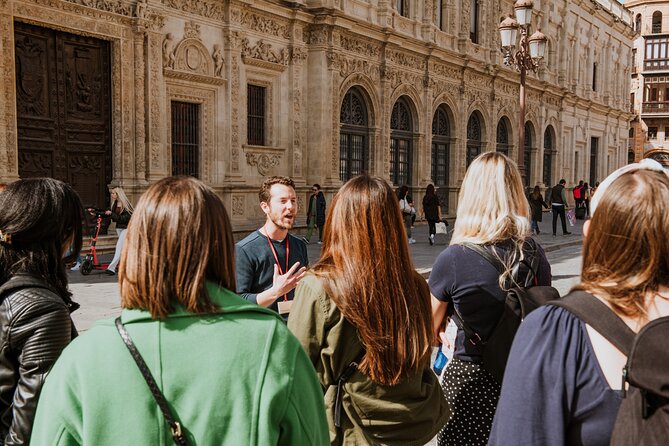
- Small group focus (max 15): you get more back-and-forth, not just a headset-style walk.
- Street-level Jewish history: you learn through squares and narrow lanes, not just big monuments.
- Great guide energy: names like Julio, Lara, Maria, and Anna come up again and again for clear explanations.
- Legends with historical framing: Susona, old disappearances on Calle Sierpes, and opera references like Rosina’s balcony.
- Arts stops that change the tone: Hospital de los Venerables and Murillo’s house add depth beyond the streets.
Walking in Santa Cruz: start at Plaza del Triunfo, then follow the story
You begin at Plaza del Triunfo, one of those Seville squares that feels like a “gateway” to the old city. It’s a good first stop because it sets the tempo: big, open space first, then you get pulled into the tighter lanes right after. That rhythm matters on a 2-hour walk—your brain needs an easy landing before the neighborhood turns into a maze of history.
From there, the tour shifts into the former Jewish Quarter’s core feel: quiet pockets, small monuments, and the kind of corners that don’t scream at you from the street. I like that your guide uses the geography as a teaching tool. When you’re standing where people once met or moved through courts, it’s easier to understand why the neighborhood’s social life mattered.
One practical plus: this is a walk through mostly outdoor streets and plazas, so it pairs well with a day when you’re already exploring Seville’s center. Wear shoes you trust on uneven stone—Santa Cruz is romantic, but it’s also very much real-life cobblestones.
And yes, you’ll cover a mix of lighter, even storybook moments and heavier history. That contrast is part of what makes the tour memorable: Seville doesn’t split those moods into separate attractions. It keeps them together.
You can also read our reviews of more tours and experiences in Seville.


Plaza de la Alianza and the quiet geometry of old meetings
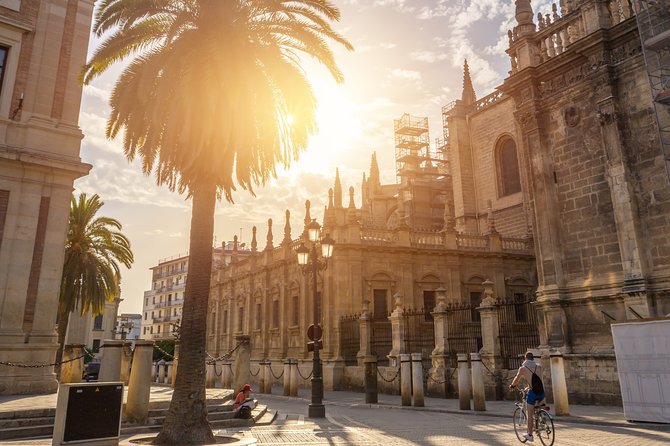
The next stop is the Fuente de la Plaza de la Alianza, tucked into Santa Cruz’s narrow-street world. Even if you don’t know what it “was,” you can feel why this kind of place worked for human stories. Small squares act like outdoor rooms: people gather, talk, exchange news, and—when politics turn—people get caught up fast.
Your guide uses this moment to talk about how power and status played out in the neighborhood. The point isn’t just trivia about nobles and intrigue. It’s understanding how ordinary street life was connected to higher decisions. In a city like Seville, the layout of space often mirrors the structure of society.
Then you move to Plaza de Doña Elvira, another charming corner where legends cling to the architecture. This is where the tour earns its nickname as a “story walk.” Your guide can explain how local memory keeps certain figures alive, even when the details have blended over centuries.
Here’s the thing I’d tell you to watch for: don’t treat these stops as random pretty spots. Look up at the buildings, then look down at the street turns. Your guide is showing you how Santa Cruz’s shape guided movement—and how that movement mattered during good times and bad.
Susona, Calle Susona, and the darker side of street legend
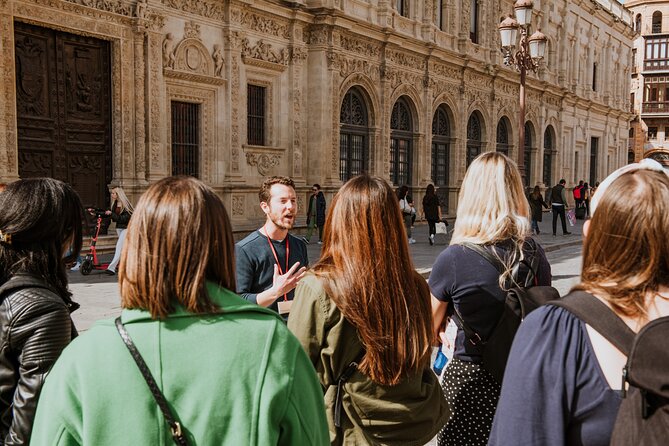
Calle Susona is named for a tragic tale tied to a young Jewish woman—love, betrayal, and the kind of local story that gets repeated until the name becomes part of the street itself. It’s the sort of stop that can feel dramatic, but the tour handles it as a window into how people remembered trauma.
Then comes Calle Sierpes, one of Seville’s iconic lanes. This is where the tour shifts from romance to unease. The street is famous, but your guide points out the darker layer: old urban legends about disappearances, and the way fear can travel down a neighborhood like a rumor.
Why I think this works on the first-time visitor: legends feel vague until you connect them to the lived reality behind them. Your guide’s job is to say, in plain terms, what might be story—and what is the shape of what people experienced. Some guides (like Julio) are especially praised for giving both the legend and the historical truth of what’s being referenced.
And then you get the opera wink: Rosina’s Balcony. The idea is fun, but it also reinforces something important—Santa Cruz’s identity didn’t disappear. Art and popular culture kept borrowing from the neighborhood’s atmosphere.
This part of the walk is the most emotionally charged for many people, so if you want to keep it comfortable, pace yourself. Take a breath in the small squares, and ask questions if anything feels too fast.
Hospital de los Venerables and Casa de Murillo: art gives the story weight
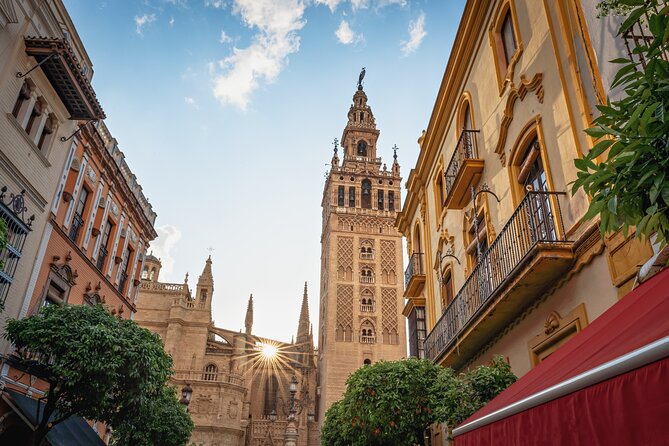
A walking tour focused on the Judería can sometimes feel like a string of signs. This one breaks that pattern by stepping into the orbit of Seville’s Golden Age art and architecture.
Hospital de los Venerables is the kind of Baroque stop that changes how you feel about the neighborhood. Even though it’s not a “Jewish site” in the simple way some visitors might expect, it adds context: Seville’s religious and cultural power shifted over time, and the city’s buildings reflect those shifts. Your guide uses the site to talk about the past roles of the building and the sacred art connected to it.
Then you reach Casa de Murillo, linked to Bartolomé Esteban Murillo, a painter strongly associated with 17th-century Seville. The value here is practical: instead of only talking about what happened to Jewish communities, you start seeing Seville as a whole machine of culture—painting, patronage, and public memory.
From a reader’s perspective, this is where you’ll benefit if you like history that touches daily life. Art isn’t just decoration; it’s evidence of what a city valued and what stories it chose to amplify.
If you’re hoping for very detailed, day-to-day “how life worked in the ghetto” explanations, note this: the tour’s structure leans toward key places and overall narrative. Some people loved the historical framing; a few felt it didn’t go far enough into everyday Jewish life. So if that level of detail is your top priority, consider pairing this with another resource or a deeper follow-up.
Callejón del Agua to Patio de Banderas: water, power, and palace walls
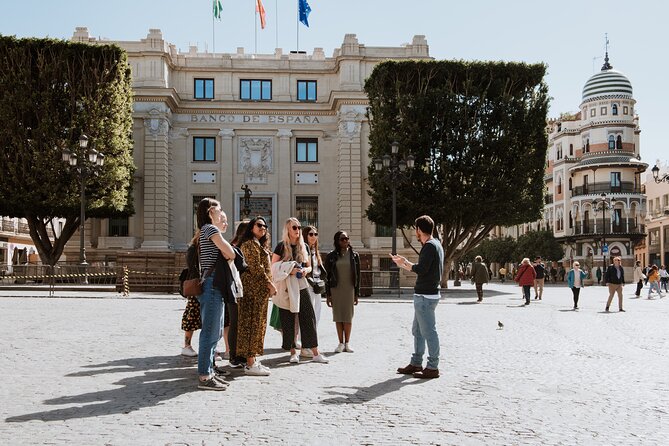
Callejón del Agua is a narrow, cooler passage where water once flowed from the Royal Alcázar. This stop works because it’s sensory. You don’t just hear about the past—you get a hint of why a place like this would matter. Water shapes movement, industry, and access. Even if you’re standing in a quiet alley today, your guide helps you picture how it connected different parts of Seville.
Then you end at Plaza Patio de Banderas, set behind Alcázar walls. Courtyards are where empires show their routines: ceremonies, power displays, and the slow evolution of a city across centuries. It’s a satisfying landing place because it reminds you Santa Cruz didn’t exist in isolation. It was part of a bigger system that included royalty, administration, and shifting control.
You’ll finish in a different “world” from where you started—still old Seville, but more palace-like in mood. That can help you connect the neighborhood story to Seville’s broader political story.
One more practical note: this part of the tour often feels like it gives your legs a final breather before you break off on your own. If you’re planning a later meal or museum visit, this ending spot is a good pivot point for continuing the day.



Price and logistics: good value for an orientation-level historical walk
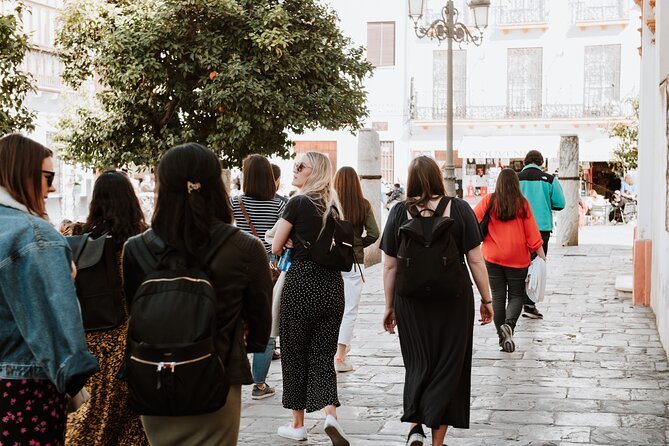
At about $18.02 per person and roughly 2 hours, this tour sits in the sweet spot for value. You’re paying for a guided interpretation of streets, squares, and cultural sites—exactly the kind of thing that becomes priceless when you’re trying to understand Seville beyond the postcard level.
A couple of logistical points that affect your enjoyment:
- It’s a mobile ticket experience, which keeps things simple.
- It runs in English or Spanish, so you can choose your comfort.
- The group caps at 15, which usually means you don’t get swallowed by the crowd.
- Most stops are free to access on the itinerary, so you’re not constantly paying extra to keep up.
Timing-wise, it’s booked about 24 days in advance on average, so if you’re traveling in peak season or on a busy weekend, don’t wait until the last minute.
Is it perfect? No tour at this length can cover every angle: some people wished for more on the Jewish community’s specific contributions to Seville society, while others wanted more on everyday ghetto life. But as an introduction that puts names, places, and themes into a coherent picture, it’s a strong deal.
Who should take this Santa Cruz Jewish Quarter walk?
You should strongly consider this tour if you:
- Want context fast—you want to leave knowing what Santa Cruz is and why it mattered.
- Like guides who tell stories while still pointing to the historical frame.
- Prefer small-group walking tours where you can ask questions and actually get answers.
It also works well for families, as long as the kids can handle a steady walk and some heavier themes. One reviewer even mentioned kids enjoying it, which tells me the tour has enough human story and humor to keep younger attention from wandering.
If you’re a history specialist chasing extremely specific primary details, you might find the pace too quick. The physical remains are limited in places, and the tour uses storytelling to bridge that gap. Think of it as a guided map of ideas and locations—not a full encyclopedia.
Should you book this tour? My honest take

If your goal is to understand Seville’s Jewish Quarter through the streets themselves, book it. The biggest win is the guide-led connection between place and story, especially with guides like Julio, Lara, Maria, and Anna who focus on making the neighborhood legible.
I’d skip it only if you know you want a very deep dive into daily Jewish life or a long, detailed breakdown of community contributions with lots of specific examples. This walk is better at explaining the overall narrative and guiding you to the spots that carry that narrative forward.
Bottom line: for the price, the small-group size, and the way the tour blends legend, history, and art stops, this is a smart way to spend an evening—or part of a day—in Santa Cruz.
FAQ
Do I need to buy entry tickets for the stops?
The itinerary stops list free admission at each location, and you’re paying for a guided tour rather than site-by-site entry.
How long is the Seville Santa Cruz Jewish Quarter walking tour?
It runs for about 2 hours.
What languages are available?
The guided tour is offered in English (and also Spanish).
Where do we start and where does it end?
It starts at Plaza del Triunfo and ends at Plaza de Santa Cruz (both in Seville’s old center).
How big is the group?
The tour has a maximum of 15 travelers.
What kind of ticket do I get?
You receive a mobile ticket.
Can I cancel if my plans change?
You can cancel for a full refund up to 24 hours in advance.
Are service animals allowed?
Yes, service animals are allowed.