Santa Fe makes more sense on this walk. This 2-hour, 15-minute guided stroll through downtown brings Spanish roots and modern life into focus, led by Santa Fe historian Ana Pacheco. You’ll link landmarks around the Plaza to Native, Spanish, Mexican, and American chapters of the city—without getting lost in facts.
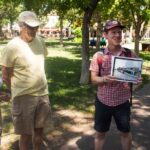
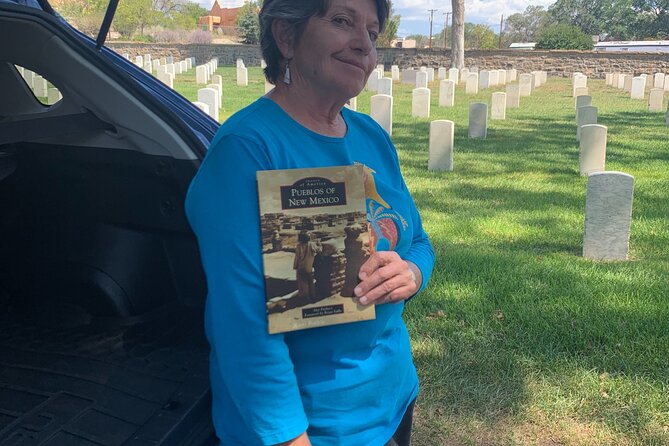
What I really like is the way Ana teaches. She’s a born-and-bred Santa Fe historian and author who tells stories with a sense of humor, and she also uses a binder of pictures while you walk. I also love the pacing: it’s longer than many walking tours, so you get time to ask questions and actually connect the dots from one site to the next.
One consideration: not everything is a timed stop you can count on for inside access. The Loretto Chapel is a privately run museum and the admission is not included, and the Cathedral Basilica doesn’t offer guided entry inside as part of the tour—so if you want the most church time, plan to go in on your own.
In This Review
- Key things that make this tour worth your time
- Walking Santa Fe’s timeline, from mission bells to WWII
- Start at the Cathedral Basilica: art, missions, and the Plaza vibe
- Small inside-access note
- 109 East Palace: the Manhattan Project checkpoint story
- Palace of the Governors: power in the same walls for centuries
- Loretto Chapel: the Miraculous Staircase, plus what to expect today
- How to plan your priorities
- Burro Alley: where commerce, animals, and nightlife once mixed
- What makes Ana Pacheco’s guiding style effective
- Timing, route flow, and how long to keep your feet ready
- Price and value: what you’re really paying for
- Who should book this tour (and who might pass)
- Should you book Santa Fe Revisited?
- FAQ
- What is the duration of this Santa Fe tour?
- Where does the tour start and end?
- What time does the tour begin?
- How big is the group?
- Is the tour offered in English?
- Is a mobile ticket provided?
- Is admission included for all the stops?
- Can I enter the Cathedral Basilica during the tour?
- What if the weather is bad?
- What is the cancellation policy?
Key things that make this tour worth your time
- Real local historian storytelling from Ana Pacheco, a Santa Fe native and author
- Longer than the usual downtown walk, with a pace that leaves room for questions
- Spanish roots plus modern Santa Fe, tied together through missions, plazas, and government buildings
- Big-name stops for the price, with admission free at most locations on the route
- Stark WWII detail nearby at 109 East Palace, tied to the Manhattan Project
- Loretto Chapel and Burro Alley color that turns “sights” into a place you can picture
Walking Santa Fe’s timeline, from mission bells to WWII
This is the kind of tour that helps you read Santa Fe instead of just seeing it. You start downtown and keep returning to a core idea: the city you visit today grew from overlap—Native American communities, Spanish colonization, Mexican governance, and then American statehood. The walk is built to show how those layers sit next to each other, often just a few blocks apart.
Ana’s approach is practical. She doesn’t treat Santa Fe history like a museum label you have to memorize. She uses the actual buildings and streets around the Plaza to explain why power, religion, and everyday life evolved the way they did. And since the group is capped at 10, the tour doesn’t feel like a rush-through.
You can also read our reviews of more tours and experiences in Santa Fe.
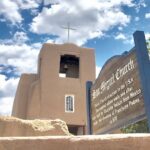
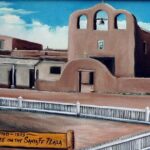
Start at the Cathedral Basilica: art, missions, and the Plaza vibe
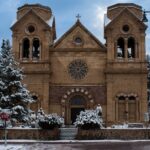
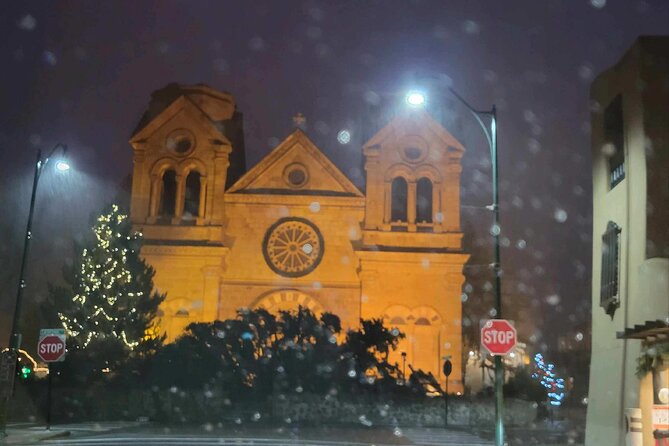
You meet at the Cathedral Basilica of St. Francis of Assisi (131 Cathedral Pl). This start point matters because it immediately places you in the center of Santa Fe’s public story—where religion, art, and civic life share the same streets.
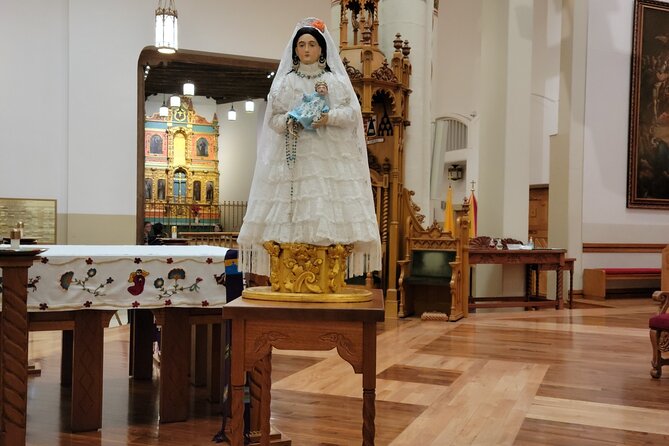
From here, the tour frames a broader cluster of landmarks. You’ll hear about La Conquistadora, described on this tour as the oldest Madonna in the United States, and you’ll get an overview that connects the area’s key mission and chapel sites. The Cathedral Basilica stop also sets up how Santa Fe’s architecture tells time: Spanish influence, later adaptations, and the way Native and Hispanic cultures shaped what “community” looked like over centuries.
You’ll also get a sense of the Plaza’s role as a hinge point. Even if you think you already know the Plaza, the tour helps you see it as more than a pretty landmark—this is where different eras kept renegotiating who had authority and how people organized their lives.
Small inside-access note
A useful heads-up: the Cathedral Basilica doesn’t offer guided tours into the church as part of this walk. You can still enter on your own if it’s open, but don’t expect the guide-led “inside walkthrough” here.
109 East Palace: the Manhattan Project checkpoint story
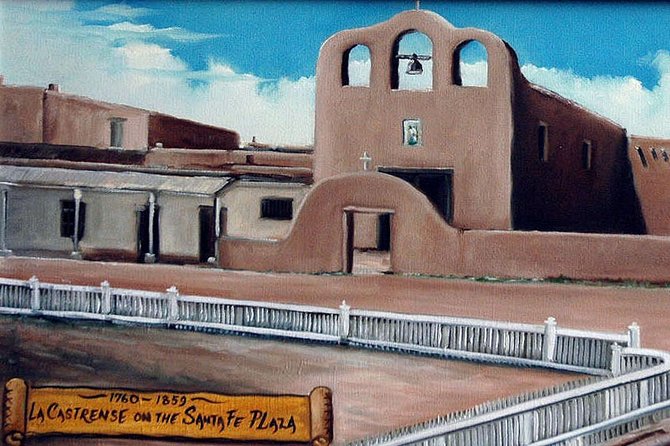
The next short stop is 109 East Palace, described as a military checkpoint tied to the Manhattan Project during WWII. This is one of those Santa Fe contrasts that makes the tour feel fresh. One minute you’re hearing Spanish-era and mission stories; the next, you’re hearing about global wartime engineering showing up in a downtown checkpoint.
It also changes how you think about “history” in Santa Fe. This isn’t only adobe romance and old saints. This city is tied to national events, and the physical downtown still carries those clues in plain sight.
The stop is brief (about 5 minutes), so treat it like a sharp side chapter rather than a long museum lesson. It’s perfect if you like history that jumps time periods without losing the thread.
Palace of the Governors: power in the same walls for centuries
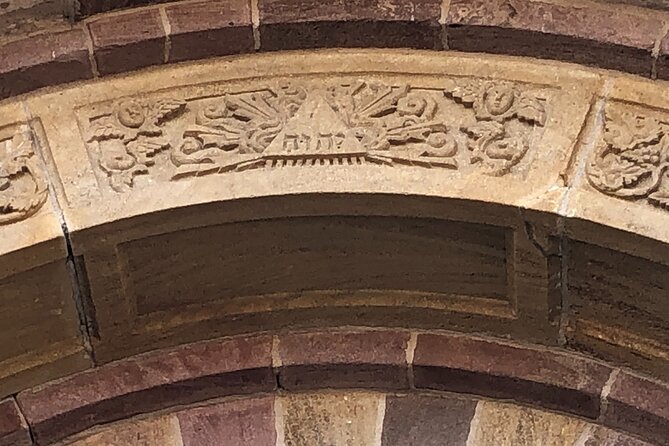
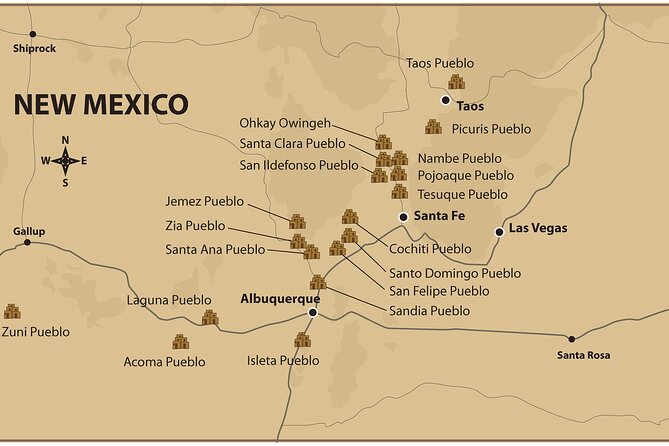
Next up is the Palace of the Governors, described here as the oldest government building in the U.S. On this stop, the guide connects that political centerpiece to New Mexico’s 19 Indian Pueblos, helping you understand how governance, identity, and cultural continuity all intersected in the region.
This is also a great moment to slow down and look. Government buildings don’t just host decisions; they become symbols. The tour uses the Palace to explain why it’s historically significant—because Santa Fe’s governance wasn’t just paperwork. It shaped land, community standing, and how institutions interacted with Pueblo peoples.
And yes, you’ll get one more “only in Santa Fe” angle: the tour points out the history of a U.S. government building designed as a Native American symbol.



Loretto Chapel: the Miraculous Staircase, plus what to expect today
The tour’s most famous building stop is Loretto Chapel. You’ll spend about 10 minutes here, and this is where the story gets both architectural and legendary.
The chapel is described as being built in 1878 by Archbishop Lamy to accompany the Sisters of Loretto Academy. The style is Gothic-Revival, and the guide connects its inspiration to Saint Chapelle in Paris—including the architect who later handled restorations. Then comes the legend: the 360-degree staircase built between 1877 and 1881 had no visible support, and it’s known as the Miraculous Staircase, associated with St. Joseph the Carpenter.
Here’s the practical part: the chapel was closed in 1968 and deconsecrated by the Catholic Church. Today it’s run as a privately owned museum, and importantly, admission is not included on this tour.
How to plan your priorities
If your top goal is to see the staircase up close, budget a little extra time around this stop so you’re not trying to squeeze museum viewing into the guide’s timing. The walk is designed for interpretation, but the museum experience is a separate purchase.
Burro Alley: where commerce, animals, and nightlife once mixed
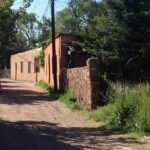
The final stop is Burro Alley, a small street connecting Palace Avenue and San Francisco Street. This is one of the most “imagination-friendly” stops on the route because it explains what you’re looking at in a way that makes the space feel lived-in.
In the 19th and early 20th centuries, vendors tied up burros here while the animals rested. The tour ties the supply chain to the landscape—salt from the Galisteo Salt Basin and firewood from surrounding mountains. And while the burros rested, the vendors had time to frequent local saloons and brothels nearby.
The guide also mentions the corner connection to a gambling hall run by María Gertrudis Barceló, known as Doña Tules.
This stop is short (about 5 minutes), but it’s worth it if you like history that explains how daily needs worked. The alley isn’t just a photo spot—it’s a clue about trade rhythms, transport, and the way commerce braided into nightlife.
What makes Ana Pacheco’s guiding style effective
The best part of this tour is the delivery. In the feedback I’m seeing reflected in the guide’s work, a pattern keeps coming up: Ana blends structure with personality.
She’s presented as a Santa Fe native who grew up here, and she uses that to keep explanations grounded. You’ll notice the way she talks about cause-and-effect: why a building ended up where it did, why a symbol mattered, why the Plaza functioned the way it did. She also uses pictures in her binder as you walk, which can help you connect what you’re seeing now to what existed earlier.
And yes, there’s humor. That matters more than people think. Lightness keeps long walks from turning into lectures, and it helps you remember the big threads later when you’re back in the plaza area taking your own photos.
Timing, route flow, and how long to keep your feet ready
This is about 2 hours 15 minutes total. You meet at 10:00 am. Most stops are quick, so the tour works well if you want a strong history foundation without losing a full day.
Because the route stays in the historic core, it’s also easier to build the rest of your day around it. Do the tour early and you’ll walk Santa Fe afterward with better context—what you notice will change.
The tour runs with good weather required, and if weather forces a change, the experience is adjusted to another date or refunded. On a sunny day, it’s straightforward downtown walking; on a rainy day, it’s still doable, but you’ll want to dress for the conditions.
Price and value: what you’re really paying for
At $80 per person for 2h15, this isn’t a budget “grab and go” add-on. You’re paying for a guide who can connect multiple centuries in a small space, and for the fact that several stops have free admission included.
Admission is noted as free at:
- Cathedral Basilica area (start stop)
- 109 East Palace
- Palace of the Governors
Admission is not included at:
- Loretto Chapel (privately run museum)
- Burro Alley (no admission listed as included, and it’s more of a street stop)
So the value equation comes down to this: you’re getting guided interpretation for the main downtown sites, plus a guided look at how Spanish, Native, Mexican, and American eras overlap. If your plan includes paying separately for Loretto Chapel anyway, the tour may feel more efficient.
For the best “bang for your buck,” treat this as your history anchor. Then spend the rest of your trip seeing what you now understand.
Who should book this tour (and who might pass)
This tour is a strong match if you:
- want a history-led walk rather than just a list of landmarks
- like connections across time periods (missions, government buildings, WWII detail)
- appreciate a small group and the chance to ask questions
You might consider a different option if you:
- only want long inside visits everywhere (some stops are outside-focused, and guided entry inside the Cathedral Basilica isn’t part of the tour)
- want a fully purchased museum-style experience at Loretto without thinking about separate admission
Should you book Santa Fe Revisited?
I’d book it if you’re spending limited time in Santa Fe and you want to understand what you’re looking at before you start wandering on your own. Ana Pacheco’s Santa Fe roots, plus the tour’s mix of Plaza culture, missions, government power, and even the Manhattan Project checkpoint angle, gives you a framework that sticks.
If your schedule is tight, plan Loretto Chapel intentionally since its museum ticket isn’t included—and decide ahead of time whether you want a quick look or a slower museum moment.
FAQ
What is the duration of this Santa Fe tour?
The tour runs about 2 hours 15 minutes.
Where does the tour start and end?
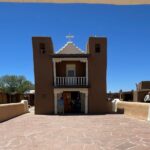
It starts at Cathedral Basilica of St. Francis of Assisi, 131 Cathedral Pl, Santa Fe, NM 87501 and ends at San Miguel Chapel, 401 Old Santa Fe Trail, Santa Fe, NM 87501.
What time does the tour begin?
The start time listed is 10:00 am.
How big is the group?
The tour has a maximum of 10 travelers.
Is the tour offered in English?
Yes, it’s offered in English.
Is a mobile ticket provided?
Yes, the tour includes a mobile ticket.
Is admission included for all the stops?
Admission is listed as free at the Cathedral Basilica of St. Francis of Assisi, 109 East Palace, and the Palace of the Governors. Loretto Chapel is noted as not included. Burro Alley doesn’t list included admission since it’s a street stop.
Can I enter the Cathedral Basilica during the tour?
Guided entry inside the Cathedral Basilica is not included, though you may be able to enter on your own if it’s open.
What if the weather is bad?
The experience requires good weather. If it’s canceled due to poor weather, you’ll be offered a different date or a full refund.
What is the cancellation policy?
You can cancel for a full refund up to 24 hours in advance. Within 24 hours of the start time, the amount paid is not refunded.