REVIEW · SANTA FE
Private Walking Tour with Local Santa Fe Historian
Book on Viator →Operated by Ana Pacheco · Bookable on Viator
Santa Fe is a town where the past walks right alongside you. On this private walking tour, I loved how Ana Pacheco turns key spots into clear, human stories, from 1600s Spanish arrival to the Manhattan Project Santa Fe era. Two things I particularly liked: the way admissions are free at every stop, and getting a thoughtful signed book by Ana Pacheco to take home. The main drawback to plan around is pace: with about 2 hours total, you’ll cover a lot, so it’s not for you if you want long, slow time inside churches.
This is a 2-hour guided stroll paced for your group, with mobile ticketing and the tour delivered in English. It’s also priced for groups: $575 per group (up to 6), which can feel very reasonable if you’re traveling with friends or family.
You’ll start at the Cathedral Basilica of St. Francis of Assisi (131 Cathedral Pl) at 10:00am and end at San Miguel Chapel (401 Old Santa Fe Trail). You’ll walk enough to feel like you’ve done something real, but the time at each stop is set so you get context without burning the day.
In This Review
- Key takeaways before you set out
- Why this private Santa Fe walk works better than a museum loop
- Ana Pacheco at the front of the group
- Starting at the Santa Fe Plaza: commerce, culture, and 1605
- Cathedral Basilica of St. Francis: Stained glass, survival, and a madanno detail
- 109 East Palace: when Santa Fe met the atomic age
- Cathedral Park and the Pueblo Revolt: monuments plus meaning
- Crossing to Barrio de Analco: names, rivers, and Nahuatl
- The New Mexico State Capitol Roundhouse: a circular twist in 1970
- San Miguel Chapel: the oldest church in the U.S. and the art of survival
- Price and value: what $575 for up to 6 people really means
- Timing, pace, and small practical details that affect your day
- Who should book this walking tour (and who might want something else)
- Should you book Ana Pacheco’s Private Walking Tour? My take
- FAQ
- How long is the Private Walking Tour with a Local Santa Fe Historian?
- What is the price for this tour?
- Where does the tour start and end?
- Is the tour private?
- What language is the tour offered in?
- What’s included with the tour?
- What should I bring since bottled water isn’t included?
Key takeaways before you set out
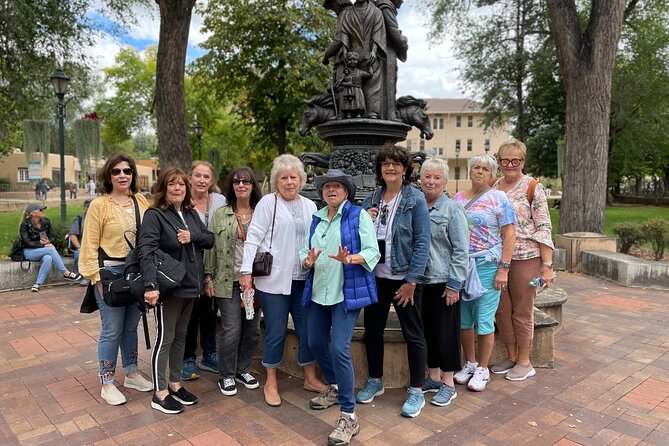
- Private, small group: up to 6 people, so questions don’t get lost.
- Free admission at every listed stop: you’re not paying again and again to see what you came for.
- Ana Pacheco leads with Santa Fe’s timelines: Spanish arrival, Pueblo Revolt, atomic-age Santa Fe—connected, not random.
- A stop for language and place-name stories: you’ll hear why Analco means on the other side of the river.
- A “last stop that matters” finale: San Miguel Chapel’s survival through the 1680 Pueblo Revolt is central to the story.
Why this private Santa Fe walk works better than a museum loop
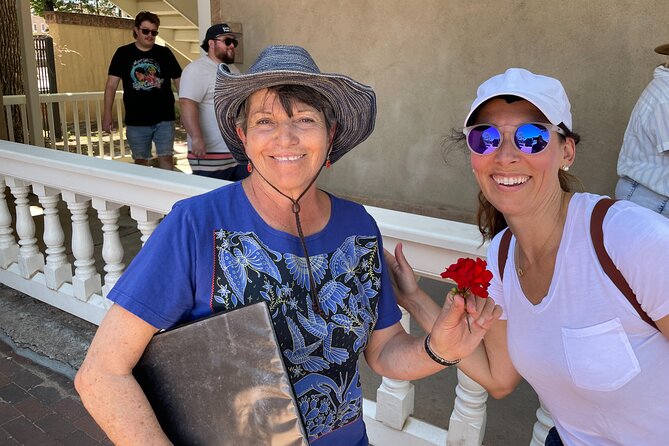
Santa Fe’s major sights are close enough together that you can get a lot done on foot, but not close enough to make sense without a guide. That’s where this tour shines: it strings the city into a single story line, so you don’t just see buildings—you understand why they’re there and what changed around them.
I also like the practicality of the structure. You get short focused visits (usually around 15 to 20 minutes each), so you’re not waiting around for someone to decide where to stand. And because it’s private, Ana can steer you based on your interests—religious art, the Spanish era, Native resilience, or the atomic-age angle.
One note to keep expectations real: you’re outdoors a good chunk of the time. The experience requires good weather, so dress for the day you’ll actually have, not the weather you wish for.
You can also read our reviews of more tours and experiences in Santa Fe.
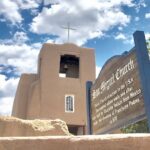
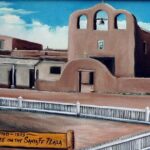
Ana Pacheco at the front of the group
Ana Pacheco is the kind of guide you want for Santa Fe because she treats history like something you can read in front of you. People highlight that she’s a Santa Fe native and that her family roots in Santa Fe reach back to the 1600s. That matters more than it sounds, because it shapes how she explains place: she doesn’t just recite dates—she points out what those dates meant locally.
In a private format, you also get a better chance to ask follow-up questions. If you’re curious about the old Spanish presence, the Pueblo Revolt, or the jump into the 20th-century Manhattan Project context, you can ask right then. This tour doesn’t feel like a script. It feels like a conversation with a local historian who knows the city’s “why.”
And yes, I like the small extra touch: a complimentary signed book by Ana Pacheco. It’s a nice way to keep the story going after you leave the streets.
Starting at the Santa Fe Plaza: commerce, culture, and 1605
Your tour begins at the Santa Fe Plaza, and it’s a smart first stop. This is the kind of place where your eyes naturally wander—past the buildings, toward the street corners, toward the open space—and Ana gives you a timeline to attach to it.
She frames the Plaza as the intersection of commerce, culture, and history since 1605. That’s not just trivia. Once you understand that early role, everything around the Plaza starts to make sense: why certain institutions took root here, why the town’s center kept pulling people back to it, and how Spanish-era Santa Fe became a lasting hub.
You’ll spend about 20 minutes at the Plaza. It’s enough time to get grounded and to learn what to watch for as you move on.
Cathedral Basilica of St. Francis: Stained glass, survival, and a madanno detail
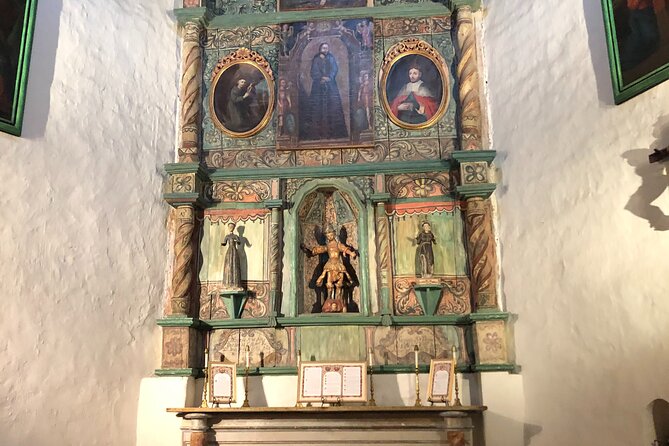
Next up is the Cathedral Basilica of St. Francis of Assisi, often described as the heart of Santa Fe. Ana uses it as a way to connect Spanish arrival to what still survives today.
One highlight is the cathedral’s reference to the oldest madanno in the United States. Even if you’ve visited churches before, this kind of detail helps your brain lock onto the site as truly early. Then there’s the story of La Conquistadora, which arrived in Santa Fe in 1625. That date turns the cathedral from “old building” into a checkpoint in time.
You’ll have about 15 minutes here. It’s a short stop, so you won’t get a long browse like you might on your own—but the tradeoff is that you’ll understand which things matter before you look.
109 East Palace: when Santa Fe met the atomic age
At 109 East Palace, Ana shifts gears to the dawn of the atomic age. This is where Santa Fe’s history stops being only “Spanish and Native eras” and becomes 20th-century engineering and national policy, too.
You’re looking at the Manhattan Project Santa Fe office context—an inside look at how the atomic-age story showed up in this particular town. The value here is not just that the project existed, but that Santa Fe became part of major historical momentum.
Expect about 15 minutes for this stop. If you like your history to include the modern shock waves—how big world events touch small places—this is a memorable pivot point.



Cathedral Park and the Pueblo Revolt: monuments plus meaning
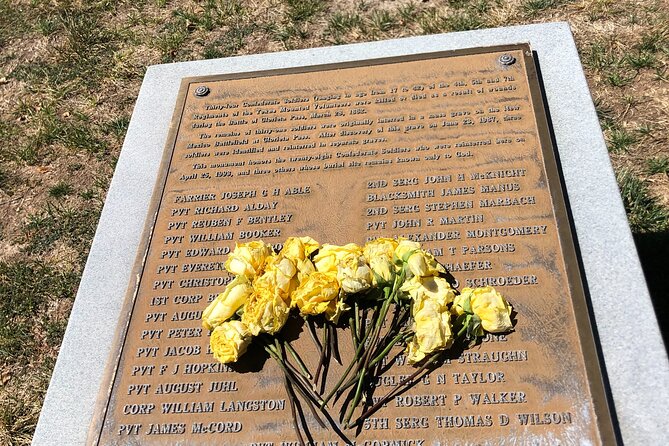
Then you’ll head to Cathedral Park, where Ana points you toward the monument dedicated to the first Spanish settlers and ties it directly to the Pueblo Revolt of 1680.
This stop works because it teaches you how to read a monument. A marker in a park isn’t just a piece of stone—it’s a statement about who was remembered, how they were interpreted, and what conflicts changed afterward. With the Pueblo Revolt as the anchor, you can better understand the emotional and political weight of the Spanish presence in the region.
You’ll spend about 15 minutes here, and it’s a good “reset” before the tour moves across the river and into a neighborhood tied to language and identity.
Crossing to Barrio de Analco: names, rivers, and Nahuatl
One of my favorite parts of this tour is the walk into Barrio de Analco. Ana treats it like more than a neighborhood stop; she explains how place names carry information across centuries.
You’ll cross the Santa Fe river and enter a district described as one of the oldest European neighborhoods in the United States. The key story is naming: the area was given its name by the Tlaxcalan Indians of Mexico, tied to the Aztec Empire, and their language, Nahuatl. Then you get a translation that makes the geography feel personal: Analco means on the other side of the river in Nahuatl.
This is where the tour avoids feeling like a list of highlights. It becomes a story about people moving, languages blending, and how a town remembers those connections in everyday labels.
You’ll have about 20 minutes here—enough time to absorb the context and notice street-level clues on your own.
The New Mexico State Capitol Roundhouse: a circular twist in 1970
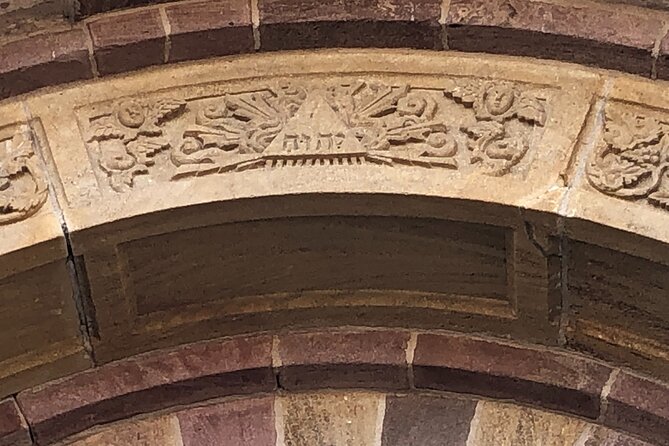
Next is the New Mexico State Capitol (Roundhouse). This stop is quick, around 15 minutes, but it packs in major facts that help you see government architecture differently.
Ana explains that it’s the only round state capitol in the United States and that it was built in 1970. Even more interesting: it’s described as the only Native American designed government building in the country.
Why does this matter on a walking tour? Because Santa Fe isn’t just a postcard of early Spanish-era buildings. It’s also a modern place with a distinct identity, and the capitol is one of the boldest expressions of that identity. Even for architecture fans, the short stop can leave you with enough to look at the building with new eyes.
San Miguel Chapel: the oldest church in the U.S. and the art of survival
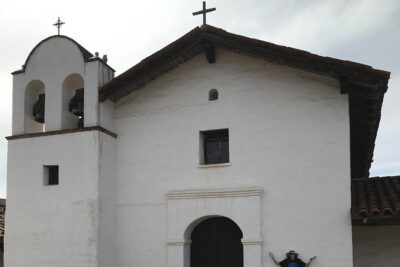
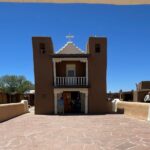
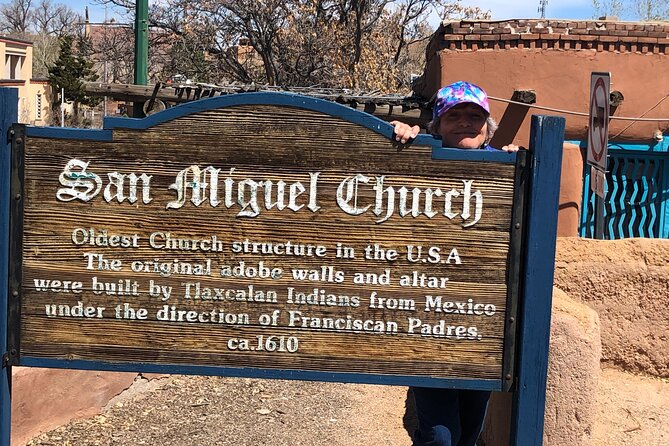
Your final stop is San Miguel Chapel at 401 Old Santa Fe Trail, with about 20 minutes on site.
Ana calls it the oldest church in the United States, built between 1605 and 1608. That alone is a big number, but the real point of the stop is survival. She connects the chapel’s continued existence to its ability to withstand the destruction of the 1680 Pueblo Revolt.
Then comes the art detail that makes this finale feel vivid: inside are ancient artifacts, including the 1769 painting of St. Michael the Archangel by Bernardo Miera y Pacheco. That painting isn’t just a pretty object—it’s part of how the church’s story spans time: early construction, later cultural reinforcement, and long-lasting meaning.
If you want a tour that ends with a strong emotional and historical payoff, this is it. You finish where the story can’t be reduced to a single era.
Price and value: what $575 for up to 6 people really means
Let’s talk money, because it’s not a small number on the screen. The tour costs $575 per group for up to 6 people, lasts about 2 hours, and includes a complimentary signed book.
So the real value depends on how many people share the booking:
- If you book as 2, it can feel pricey for a short walk.
- If you book as 4 to 6, it starts to feel like a smart splurge, because the guide’s attention is private and you’re covering multiple major sites with free admission built into the experience.
The best value angle here is not just that entry is free. It’s that you’re paying for interpretation: the connections between eras, the reasons behind the names, and the “look for this” guidance that you normally don’t get when you tour on your own. This is the kind of paid guide that can save you from misunderstanding key moments.
Also, free admissions mean less friction. You don’t have to decide which sites are worth paying for. You just walk in and let the stories land.
Timing, pace, and small practical details that affect your day
This tour starts at 10:00am, ends at San Miguel Chapel, and is about 2 hours overall. Expect each stop to be around 15 to 20 minutes, which keeps things moving. If you’re the type who wants extra time inside every building on your own schedule, you might feel slightly “clock-watched” by the structure. If you like a guided route that covers ground and teaches you what to notice, the pace is a plus.
Two practical notes:
- Bottled water isn’t included, so plan to bring your own.
- The experience requires good weather, so if you’re visiting during a season with sudden storms, dress in layers and keep rain coverage handy.
On the plus side, it’s near public transportation, uses a mobile ticket, and allows service animals. And the tour notes that most travelers can participate, which suggests the walking demands are realistic for a broad range of visitors.
Who should book this walking tour (and who might want something else)
This tour is a great match if you:
- Want a private guide and don’t want to compete with crowds for attention.
- Like connected storytelling that links Spanish arrival, Native resistance, and later 20th-century history.
- Appreciate small, specific details—like the oldest madanno, the meaning of Analco, or the 1769 painting—that make places feel real.
It may not be the best fit if you:
- Want long, slow sightseeing and independent time in each site.
- Prefer a self-guided pace where you can stay as long as you want inside churches without moving on.
Should you book Ana Pacheco’s Private Walking Tour? My take
If you want to understand Santa Fe instead of just sampling it, book this. Ana’s strength is turning famous stops into a clear chain of meaning—1605 beginnings at the Plaza, the cathedral’s early references and artifacts, the atomic-age presence at 109 East Palace, then the river-crossing identity story of Barrio de Analco, finishing with San Miguel Chapel’s survival and art.
The only reason to hesitate is the “2 hours, many stops” reality. If your travel style is leisurely and you hate being guided along a set rhythm, you’ll need to balance that. But if you love a smart route with interpretation you can’t easily DIY, this is an excellent use of your time in Santa Fe.
FAQ
How long is the Private Walking Tour with a Local Santa Fe Historian?
It lasts about 2 hours.
What is the price for this tour?
The price is $575.00 per group (up to 6 people).
Where does the tour start and end?
It starts at the Cathedral Basilica of St. Francis of Assisi, 131 Cathedral Pl, Santa Fe, and ends at San Miguel Chapel, 401 Old Santa Fe Trail, Santa Fe.
Is the tour private?
Yes. It’s a private tour/activity, and only your group participates.
What language is the tour offered in?
The tour is offered in English.
What’s included with the tour?
You receive a complimentary signed book by Ana Pacheco.
What should I bring since bottled water isn’t included?
The tour does not include bottled water, so you’ll want to bring your own.