REVIEW · VIENNA
Vienna: Christmas Photoshoot with a Pro Photographer
Book on GetYourGuide →Operated by NextView Tours · Bookable on GetYourGuide
One hour can still feel like a full Vienna memory. This Vienna Christmas photoshoot turns a short walk into a guided portrait session at the city’s most photogenic landmarks, from the Opera area to Stephansplatz. I love that you get a pro photographer directing your angles, and I love the way the route strings together royal facades and classic Vienna corners. The main drawback is simple: with only 1 hour, you won’t have time for long museum exploring or a slow café sit-down.
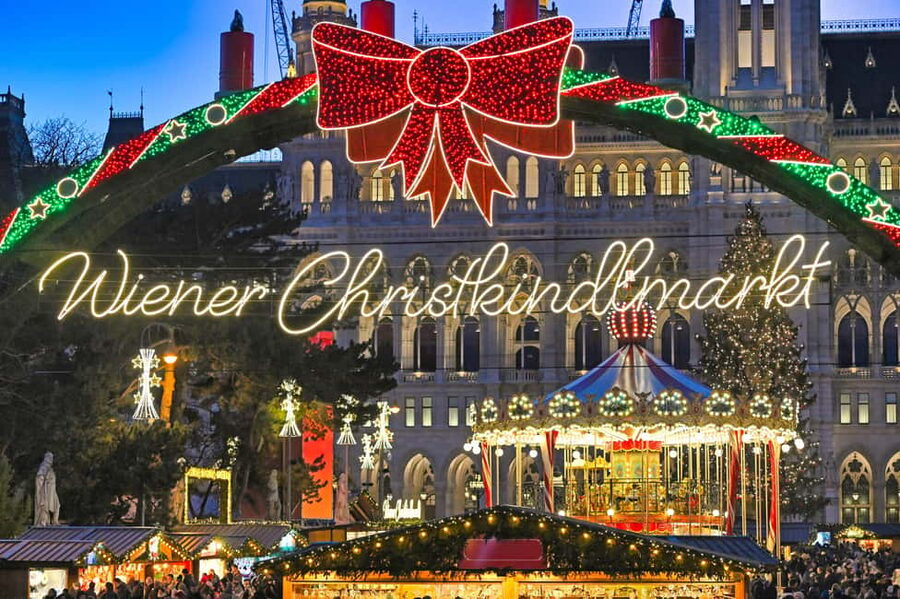
The whole experience is built around timing, light, and architecture. You’ll be moving on foot between big-picture sights, with a live English guide and lots of chances to step into position for photos. And yes, it’s a Christmas-themed session—so expect winter mood, crisp air, and good street-level photo opportunities when the light cooperates.
In This Review
- Key things I’d plan for
- Starting at Vienna State Opera: Albertina Platz portraits
- Albertina Museum and the terrace: first “wow” frames
- Burggarten and the Mozart Statue: calm, classic Vienna
- Hofburg Palace and Heldenplatz: imperial backdrops that work
- Maria-Theresien-Platz and the twin museums: strong symmetry shots
- Parliament, Pallas Athena Fountain, Rathaus, and Burgtheater
- Ankeruhr Art Nouveau clock: a creative pause for closer shots
- Ending at Stephansplatz: St. Stephen’s Cathedral finale
- How the photographer helps you look natural (without overthinking it)
- What’s included in the $140, and what isn’t
- What to bring (and what to avoid)
- If you’re traveling with kids: child seat note
- Who this Vienna Christmas photoshoot is best for
- Should you book this one? My honest recommendation
- FAQ
- How long is the Vienna Christmas photoshoot?
- Where does the tour start and end?
- What is included in the price?
- Is food or drinks included?
- What do I need to bring?
- Is alcohol allowed during the tour?
- Is the tour suitable for children and seniors?
Key things I’d plan for
- Pro direction for better photos: you won’t just wander and hope the camera works out.
- Landmark-to-landmark route: Opera area to Albertina, then Burggarten, Hofburg, Rathaus zone, and finally Stephansplatz.
- Short session means fast pacing: 1 hour is tight, so wear comfortable shoes and be ready to move.
- Architecture-focused portrait spots: wide-angle views and artistic-looking frames are part of the plan.
- No food included: you can look for snacks nearby, but you’ll pay for them yourself.
Starting at Vienna State Opera: Albertina Platz portraits
Your walk begins at Albertina Platz, right by the grand Vienna State Opera. That location matters because it gives you an instant “Vienna postcard” backdrop with symmetry, columns, and dramatic lines—perfect for the kind of portraits that look good even without fancy outfits.
Right from the start, the photographer’s job is to help you get out of tourist mode. Expect quick guidance on stance, how to face the building, and how to use the space around you. Even if you feel awkward in photos, this kind of directed session usually makes it easier to relax.
Practical note: transportation to the starting point isn’t included. Plan to arrive a bit early so you don’t start the session rushed or windblown.
You can also read our reviews of more tours and experiences in Vienna.
Albertina Museum and the terrace: first “wow” frames
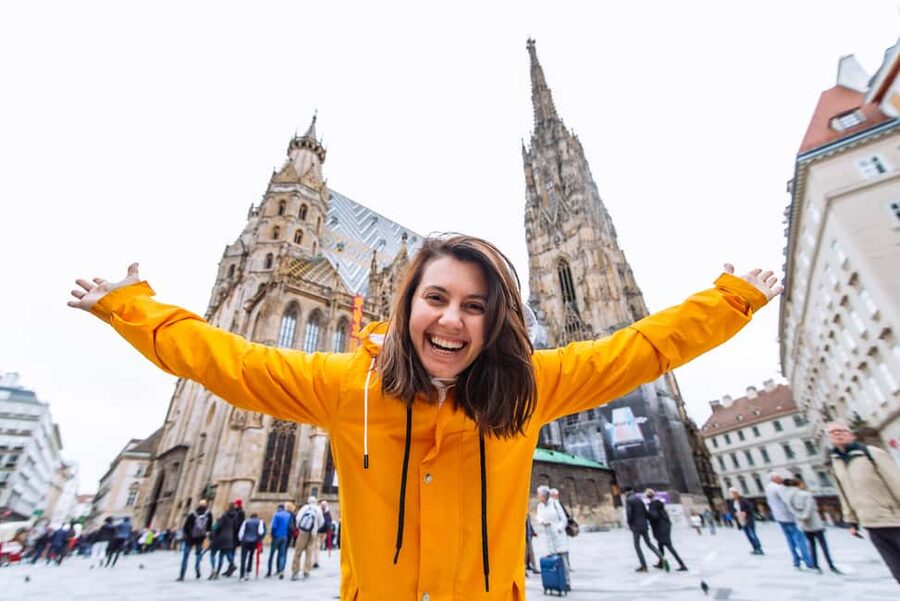
Next up is the Albertina Museum and—this is the key—its terrace views. A terrace is where photography turns from street snaps into cinematic shots. You get cleaner angles and a sense of depth, which helps your photos look more intentional.
This is also where you’ll likely get your first set of holiday-themed portraits (even if the streets aren’t covered in decorations, the winter atmosphere and warm lighting at major landmarks can still look great). The guide and photographer focus on pairing you with the setting, not just pointing you toward a famous wall.
What to watch for: terraces can be windy in Vienna. If you’re wearing anything that will fight the breeze (wide scarves, loose hats), be ready with a quick adjustment before your photo.
Burggarten and the Mozart Statue: calm, classic Vienna
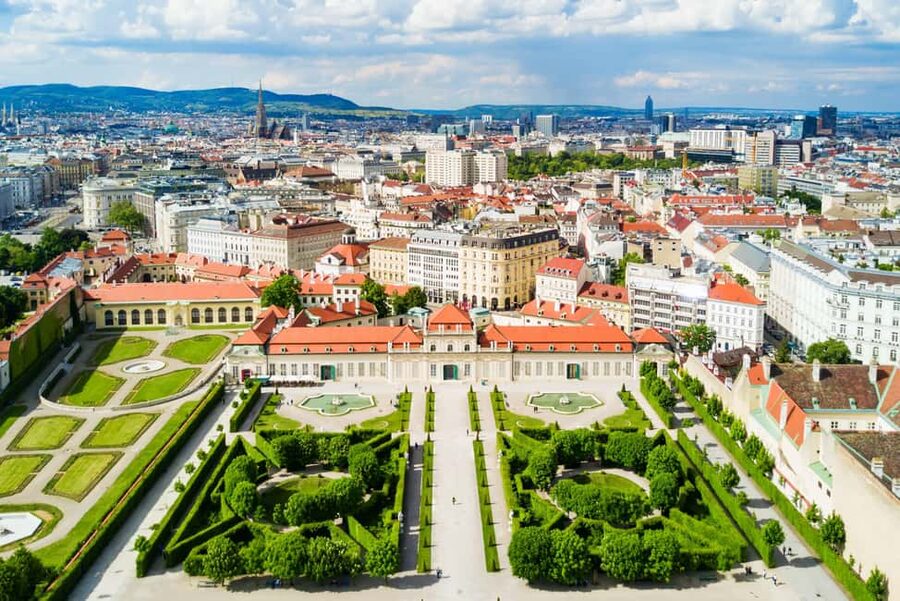
From the museum side of the city, you move into Burggarten. This area feels more garden-like and slower, which is a nice contrast after the museum’s grand scale. You’ll see the famous Mozart Statue, and that’s a smart choice for photos because it gives you a clear focal point.
There’s also the Palmenhaus Café nearby, and the greenery plus classical statues can create an easy “candid-but-polished” look. The photographer can use these elements to frame you with softer textures instead of only hard stone and arches.
In winter, parks can be quiet—or at least less chaotic than the busiest street corners. If your main goal is portraits that don’t look crowded, Burggarten is a good mid-tour reset.
Hofburg Palace and Heldenplatz: imperial backdrops that work
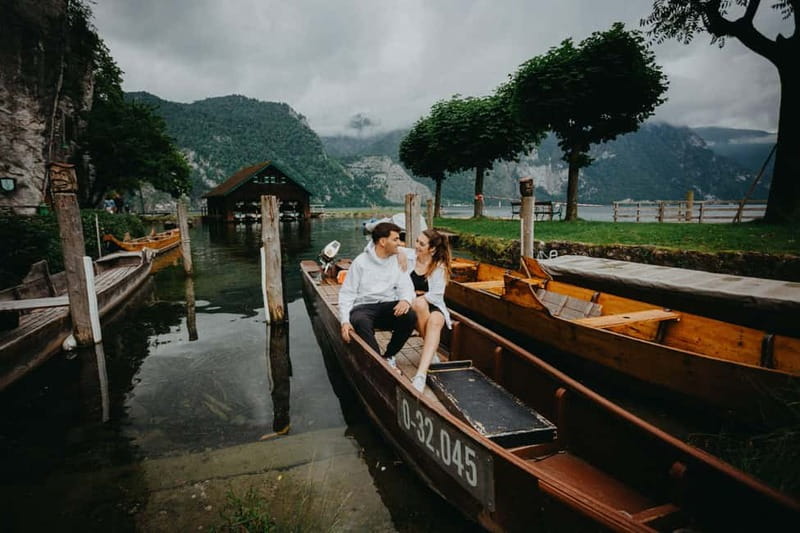
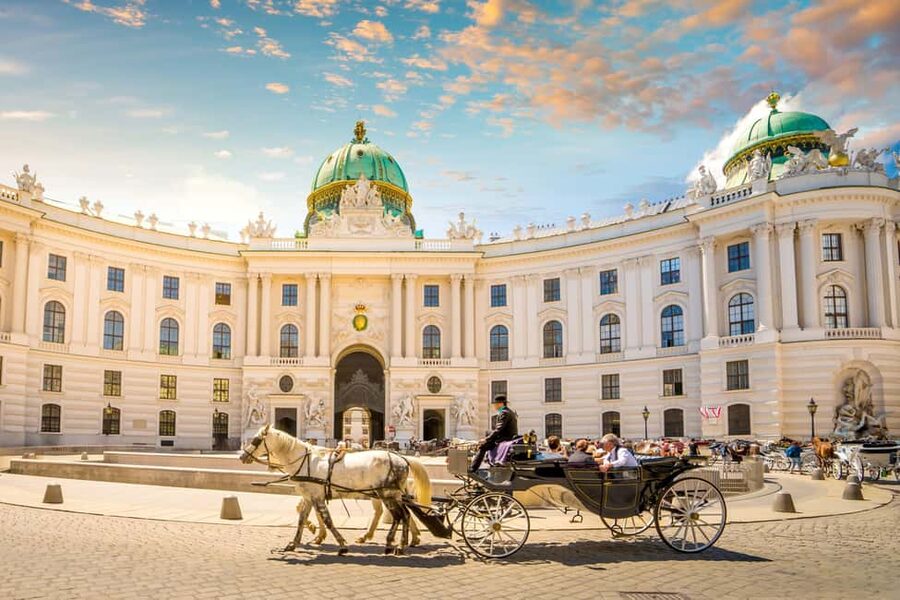
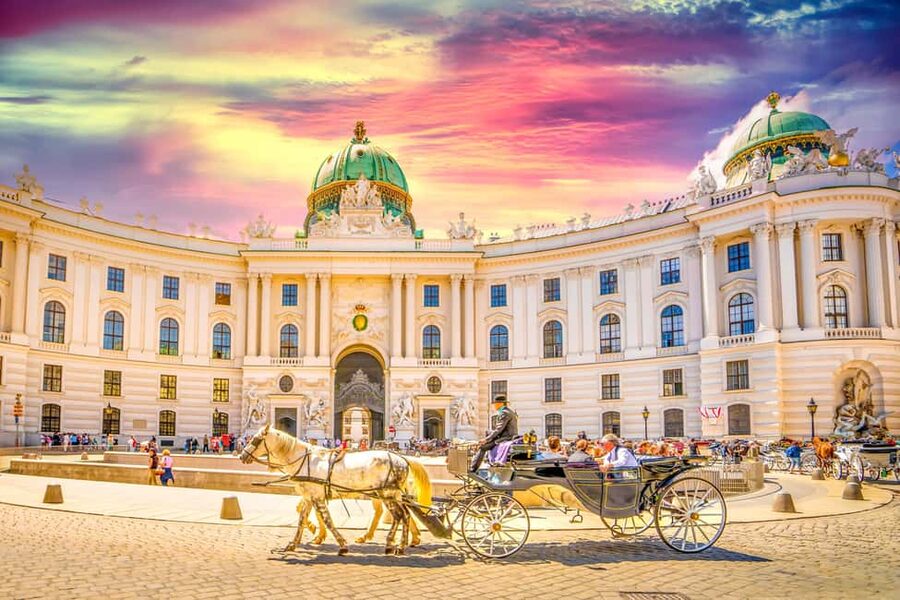
Then comes the heart of imperial Vienna: Hofburg Palace and Heldenplatz. These stops are all about scale. The archways, equestrian statues, and open courtyards give you strong photo structure, like a built-in set.
This is where I’d expect the photographer to lean into cinematic shots. Wide-angle views can show more of the palace framing around you, while tighter portrait angles can keep the focus on your face and expression against historic architecture.
A consideration: Heldenplatz can be lively depending on the day and time. That doesn’t ruin photos, but it does mean you’ll want to listen closely when the photographer asks you to pause, step, or shift position.
Maria-Theresien-Platz and the twin museums: strong symmetry shots
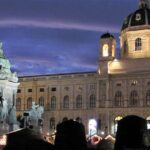
You’ll also pass through Maria-Theresien-Platz, framed by the twin giants of museum architecture: the Kunsthistorisches and Naturhistorisches Museums. This is a photographer’s playground because symmetry makes composition easier. When buildings mirror each other across a space, your photos tend to look balanced even if you’re not a model.
This part of the route supports both styles:
- wide-angle shots for big Vienna drama
- artistic portraits with architecture acting like a frame
If you’ve ever seen portraits where the subject looks crisp and the background still feels meaningful, this is the kind of setting that helps make that happen.
Parliament, Pallas Athena Fountain, Rathaus, and Burgtheater
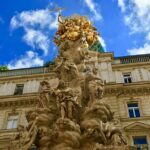
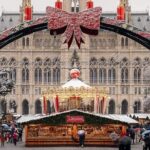
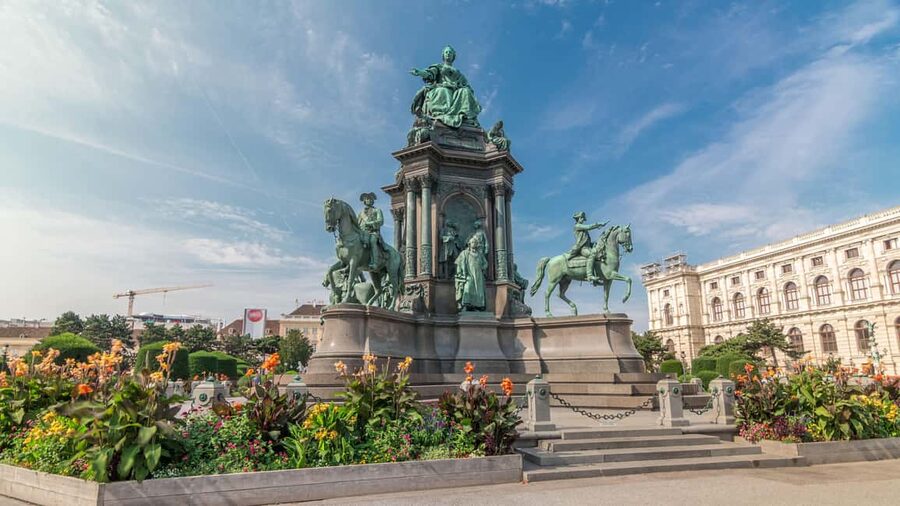
The itinerary also threads through Austria’s civic and cultural power centers. You’ll pass by the Austrian Parliament, crowned by the Pallas Athena Fountain, and continue toward the Rathaus and Burgtheater.
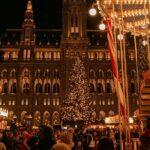
Why this matters for your photos: different Vienna landmarks give different “moods.” Parliament-and-fountain areas feel formal. Rathaus and Burgtheater feel theatrical and grand, which is useful if you want your photo set to look like a story instead of one repeated background.
This zone can be visually busy, but it’s also full of details the photographer can isolate for you—arches, statues, and corners that turn a crowded street into usable composition.
Ankeruhr Art Nouveau clock: a creative pause for closer shots
A short walk away, you’ll pause at the Ankeruhr, an Art Nouveau clock. This is a great change of pace from palace and museum stone. A clock gives you something graphic and specific in the frame, and it’s ideal for portrait shots that feel a little more playful.
In practical terms, it also works as a breather. After long landmark sequences, this kind of distinctive spot is where photographers often slow down just enough to get a variety of poses without making you feel like you’re being dragged from corner to corner.
Ending at Stephansplatz: St. Stephen’s Cathedral finale
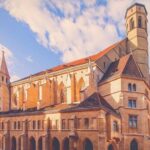
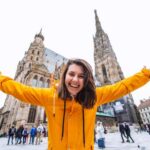
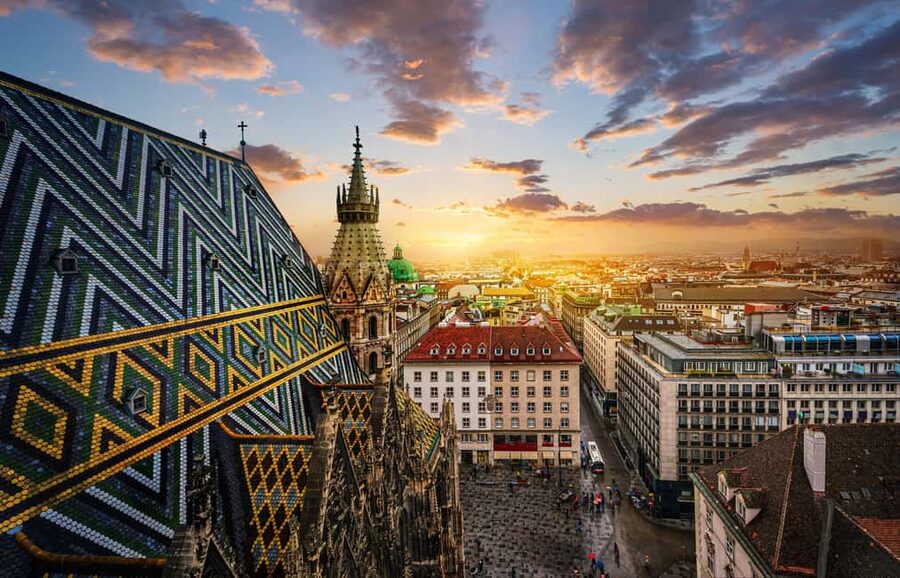
You’ll finish at Stephansplatz, in the shadow of St. Stephen’s Cathedral. This ending matters because the cathedral is a built-in finale. The patterned roof and soaring spire help your last photos feel like the “end card” of a Vienna story.
Stephansplatz also has the energy of a real city square: cafés, shops, and a flow of pedestrians. Your photographer can use that movement in a couple of ways—either by keeping you crisp while the background gives context, or by timing shots when the space around you clears slightly.
The good news: even if you’re not a cathedral person, the setting is visually strong. You’ll get at least a couple photos that look iconic.
How the photographer helps you look natural (without overthinking it)
A lot of “walking tours with photos” fail because they treat the camera like a tour stop. This one is different. The professional photographer is the driver of the session.
That typically means:
- quick direction on where to stand and how to angle your body
- guidance on how to use the landmark behind you
- enough time at each key spot to try more than one frame
One review I came across praised the way guides handled larger adult groups with efficiency and care, keeping explanations concise while still allowing ample time for photos. Another highlighted how a guide focused on relevant historical context without turning it into a lecture. The best version of this experience feels like that: guided, not suffocating.
What you can do to help: keep your phone in your pocket unless asked. You’ll get better results if you focus on following directions and watching what the photographer is doing around you.
What’s included in the $140, and what isn’t
At $140 per person for a 1-hour session, you’re paying for three things:
1) a professional photographer (the real value)
2) a guided walk that connects photogenic locations
3) structured time at the key stops for portrait-style photos
What’s not included is just as important. Transportation to the starting point and food and drinks are on you. That means you should plan to meet the group ready to work, not shopping-for-snacks while the clock runs.
For value: if you’ve spent time in Vienna already, you might be tempted to skip paid photos. Don’t. Vienna’s architecture is stunning, but it can be hard to translate into flattering portraits without someone directing the shot. This session buys you that direction.
What to bring (and what to avoid)
Bring an ID card or passport. That’s a clear requirement, so don’t leave it to luck.
Also note what isn’t allowed: alcohol and drugs. Keep it simple, stay focused, and you’ll have an easier time following directions when the photographer asks for adjustments.
Clothes-wise, think practical and camera-friendly:
- comfortable walking shoes
- layers for wind or cold at terraces and open squares
- something that looks good against stone (neutral tones or classic colors often photograph cleanly)
If you’re traveling as a couple or with friends, coordinate outfits so you don’t all end up in the exact same shade of black. Your photos will look more intentional if you add subtle variety.
If you’re traveling with kids: child seat note
If you’re booking for a child, you’ll need to arrange a mandatory child seat in Austria. The info you were given says to write with your booking details so the team can arrange it. If you’re traveling with little ones, do that early—last-minute changes can get messy fast.
Who this Vienna Christmas photoshoot is best for
This is ideal if you want a quick, high-impact Vienna experience that focuses on photos and landmark backdrops more than deep museum time.
You’ll probably love it if:
- you want professional portraits without spending half a day hunting locations
- you enjoy classic Vienna architecture and want it framed around you
- you’re traveling solo, as a couple, or with friends and want the same strong photo set
You might not love it if:
- you need long breaks, slow pacing, or lots of indoor exploring
- you’re expecting food or transportation to be part of the package
- you prefer a self-guided Vienna wandering style
Age note: it’s not suitable for babies under 1 year, and it isn’t suitable for people over 95.
Should you book this one? My honest recommendation
If your goal is to leave Vienna with a real set of professional photos taken in iconic locations, I’d book this. The route is concentrated and portrait-friendly, and the photographer-led approach is the difference between usable shots and photos you’ll actually print.
If you’re the type who loves lingering—long museum hours, café time, and zero pressure—consider whether 1 hour is enough. But if you treat it like a sprint with excellent guidance, it’s a smart use of your time.
FAQ
How long is the Vienna Christmas photoshoot?
It lasts 1 hour.
Where does the tour start and end?
It starts at Albertina Platz and ends at Stephansplatz, near St. Stephen’s Cathedral.
What is included in the price?
The price includes a professional photographer, a walking tour of Vienna, and photo opportunities at key landmarks.
Is food or drinks included?
No. Food and drinks are not included.
What do I need to bring?
You should bring a passport or ID card.
Is alcohol allowed during the tour?
No, alcohol is not allowed.
Is the tour suitable for children and seniors?
It is not suitable for babies under 1 year and not suitable for people over 95. If you have a child, you should write your booking details so a mandatory child seat in Austria can be arranged.