REVIEW · TENERIFE
1.5 Hour Guided Bike Tour of Santa Cruz de Tenerife
Book on Viator →Operated by Orange Fox · Bookable on Viator
Santa Cruz turns into a photo-friendly sprint on two wheels. In just 1.5 hours, you bike through the city’s key squares and landmarks with bottled water and smart photo stops built into the route. The big drawback: the sightseeing time at each stop is brief, so this is more highlights ride than slow, in-depth history.
I like that it stays small-group (typically 10 to 15, with a higher overall cap), which keeps the pace relaxed and lets you ask questions before you roll on. One more thing to consider: it’s listed as English, so if you need another language, confirm clearly before you arrive.
In This Review
- Key points at a glance
- Why this 90-minute bike loop works in Santa Cruz
- Price and what you truly get for $32.65
- The route in order: squares, churches, theater, temples, and fortifications
- Stop 1: Plaza de La Candelaria
- Stop 2: Plaza de España
- Stop 3: Iglesia de la Concepción
- Stop 4: Teatro Guimera
- Stop 5: Templo Masónico de la Logia de Añaza (facade-only)
- Stop 6: Parish of St. Francisco de Asís
- Stop 7: Auditorio de Tenerife (Auditorium of Tenerife)
- Passing highlight: Carnival poster mosaic
- Stop 8: Castillo de San Juan Bautista (Castillo Negro)
- Stop 9: Cabildo Insular de Tenerife
- Stop 10: Back to Plaza de La Candelaria
- Small-group pace, bike options, and comfort details that matter
- Photo stops and what to look for at each kind of landmark
- Guide style: friendly, but keep expectations realistic
- Who should book this bike tour
- Should you book this 1.5-hour guided bike tour of Santa Cruz?
- FAQ
- FAQ
- How long is the 1.5-hour guided bike tour?
- Where does the tour start?
- Are regular and electric bikes available?
- What’s included in the price besides the bike?
- Is this a small-group tour?
- Is the tour offered in English, and can children ride?
- Can I cancel for a full refund?
Key points at a glance
- Short, efficient loop (about 90 minutes): You cover a lot of central Santa Cruz without long walking.
- Bike + water included: Regular or electric bikes, plus bottled water to keep things easy.
- Tons of outdoor “see-it-fast” stops: Squares, churches, and major buildings you can appreciate quickly.
- Some sights are facade-only: The Masonic temple stop is outside viewing only.
- Small group vibe: Usually 10–15 people, which helps the guide manage the route smoothly.
- Plan for quick commentary: You’ll get context, but don’t expect a deep, museum-style lecture at each spot.
Why this 90-minute bike loop works in Santa Cruz
Santa Cruz de Tenerife can feel spread out, but this tour keeps you in the action. The route is built like a scenic checklist: you start at Plaza de la Candelaria, roll through the historic core, and end back at the same lively square.
The magic is the timing. With each stop clocking in around 5 minutes, you’re not stuck in one place too long. That’s great if you want to get your bearings fast and still have energy left for the rest of the day—be it lunch, shopping, or a longer walk on your own.
There’s also a practical rhythm here. You bike between landmarks, then you pause just long enough to look up, take a few photos, and soak in the atmosphere. If you’re the type who hates “forced standing” tours, you’ll probably enjoy the pace.
You can also read our reviews of more tours and experiences in Tenerife.
Price and what you truly get for $32.65
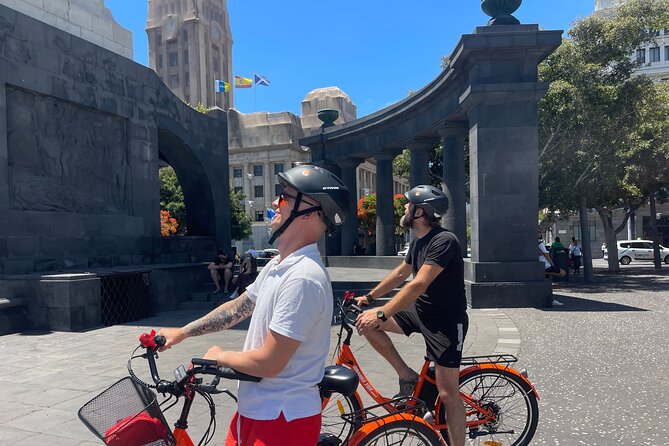
At $32.65 per person for about 1 hour 30 minutes, the real value is not just the guide—it’s the package. You’re getting:
- a regular or electric bike (based on the option you choose)
- a professional local guide
- bottled water
- luggage storage
- helmets and child seats on request
- a small-group format (typically 10 to 15)
In plain terms: you’re paying for transportation + guidance + key stops in one. That often costs more separately if you’re cobbling together a bike rental plus figuring out routes and meeting points.
One more value detail: the tour includes “photo stops.” That doesn’t mean someone is doing the photography for you. It means the route is planned so you actually have time to frame iconic buildings—especially useful with a mix of modern and older architecture.
The route in order: squares, churches, theater, temples, and fortifications
You’ll start at Calle Dr. Allart, 17 in central Santa Cruz, and the tour ends back at the meeting point. The loop is designed so the sights connect logically—religion and civic life, then modern culture, then defense and island governance.
Stop 1: Plaza de La Candelaria
This is one of the city’s oldest and most central squares. You’ll see the marble monument to the Virgin of Candelaria, patron saint of the Canary Islands. It’s a strong starting point because it anchors the entire trip in local identity.
Even with only a short stop, you can still pick up how the square functions: people meet here, buildings ring the plaza, and the place feels like a real neighborhood center rather than a dead postcard.
Stop 2: Plaza de España
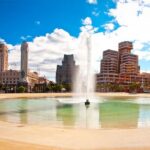
Next up is Plaza de España, described as the largest square in the Canary Islands. It sits over the ruins of a former fortress, which gives the square a “layered time” feel—you’re in a modern public space, but the ground has older stories.
The fountain-style lagoon and the modern civic design by Swiss architects Herzog & de Meuron make it easy to spot why this square matters. This is also one of those places where photos look good from multiple angles.



Stop 3: Iglesia de la Concepción
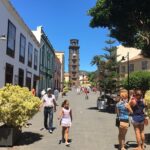
This 16th-century church is the oldest in Santa Cruz, known for Canarian colonial architecture. The standout details include the bell tower and traditional wooden balconies—small features that make the building feel handmade and island-specific rather than generic.
Tip: even if you only have a minute or two, look at the upper details. The balconies and tower elements tend to be what you’ll remember later.
Stop 4: Teatro Guimera
Built in 1851, Teatro Guimera is the oldest theater in the Canary Islands. It’s neoclassical and named after Catalan writer Àngel Guimerà.
This stop is a nice change of pace from churches and civic squares. It also helps you understand Santa Cruz as a culture hub, not just an administrative center.
Stop 5: Templo Masónico de la Logia de Añaza (facade-only)
Here’s the curveball: the Masonic Temple is an architectural mystery with heavy symbolism, but it’s not open to the public. You’ll focus on what you can see from outside—its façade and details.
If you love architecture puzzles and don’t need interior access, this is the kind of stop that feels special without slowing the tour down. If you were hoping for a guided interior visit, just know this one is external.
Stop 6: Parish of St. Francisco de Asís
This is a Baroque-style church on the site of a former Franciscan convent. The tour highlight here is the blend of spiritual continuity and artistic detail—something you’ll feel immediately once you’re close to the building.
Baroque architecture is often about effect: form, ornament, and light. Even during a quick stop, you can still notice how it tries to make the space feel peaceful and “invited.”
Stop 7: Auditorio de Tenerife (Auditorium of Tenerife)
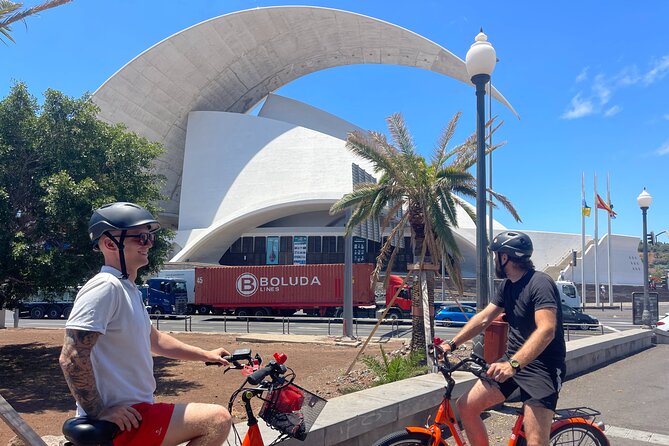
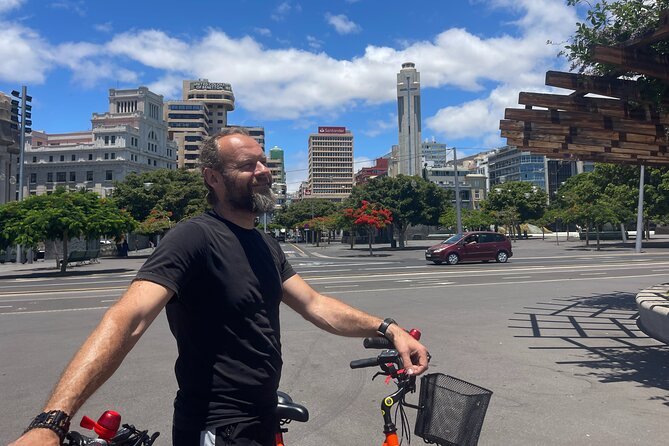
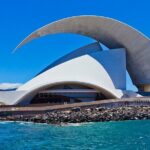
Now you hit modern Tenerife at full volume—well, visually. Auditorio de Tenerife, designed by Santiago Calatrava, looks like a wave or a ship’s sail. It’s one of the island’s most photographed structures, and it’s easy to see why.
This stop works well because it’s a mental palate cleanser. After the older streets and churches, the auditorium’s modern lines feel like a different chapter of the same story.
Passing highlight: Carnival poster mosaic
As you ride through, you catch a colorful mosaic made from past Tenerife Carnival posters. It’s a fun reminder that culture here isn’t stuck in old stone. It’s printed, celebrated, and remixed into public art.
If you like street-level details, this is the kind of moment you’ll want to slow down for with your phone up.
Stop 8: Castillo de San Juan Bautista (Castillo Negro)
This is one of the most powerful stops in the loop. The 17th-century Castillo Negro was built to defend the coast from pirates and invaders. It also played a role in repelling Admiral Nelson’s attack in 1797.
It’s described as one of Santa Cruz’s best-preserved fortresses, and you can see the care in how it’s held and maintained. Even with limited time, the fortress vibe gives the tour weight.
Stop 9: Cabildo Insular de Tenerife
Next comes the political heart: Cabildo Insular de Tenerife, the seat of the island council. The building’s grand design and central location make it feel like where decisions happen.
Nearby, you’ll also notice a monument honoring those who fell in the Spanish Civil War. This is another “quick hit” stop, but it adds context to how the island’s public life is organized.
Stop 10: Back to Plaza de La Candelaria
You finish where you began. This return loop is handy because it gives you a clear endpoint: relax in the square, grab final photos, and ask the guide any questions before you break off on your own.
Small-group pace, bike options, and comfort details that matter
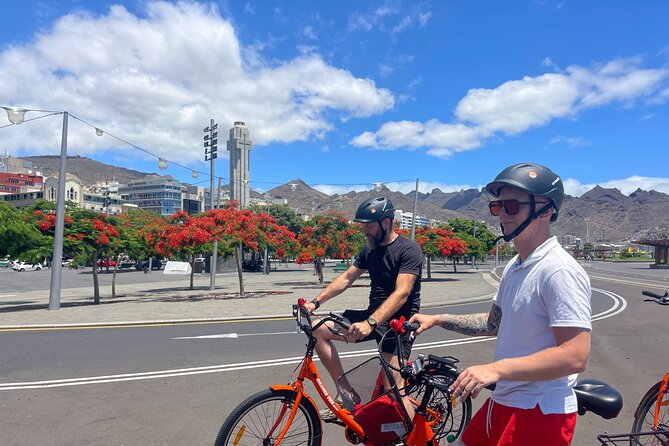
This tour runs as a small-group ride, typically 10–15 people for intimacy. There’s also a listed maximum of 50 travelers, so in the worst-case scenario you still won’t feel swallowed by a crowd—but the comfort is tied to that smaller typical group size.
You’ll ride either a regular or electric bike, depending on what you choose. If you’re unsure, electric can be a big help if you prefer to spend your energy on sights, not pedaling.
Luggage storage is included, which is a quiet win if you’re traveling light but still carrying a day bag. And helmets and child seats are available on request.
One more practical point: the tour includes bottled water, so you’re not immediately hunting for a shop during your sightseeing window.
Photo stops and what to look for at each kind of landmark
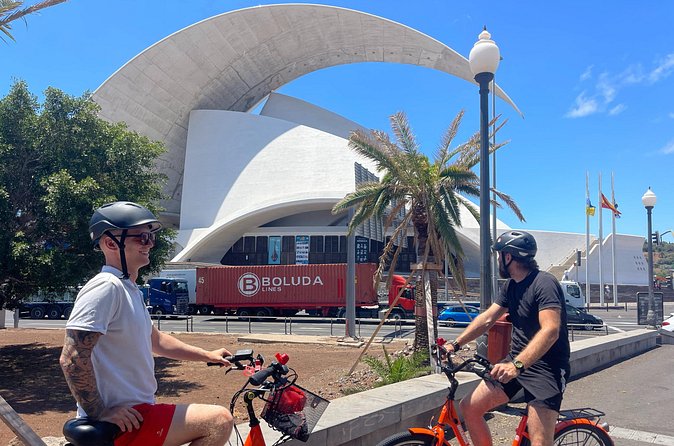
This tour mixes three types of views:
- Monuments and squares (Plazas de Candelaria and España)
- Architecture details (church bell towers, wooden balconies, façades)
- Iconic silhouettes (Teatro Guimera, Auditorio de Tenerife, the fort)
At plazas, aim to capture the space as a whole—then a close-up detail. A square photo without context can look flat. A detail photo without the square can look random. The route’s short pauses are designed for both.
For churches and older buildings, focus on vertical elements: bell towers, façades, and balcony lines. For modern architecture like the auditorium, shoot from a bit farther back. These buildings look best when your frame includes the curves and scale.
Guide style: friendly, but keep expectations realistic
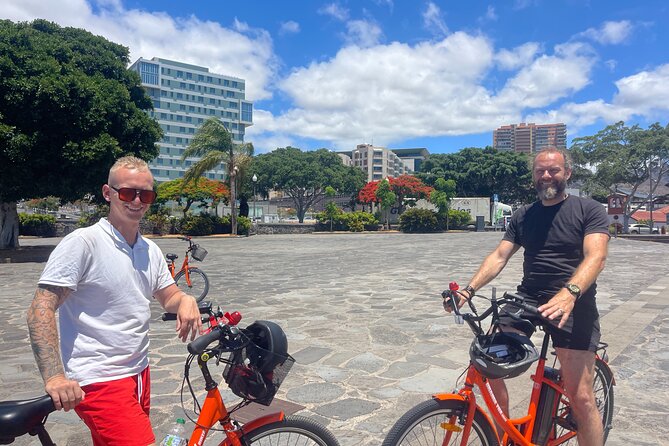
A good guide can turn quick stops into meaningful connections. This one is meant to be fast and friendly, with a local lens and time to answer your questions while you’re still in motion.
That said, you should go in knowing the format: each stop is only about 5 minutes, so the commentary is likely to be highlights, not deep-dive lectures. If you want more explanation than the tour can fit, ask a targeted question early—something like what to notice in the façade, or how one building relates to the city’s development.
Also, double-check language needs. The tour is offered in English, and that’s the key detail you should rely on when planning.
Who should book this bike tour
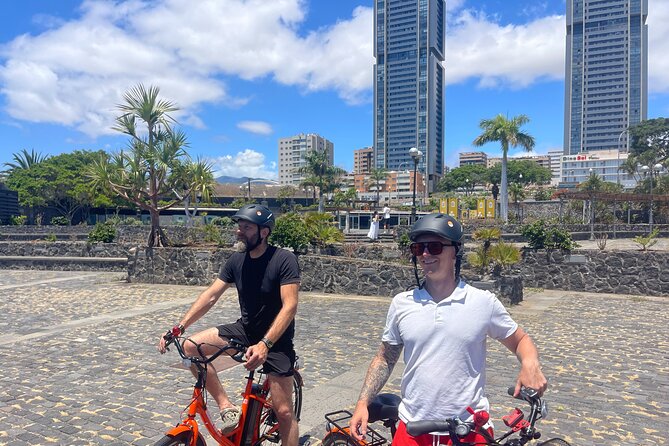
I’d steer you toward this tour if you:
- want a 90-minute overview of Santa Cruz’s central highlights
- prefer biking over long walking
- like a mix of old churches + modern icons + fortress history
- want a guide, but you’re okay with short stops
It’s less ideal if you:
- want lots of time inside buildings
- expect long, museum-level explanations at every location
- need a specific language other than English (confirm first)
Should you book this 1.5-hour guided bike tour of Santa Cruz?
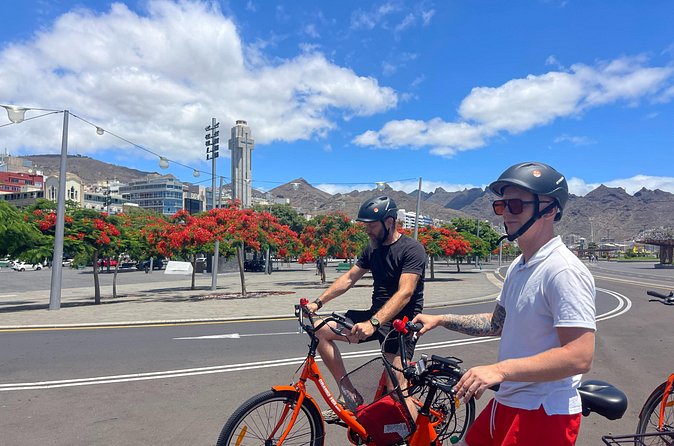
If your goal is get your bearings and see the main sights without fuss, I think this is a solid choice. The bike + guide + water + small-group format makes the $32.65 feel practical, not gimmicky.
Book it when you want efficiency. Skip it when you want slow, deep history or plenty of interior time. And if language matters to you, confirm before you go.
FAQ
FAQ
How long is the 1.5-hour guided bike tour?
The tour runs for about 1 hour 30 minutes (approx.).
Where does the tour start?
The meeting point is Calle Dr. Allart, 17, 38003 Santa Cruz de Tenerife, Spain. The tour ends back at the same meeting point.
Are regular and electric bikes available?
Yes. The tour includes a bicycle, either regular or electric, depending on the option you select.
What’s included in the price besides the bike?
The tour includes a professional local guide, bottled water, luggage storage, and a small-group bike format. Child seats and helmets are available on request.
Is this a small-group tour?
Yes. It’s designed as a small-group experience, typically between 10 and 15 people, with an overall maximum of 50 travelers.
Is the tour offered in English, and can children ride?
The tour is offered in English. Children under 6 can ride free on a child seat (maximum 20 kg and 140 cm), and child seats are available on request.
Can I cancel for a full refund?
Yes. You can cancel up to 24 hours in advance for a full refund. If you cancel less than 24 hours before the start time, the amount paid is not refunded.