REVIEW · SANTA BARBARA
Ultimate Guide to Santa Barbara: A GPS Self-Guided Urban Stroll
Book on Viator →Operated by VoiceMap Audio Tours · Bookable on Viator
Santa Barbara has a talent for turning walking into stories. This GPS self-guided route uses VoiceMap to guide you door-to-door through downtown icons, older structures, and the people behind the city’s big changes.
What I like most is how efficient it is for a 1 hour 15 minute to 1 hour 30 minute stroll, and how it keeps you moving with a clear narrative instead of random sightseeing. You also get offline access to audio and maps, which matters when you’re downtown and cell service gets spotty.
One real consideration: the audio is English only, and if that’s not your best language, you may miss some of the finer details (even if you can still enjoy the route).
In This Review
- Key Highlights of This Santa Barbara GPS Urban Stroll
- A Self-Guided Santa Barbara Walk That Actually Makes Sense
- What You Pay for: $14.99, Unlimited Access, and VoiceMap Offline
- How the VoiceMap Experience Works on Your Phone
- Starting at Alameda Park: Early Roots in the Right Place
- Churches and Streets: Getting Oriented with Trinity and Our Lady of Sorrows
- Downtown Icons You’ll Recognize in Seconds
- Chumash, Cabrillo, and Vizcaino: 9,000 Years Compressed
- El Presidio de Santa Bárbara: One Stop Where You Can Slow Down
- Covarrubias Adobe and the Santa Barbara Historical Museum Area
- Moreton Bay Fig Tree: A 150-Year-Old Pause in the Route
- Funk Zone and the Urban Wine Trail: How the City Gets Its Cool
- West Beach to Stearns Wharf: The 1925 Earthquake Moment
- Timing and Pace: Plan for 75 to 90 Minutes
- Who This Tour Is Best For
- The Balanced Bottom Line: Great Route, One Language, Sidewalk-Only Access
- Should You Book This Santa Barbara GPS Stroll?
- FAQ
- How long is the Santa Barbara GPS self-guided urban stroll?
- What does the tour cost?
- What language is the audio available in?
- Where does the tour start and end?
- Do I need an internet connection?
- What app do I use during the tour?
- Are museums and attractions included with this tour?
- What do I need to bring?
- Is this tour private?
- What are the operating hours?
Key Highlights of This Santa Barbara GPS Urban Stroll
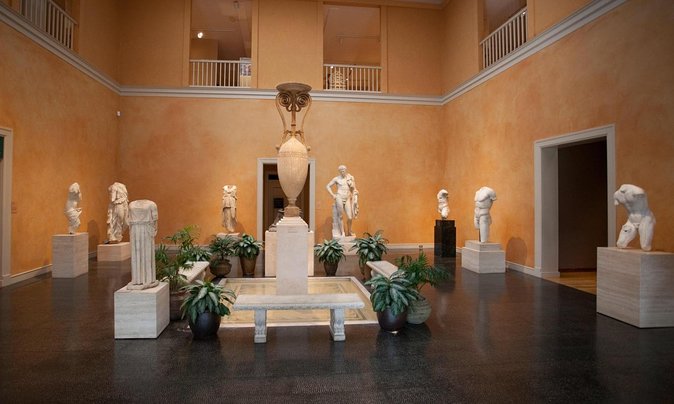
- A smart downtown route that links early roots to iconic landmarks and ends at Stearns Wharf
- VoiceMap GPS audio with offline maps so you can keep walking even with weak signal
- Chumash and Spanish-era storytelling in the middle of modern streets
- Old-site stops like El Presidio de Santa Bárbara State Historic Park and Covarrubias Adobe
- Fun add-ons such as the 150-year-old Moreton Bay Fig Tree and the Funk Zone / Urban Wine Trail theme
A Self-Guided Santa Barbara Walk That Actually Makes Sense
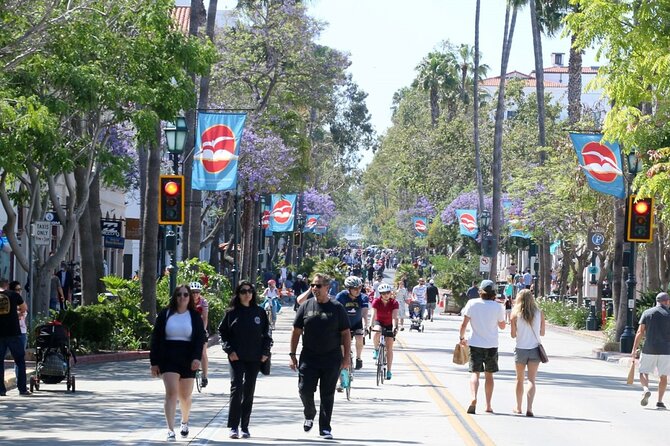
This isn’t one of those “wander around and hope” tours. You follow a GPS plan and hit a sequence of stops that connect Santa Barbara’s past to the present-day downtown you can see right in front of you.
The format is great for short trips. In about 1 hour 15 minutes to 1 hour 30 minutes, you cover a lot of recognizable places without needing a full-day commitment or museum tickets.
And because it’s self-guided, you can control your pace. Stop for photos, step into the shade, or linger near a historical site when the story hits.
You can also read our reviews of more tours and experiences in Santa Barbara.


What You Pay for: $14.99, Unlimited Access, and VoiceMap Offline
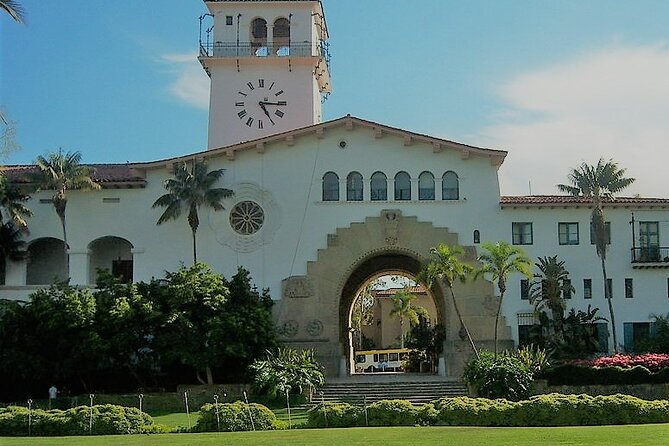
At $14.99 per person, the value comes from the mix of route guidance + audio context. For many visitors, the biggest problem in Santa Barbara is knowing what they’re looking at. This tour tackles that with spoken narration tied to specific points.
You also get lifetime access to the tour in English. That means you can reuse it later if you come back to Santa Barbara, or if you want a quick “second pass” with fresh eyes.
The big practical perk: VoiceMap includes offline access to audio, maps, and geodata. When you’re walking, you don’t want your day to depend on a perfect connection.
How the VoiceMap Experience Works on Your Phone
You’ll use the VoiceMap app for Android and iOS. The tour runs as a GPS self-guided stroll with audio triggered by your location.
What you should plan for:
- You’ll need your smartphone and headphones (not included)
- You’ll have the tour in English
- The experience is private, meaning only your group participates
Also, note a key limitation that affects expectations. You won’t be guided through museums or attractions on the route. If you choose to enter and visit any indoor sights, that’s on your own and you’ll pay separately.
Starting at Alameda Park: Early Roots in the Right Place
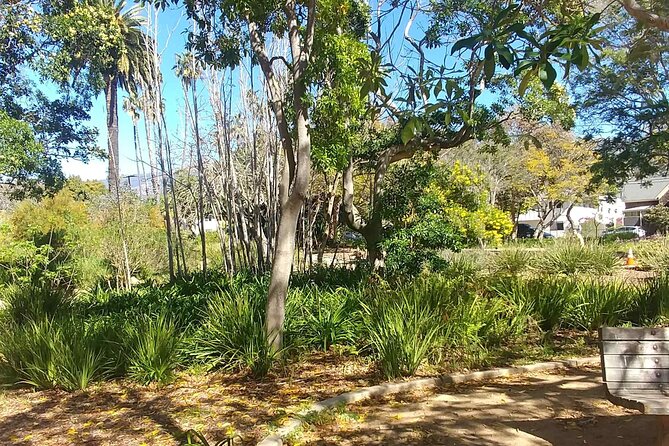
Your walk begins around Alameda Park (near 1400 Santa Barbara St), and the first story point ties you to the corner area of Alice Keck Park Memorial Garden and Alameda Park. This is a smart opener because it sets a “before the downtown skyline” tone early.
You get an early look at Santa Barbara’s beginnings. Even if you’ve only seen the postcard version of downtown, this first chapter helps you understand why the city grew where it did.
Practical tip: start with comfortable shoes. Even though the tour is relatively short, you’ll cover enough ground to make footwear matter—especially if you plan to stop for photos.
Churches and Streets: Getting Oriented with Trinity and Our Lady of Sorrows
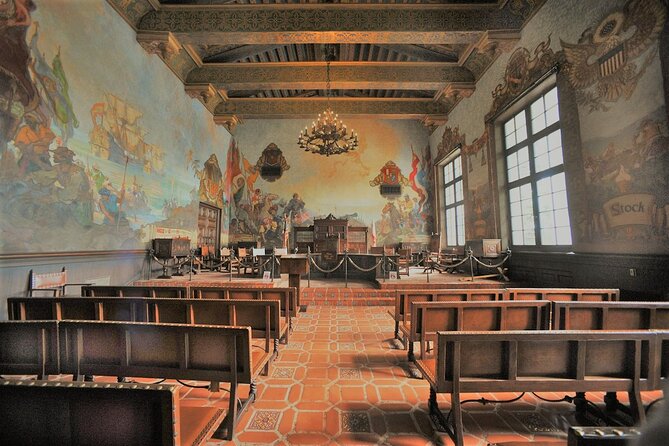
Two of the next listening points happen around major churches: Trinity Episcopal Church and Our Lady of Sorrows Roman Catholic Church. You’re not being sent inside; you’re absorbing context as you pass by.
This approach is useful. Religious buildings often feel like they’re just “pretty landmarks” until someone explains what role they played in the community. Here, the narration frames what you’re seeing as part of the city’s broader transformation.
Potential drawback: if you’re hoping for a tour that includes interior access, you’ll be disappointed. This one is built for walking and listening from the sidewalk.





Downtown Icons You’ll Recognize in Seconds
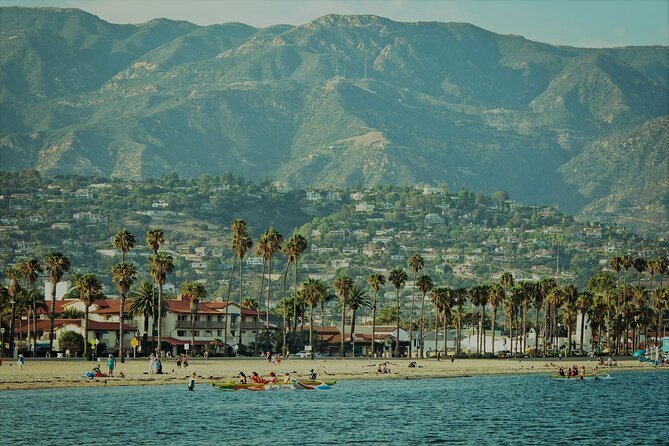
After that, the route swings into the downtown signature sights, with narration timed for some of Santa Barbara’s best-known landmarks. Expect big names along the way, including:
- Hotel Californian
- Lobero Theatre
- Hotel Santa Barbara
- Santa Barbara Museum of Art
You’re getting the value of recognition plus context. Even if you never go inside these buildings, you’ll walk with a better sense of what makes them meaningful in Santa Barbara’s story.
The trick here is pacing. With multiple major stops packed into one stretch, I suggest you pause for a few “no-phone” moments—just look at the facades, streetscape, and how the blocks connect. Then press play again when you’re ready.
Chumash, Cabrillo, and Vizcaino: 9,000 Years Compressed
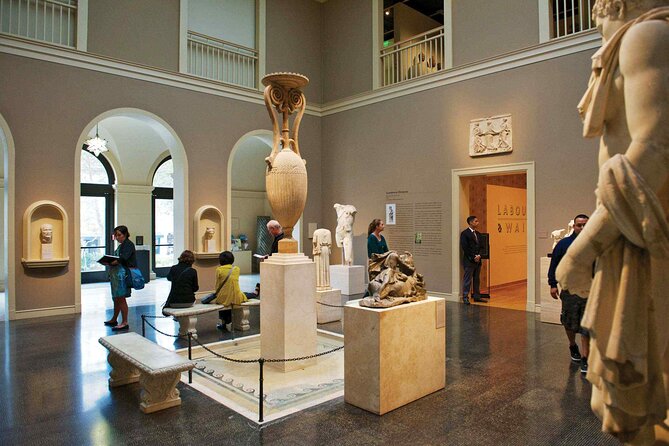
One of the tour’s best features is how it places deep time into an urban walk. You’ll hear about the Chumash natives who lived here more than 9,000 years ago, then you’ll connect that to the arrival of Spanish explorers Juan Cabrillo and Sebastian Vizcaino in the 1500s.
This is a strong narrative switch because it doesn’t treat history like a museum label. Instead, it makes you notice that the ground beneath your feet has layers—some visible, some not.
How to get more out of it: listen with your eyes up. When the audio talks about early chapters and later explorers, glance at where you are in the city grid. That mental map helps you remember what you heard.
El Presidio de Santa Bárbara: One Stop Where You Can Slow Down
The itinerary includes El Presidio de Santa Bárbara State Historic Park, one of the city’s important historical sites. Since the tour is GPS guided by audio, this is where you’ll likely want to slow your walking pace and give the area a little attention.
This kind of stop works well on a self-guided tour because it’s visual even if you don’t go inside. You’ll likely get more from lingering than rushing, especially if you’re the type who likes to stand, look, and let the story land.
Covarrubias Adobe and the Santa Barbara Historical Museum Area
Another older-site moment comes at Covarrubias Adobe, located next to the Santa Barbara Historical Museum. You’ll “gaze” at one of the city’s oldest structures while the narration gives you the background.
This stop is valuable because it’s small enough to feel personal but important enough to anchor your understanding of Santa Barbara’s age. Instead of floating between big downtown landmarks, you get one clear “older than the facade” reference point.
Again, you’re passing the area rather than being guided through museum interiors. If you want to go inside the museum, you can—just budget extra time and ticket cost.
Moreton Bay Fig Tree: A 150-Year-Old Pause in the Route
The tour also highlights a Moreton Bay Fig Tree that’s described as 150 years old. It’s a perfect “reset” stop, because trees change how a street feels. Shade, scale, and atmosphere shift the moment you’re near something that’s been standing for that long.
This kind of point is also useful if you’re walking on a tight schedule. When the audio hits this moment, it gives you a reason to stop and enjoy a slower view—without requiring any ticket or entrance.
Funk Zone and the Urban Wine Trail: How the City Gets Its Cool
One of the fun themes you’ll hear about is how the Funk Zone got so funky. You’ll also learn about an Urban Wine Trail that covers over 20 wineries.
This section is best for two types of visitors:
- People who like food-and-drink culture as a lens for city stories
- People who want a route that’s more than just “old buildings and museums”
A reality check: the tour theme mentions wine and wineries, but the data you have doesn’t say there’s tastings included. So treat this as a storytelling and route cue. If you want tastings, that’s something you can plan separately.
West Beach to Stearns Wharf: The 1925 Earthquake Moment
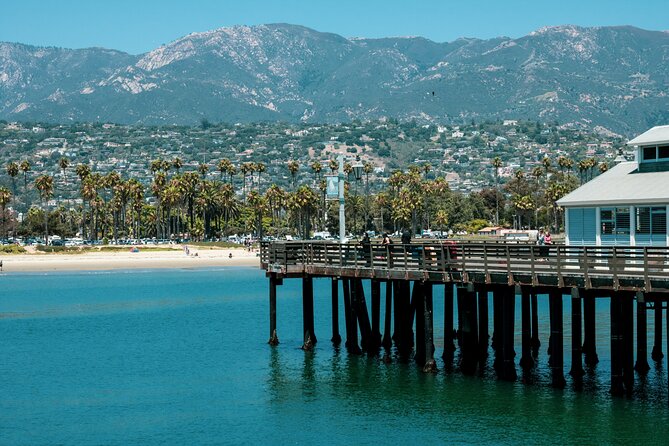
Near the end, you’ll soak up the fresh air along West Beach, then you’ll wind your way across State Street to Stearns Wharf, where the tour ends.
The final story beats tie the whole day together. You’ll hear about the disastrous 1925 earthquake that destroyed the area, and how activists with a vision helped put policies in place to preserve the beauty of the historical downtown district.
That ending is powerful because it changes how you view what you’ve seen. Instead of thinking downtown is just scenic, you start thinking about preservation as an ongoing choice—and about what can be lost and rebuilt.
Practical photo tip: Stearns Wharf is a great place to finish. Even if you’re not a “wharf person,” the sightlines and coastal light usually make it feel like you actually earned your ending.
Timing and Pace: Plan for 75 to 90 Minutes
The tour duration is about 1 hour 15 minutes to 1 hour 30 minutes. That’s long enough to feel like an actual outing, but short enough that it fits into most travel schedules.
Because it’s self-guided, your time will depend on:
- how often you stop for photos
- how long you linger near the older-site sections like the Presidio area and Covarrubias Adobe
- whether you pause the audio to read signs on your own
If you’re visiting in peak season, give yourself a little buffer. Santa Barbara streets can slow you down, especially near downtown icons.
Who This Tour Is Best For
I think this tour hits hardest if you want:
- a guided-feeling walk without joining a group bus or waiting for schedules
- a route that connects famous spots with older context
- offline-friendly audio on a short timeline
It’s also a good fit for first-timers who want to cover key downtown and coastal highlights efficiently.
On the other hand, if you need Spanish or another language, this may be frustrating. The tour data says it’s offered in English, and one of the biggest complaints you might run into is losing details when you’re not following the narration comfortably.
The Balanced Bottom Line: Great Route, One Language, Sidewalk-Only Access
This experience is an efficient, story-led walk that ties together downtown landmarks, historic sites, and the coastal end of the route. The offline VoiceMap setup is a real quality-of-life upgrade for walking days.
Just keep your expectations aligned with what it is: it’s not a museum tour, and you won’t be led inside attractions. If you want entrances and guided interiors, you’ll need to plan those separately.
Should You Book This Santa Barbara GPS Stroll?
Yes—if you want a structured walk that helps you understand Santa Barbara fast, without paying for museums you may not have time for. The $14.99 price works out well when you factor in offline access, lifetime use, and the way the narration connects major landmarks with older chapters of the city.
Consider skipping or supplementing if:
- you strongly need a language other than English
- you’re expecting guided entry into museums and attractions
- you’d rather do a shorter “just the highlights” loop (this one is built as a connected narrative route)
If you fit the first group, you’ll likely come away feeling like you didn’t just walk through Santa Barbara—you understood what you saw.
FAQ
How long is the Santa Barbara GPS self-guided urban stroll?
It takes about 1 hour 15 minutes to 1 hour 30 minutes.
What does the tour cost?
The price is $14.99 per person.
What language is the audio available in?
The experience is offered in English.
Where does the tour start and end?
It starts at Alameda Park, 1400 Santa Barbara St, Santa Barbara, CA 93101, and ends at Stearns Wharf, 217 Stearns Wharf, Santa Barbara, CA 93101.
Do I need an internet connection?
The tour includes offline access to audio, maps, and geodata through the VoiceMap app.
What app do I use during the tour?
You use the VoiceMap app for Android and iOS.
Are museums and attractions included with this tour?
No. You will not be guided through museums or other attractions mentioned en route. If you enter places, you pay separately.
What do I need to bring?
You need your smartphone and headphones.
Is this tour private?
Yes, it’s listed as a private tour/activity, with only your group participating.
What are the operating hours?
The experience shows hours from 12:00 AM to 11:59 PM during the listed date range (11/16/2022 to 02/16/2027).