REVIEW · SANTA BARBARA
Surfing Lesson in Santa Barbara (2 Hours)
Book on Viator →Operated by Santa Barbara Adventure Company · Bookable on Viator
Learning to surf feels random until it suddenly doesn’t. In this small-group lesson, you get guided practice in Santa Barbara’s classic surf zone, from wave spotting to your first pop-up. I love the cap of six—it keeps the coaching personal—and I love that all the key gear is handled for you. One thing to consider: this is a 2-hour introduction, so you’ll leave with skills to build on, not a full mastery plan.
Before you even touch the water, you start on sand at Mondo’s Beach, where you’ll learn how to watch for wave breaks and nail the basics of paddling and standing. Then you move to the ocean and work through the sequence in real conditions, step by step. The coaching style can make or break a first lesson, and one guide highlighted by name, Beau, is described as friendly, informative, and patient—exactly the vibe you want when your brain is learning a new sport.
This is also set up for real beginners, and the pace matches moderate activity levels. You’ll be in the water and moving on shore, so pack smart and come ready to work. If you’re traveling with kids, note the minimum age is 7 and they need to be comfortable swimming in the ocean and ducking under waves.
In This Review
- Key things to know before you go
- Santa Barbara surfing basics: why Mondo’s Beach works for a first timer
- The 2-hour flow: what happens from the sand to your first rides
- Stop 1 at Mondo’s Beach: your technique coaching in the real lineup
- What’s included (and what’s not) so you pack like a surfer
- Price and value: is $89 worth it for 2 hours of coaching?
- The small-group limit: why six people changes everything
- Fitness, age, and comfort: who this lesson suits best
- If the group minimum isn’t met, what changes
- Quick tips that will help you stand up sooner
- Should you book this Santa Barbara surfing lesson?
- FAQ
- What is the duration of the surfing lesson?
- Where does the lesson meet, and where does it end?
- What do I get with the lesson?
- Are booties included?
- What should I bring with me?
- What fitness level is required?
- What is the minimum age for kids?
- What if there aren’t enough participants to run the lesson?
Key things to know before you go
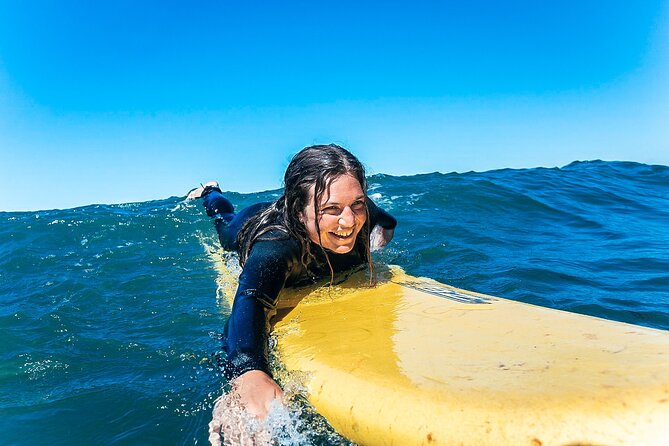
- Max six people in the group means you’re not lost in the back row.
- Instruction on sand first helps you understand what to do before you’re in the chop.
- Gear is included (surfboard and wetsuit) so you’re not hunting rentals.
- Mondo’s Beach location puts you in a well-known Santa Barbara-area surfing setting.
- You’ll learn the full sequence: spotting breaks, paddling out, standing, and riding.
- A 2-hour format is a fun start, with an optional full-day upgrade if you want more time.
Santa Barbara surfing basics: why Mondo’s Beach works for a first timer
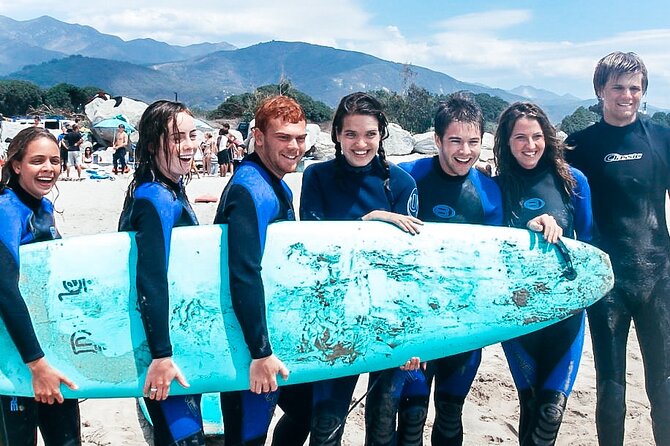
Santa Barbara is one of those places where surfing feels instantly believable. The ocean is right there, the conditions are part of the learning, and you’re not stuck in a parking lot staring at a schedule. What makes this lesson especially practical is that it’s built around the real beginner questions: Where do I look for waves? How hard do I paddle? How do I go from lying to standing without face-planting?
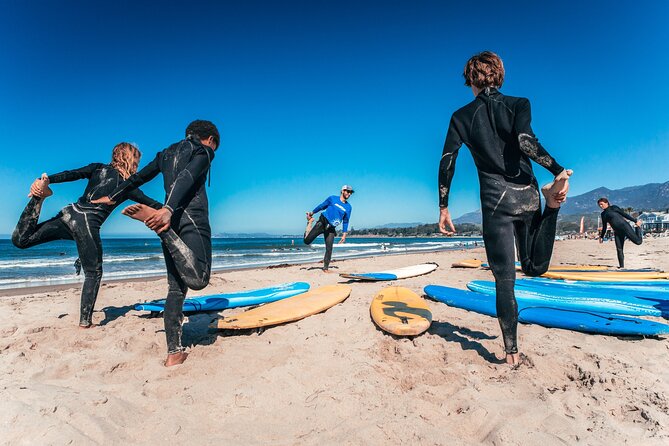
Starting at Mondo’s Beach keeps the experience grounded. You’ll have a sand-based warm-up where you can watch how the mechanics work and then translate those moves into the water. That split matters. A lot of lessons either throw you in too fast or teach too much on shore. Here, you get both: technique talk first, then reps in the ocean.
For you, this is the sweet spot if your goal is to come away with usable skills and a real sense of timing. For your confidence, the small group helps a ton, because the instructor can correct body position and pacing instead of giving you the same generic advice while 20 people crowd the lineup.
You can also read our reviews of more tours and experiences in Santa Barbara.


The 2-hour flow: what happens from the sand to your first rides
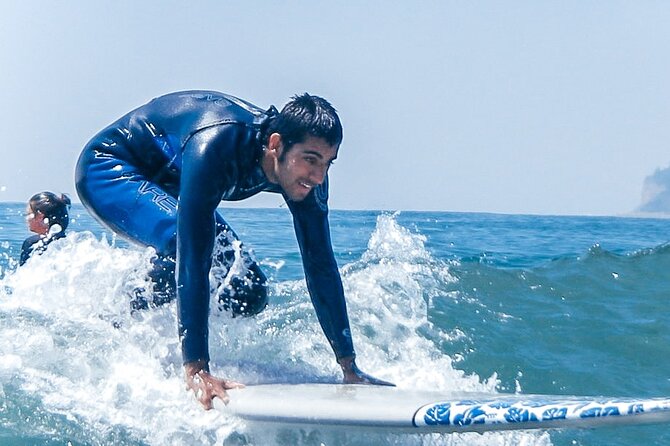
This lesson is designed to run in about two hours, and the timing is focused on momentum. You start in the morning at Mondo’s Beach with a quick introduction to surfing technique on the sand. That means you’re not guessing at what to do first—you’re learning the order of operations.
On the sand, you’ll work through basics that prevent the most common beginner problems. You’ll learn how to watch for wave breaks, which is really the key skill in surfing. If you can identify the right moment, you can paddle with intent instead of flailing at random sets. You’ll also learn the fundamentals of paddling and standing—how to position your body so your pop-up has a chance.
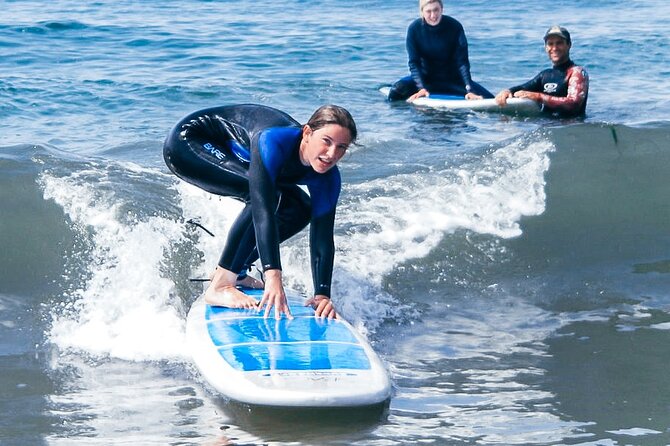
Then comes the ocean time, where you practice the progression. The lesson covers how to paddle into waves, stand up, and ride. The “ride” part is important: you’re not just training balance on one spot. You’re trying to catch and travel the wave, which makes the whole thing feel like surfing rather than a swimming class with a board.
The pace is fast, but that’s the point. Surfing is a learn-by-doing sport. A short lesson forces smart repetition instead of long lectures. You’ll likely feel tired and exhilarated by the end—then you’ll know exactly what to focus on next time.
Stop 1 at Mondo’s Beach: your technique coaching in the real lineup
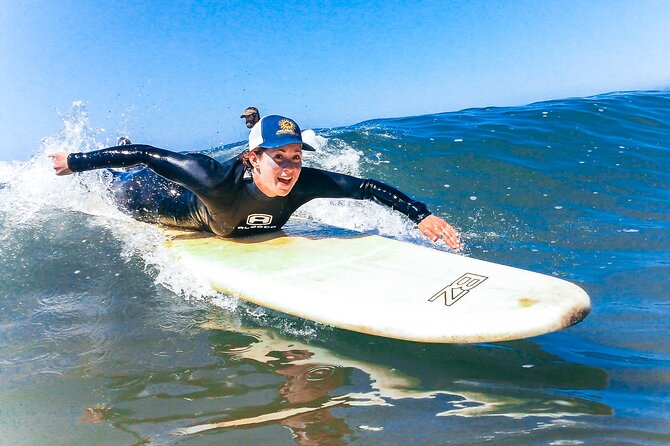
Mondo’s Beach is where the lesson starts and ends, and that simplicity helps. You don’t need to plan extra logistics once you’re there. The learning happens in a tight cycle: instruction, practice, quick adjustment, repeat.
In the first phase on shore, your instructor will help you understand where to look. Watching wave breaks isn’t glamorous, but it’s the difference between catching something you can ride and getting knocked around by waves you never meant to take. You’ll get guidance on scanning the water and timing your paddling so you’re not charging every wave that shows up.
Then you move to the water to paddle into waves. This is usually where beginners either succeed quickly or get discouraged. The lesson format helps because you’re working on technique, not just survival. Stand up is the next hurdle, and it’s taught as a sequence: body position, weight placement, and the movement that transitions you from prone to standing.
Once you can catch and stand, you start riding. Even if you only get a few good waves, it changes how you think about the sport. You stop seeing the ocean as chaos and start seeing it as patterns you can read.
One more thing I appreciate: the lesson is capped at six travelers, so the instructor can stay close to you when you need corrections. That’s a major value driver for a first lesson. If the group is larger, your progress often depends on luck and when the instructor has a free moment.
What’s included (and what’s not) so you pack like a surfer
You’re not expected to arrive with a full surf setup. The lesson includes a surfboard and a wetsuit provided according to your size, plus a professional guide. That’s a big deal because the gear choices for wetsuits and boards can be confusing for beginners. Having the right fit and basics ready removes a common barrier.
What you should plan for outside of the included gear:
- Booties are not included, so if you expect cold feet or you’re sensitive to shore rocks, you may want to bring optional neoprene booties.
- Transportation to Mondo’s Beach is not included.
- Gratuity for your guide is not included. It’s optional, but if your coach is leading you well and being patient, tipping at your discretion is a thoughtful move.
Then there’s the stuff that makes the day easier and safer. Bring sunscreen SPF 30 or higher, a reusable water bottle (1 quart or greater), a hat with a brim, and a beach towel. You’ll also want beach shoes or flips for getting around before and after. Sunglasses with a neck strap—like Chums or Croakies—help when the wind and water make it easy to lose things.
Clothing matters too. You’ll want a swim suit or swim trunks, plus a sweatshirt or sweater and a dry change of clothes for after you’re done. If you have one, a waterproof camera is optional.
If you plan ahead with fit, you’ll have an easier time. The operator asks you to provide your heights and weights to ensure proper equipment.
Price and value: is $89 worth it for 2 hours of coaching?
At $89 per person for about two hours, this lesson is priced like a genuine guided activity, not a bargain filler. The value comes from the combination of things that are usually separate costs: a professional guide, a suitable board, and a wetsuit fitted to you.
The six-person cap is where value becomes practical. When an instructor can watch you closely, you get corrections faster. That saves time and frustration, especially during the stand-up moment. You’ll also get guidance on wave breaks and paddling choices—those are the skills that help you keep progressing after you leave.
Also, you’re learning in a real surfing environment in the Santa Barbara area, not a pretend setup. The lesson focuses on basics that transfer: spotting breaks, paddling into waves, standing, and riding.
Could you spend less elsewhere? Maybe, but you’d be trading away some combination of small group attention and included gear. Could you spend more and get more reps? Yes. That’s where the optional full-day upgrade comes in.





The small-group limit: why six people changes everything
A capped group isn’t just a comfort feature. It’s a learning tool.
With a maximum of six travelers, the guide can:
- check your body position when you’re learning the pop-up,
- watch your paddling rhythm so you’re not spinning your wheels,
- and give more specific wave timing cues.
For many beginners, the biggest frustration is not the ocean. It’s uncertainty—what to do next, whether they’re doing it right, and whether the instructor sees their mistake. Smaller groups reduce that mental load.
The lesson is also delivered in English, which matters if you want clear, direct coaching instead of guessing through translated instructions. And because the experience includes the key equipment, you’re not spending your first session sorting rentals, sizes, and paperwork.
If you’re someone who learns fastest with direct feedback, this group size is one of the best reasons to book. It’s the difference between trying surfing and learning surfing.
Fitness, age, and comfort: who this lesson suits best
This activity recommends a moderate physical fitness level. That makes sense. You’ll be paddling, standing, and moving in and out of the water, and you’ll need the stamina to repeat those actions within a short session.
For kids, the minimum age is 7, and they must be comfortable swimming in the ocean and ducking under waves. That’s a clear threshold. If your child is close but not comfortable yet, you might want to wait or choose an option that builds confidence more gradually.
For adults who can swim and handle ocean conditions, the lesson is a straightforward way to get started. You should be able to follow instructions and be comfortable with getting wet and working through uncertainty. Surfing teaches through resistance, so if you’re expecting a completely calm experience, you may feel surprised at first.
You’ll also want to use practical ocean-smart habits: sunscreen, water, hat, and a dry change of clothes. Those details don’t sound dramatic, but they prevent the day from turning into a miserable slog.
If the group minimum isn’t met, what changes
This lesson requires a minimum of four participants to run. If the minimum number isn’t met after confirmation, the activity may be canceled, but you should expect an offer of an alternative or a full refund.
There’s also a helpful option if you want more time: if your group doesn’t meet the minimum, you can upgrade to a full day lesson for $30 more per person. That full-day option requires only two guests to operate. So if your schedule allows and you want more reps, the upgrade can be a way to keep your plans moving.
Also, this experience depends on good weather. If conditions are poor, you’ll be offered a different date or a full refund.
Quick tips that will help you stand up sooner
Based on how surf lessons succeed or fail for beginners, these are the habits that usually make the biggest difference:
- Bring your own reusable water bottle and drink before you’re tired. Dehydration makes paddling feel harder fast.
- Use SPF 30 or higher. Getting burned ruins the next day and makes you dread the water.
- Wear beach shoes or flips so you’re not walking barefoot over rough edges.
- Pack dry clothes in a bag you can close. You don’t want wet gear soaking the rest of your day.
- If you’re debating optional items, a rashguard can help with sun and comfort, and neoprene booties can help if you’re cold-foot sensitive.
And here’s the human tip: choose a mindset where you expect wipeouts. Surfing is learning your body’s timing. The coaching matters, and a guide like Beau—described as friendly, informative, and patient—fits that reality well. When the instruction is clear and the vibe is calm, you take corrections better and try again quicker.
Should you book this Santa Barbara surfing lesson?
Book it if you want a guided beginner start with small-group attention, included gear, and a real lesson arc that moves from sand technique to ocean riding. The $89 price is reasonable for what you’re getting: a professional guide, board, and wetsuit, plus hands-on coaching that focuses on wave reading, paddling, standing, and riding.
Skip it or consider the upgrade if you’re someone who freezes under pressure or you’re not sure you’ll get enough ocean time in two hours. Also, if you or your kids aren’t comfortable swimming and ducking under waves, this specific format may feel too demanding right now.
If your plan is to learn enough to keep improving after you leave, this is a strong pick.
FAQ
What is the duration of the surfing lesson?
It runs for about 2 hours.
Where does the lesson meet, and where does it end?
It starts at Mondo’s Beach on Pacific Coast Hwy, Ventura, CA 93001, and it ends back at the meeting point.
What do I get with the lesson?
You get a professional guide, a surfboard, and a wetsuit provided according to your size.
Are booties included?
No, booties are not included.
What should I bring with me?
Bring sunscreen (SPF 30 or higher), a reusable water bottle (1 quart or greater), a hat with a brim, a beach towel, beach shoes or flips, sunglasses with a neck strap, a swimsuit, and a sweatshirt or sweater plus a dry change of clothes. A waterproof camera is optional.
What fitness level is required?
You should have a moderate physical fitness level.
What is the minimum age for kids?
Children must be at least 7 years old and comfortable swimming in the ocean and ducking under waves.
What if there aren’t enough participants to run the lesson?
The lesson requires a minimum of 4 participants. If it doesn’t meet the minimum, you may be offered an alternative or a full refund. There is also an option to upgrade to a full day lesson for $30 more per person if the operator can run it with 2 guests.