REVIEW · LA PALMA
Historical Tour City of Santa Cruz de La Palma
Book on Viator →Operated by Hello La Palma · Bookable on Viator
Santa Cruz de La Palma moves at a human pace. This 2-hour historic stroll links colonial streets, Renaissance architecture, and island traditions around free admission stops. I love the mix of public squares and heritage interiors, and I also like how the route threads from city power to maritime defenses. The one catch: at $2,894, you’ll want to double-check the value for your group, since only one extra option (the Naval Museum) costs €4.
You’ll start in the center and work your way through the old core—easy to follow, not rushed, and built for getting your bearings fast with real place names. A possible drawback is weather dependence: the experience requires good weather, so plan a little flexibility if conditions change.
In This Review
- Key highlights to look for
- Santa Cruz de La Palma on foot: the feel of this 2-hour route
- Plaza de Vandale and the Lo Divino Monument
- Santa Cruz de la Palma and the Civil Renaissance façade
- Plaza de España: Renaissance style, fountains, and the El Salvador bell tower
- Iglesia Matriz de El Salvador: a Mudejar roof over layered styles
- Sociedad La Investigadora (El Casino) and Plaza La Alameda’s walking alleys
- Naval Museum view and Real Castillo de Santa Catalina: sea power in stone
- Balcones de la avenida Marítima: Portuguese-style double balconies and trade winds
- Price and value: what you’re paying for (and what costs extra)
- Who this tour suits best
- Should you book Hello La Palma’s Santa Cruz de La Palma tour?
- FAQ
- How long is the Santa Cruz de La Palma historical tour?
- What time does the tour start?
- Where do I meet the group?
- Where does the tour end?
- Is the Naval Museum included in the price?
- Are admission tickets included for the main sights?
- Is this tour ticketed digitally?
- What’s the maximum group size?
- Is the tour allowed with service animals?
- What happens if the weather is bad?
- What is the cancellation policy?
Key highlights to look for
- Lo Divino Monument in Plaza de Vandale, the only one of its kind in Spain
- Civil Renaissance façade and mural at Santa Cruz de la Palma, with art by master Cossío
- Mudejar + Gothic/Renaissance/Baroque mix inside Iglesia Matriz de El Salvador
- El Casino (Sociedad La Investigadora), an old Massieu-Sotomayor mansion tied to Masons
- Plaza La Alameda kiosk and May 3 cross tradition with a built-in seasonal ritual
- Real Castillo de Santa Catalina and the seaside balcony “double-balcony” tradition
Santa Cruz de La Palma on foot: the feel of this 2-hour route
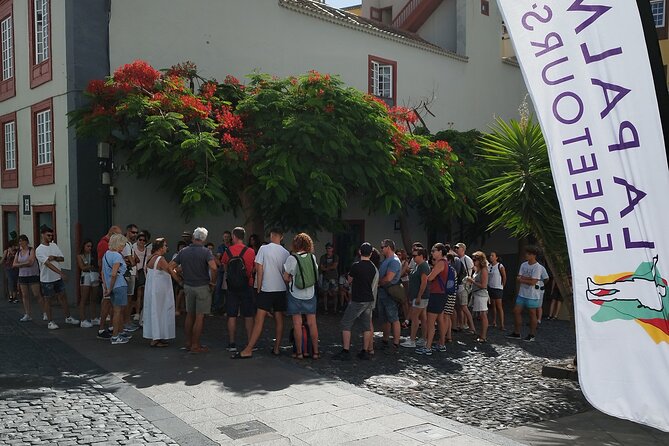
Santa Cruz de La Palma is the island capital, and it wears its history openly. The old town is known for its cobbled streets, stately houses with interior patios, charming squares, and wooden balconies with flowers. This tour is designed to give you that on-the-street feeling without turning it into a marathon.
The route also has a smart structure: public spaces first (where you can pause and read the city), then heritage stops where the architecture and details matter more. With free admission for the listed sights, you’re not stuck at every stop wondering whether you’re “paying twice” for the same experience.
Timing is about 2 hours with a small-ish group cap of up to 40, which keeps the pace social but still workable for pictures and short explanations.
Plaza de Vandale and the Lo Divino Monument
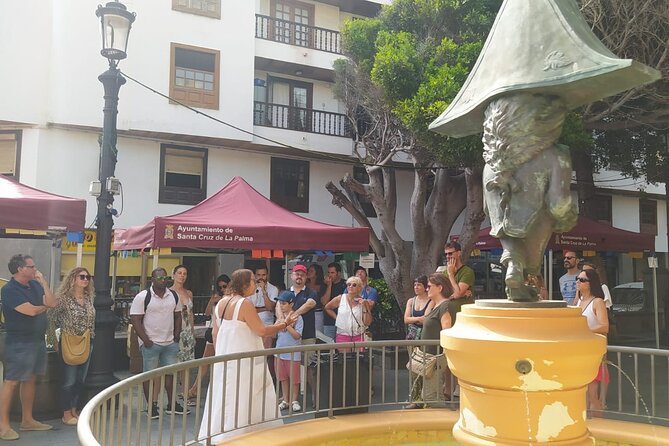
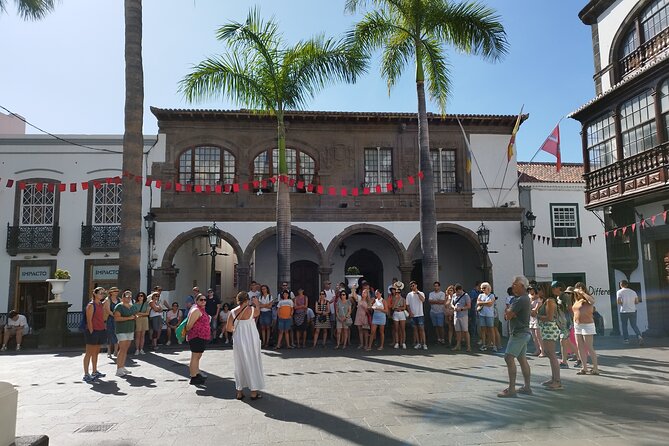
You begin at Plaza de Vandale, located on an old site associated with Captain Jacques de Brier. When the City Council acquired the area, it named it Vandale as a nod to a famous Flemish lineage of origin—one of those details that makes the plaza feel more layered than it first appears.
Look down at the ground here. The paving uses callao and rounded coast pebbles, and that texture matters because it changes how the street “reads” underfoot. The botany is part of the visual signature too, with flamboyant trees known for orange-red foliage/flowers.
In the center is the Lo Divino Monument, described as the only such monument in Spain. It’s a bronze work dedicated to the Christmas string and voice groups that run through the nine nights prior to Christmas. Even if you don’t catch a seasonal moment, it’s a reminder that these squares are living stages, not just backdrops.
A practical note: this stop is short (about 5 minutes), so keep your phone ready for one good overview photo, then move on.
Santa Cruz de la Palma and the Civil Renaissance façade
Next you reach Santa Cruz de la Palma, the city’s civic heart in historical terms. The building is tied to a major claim: the first democratic city council in Spain, elected by universal suffrage. Whether you come for politics, architecture, or both, that framing gives the façade meaning beyond decoration.
This structure is described as being built in 1567 after a fire event that affected the city, with a mention of 1953 as part of the story. The key visual for you is the two-story façade, flagged as the best example of Civil Renaissance architecture in the Canary Islands.
Now go up to the mural: the building features a spectacular mural located in the staircase hollow, attributed to master Cossío. It’s the kind of detail that makes you pause mid-walk, because it turns a functional space into something theatrical.
The heritage inventory you’ll hear about includes the Royal Banner of the Island of La Palma, a seat made of 17th-century country wood, and portraits of the Catholic Monarchs. That mix of symbols—political, artistic, and royal—helps you understand why the city center was such a power hub.
This stop is brief (around 10 minutes) but dense. If you’re the type who likes to read plaques closely, you may want to keep your eyes open as you move.
Plaza de España: Renaissance style, fountains, and the El Salvador bell tower
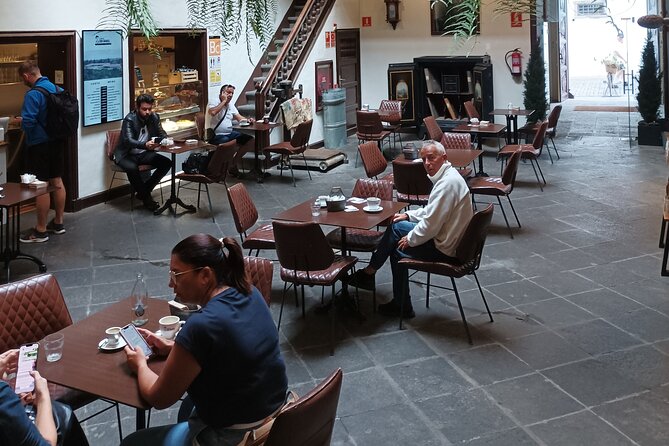
From there, you step into Plaza de España, often described as the best Renaissance style set in the Canary Islands. In plain terms, think: this is a “city living room” space—religious events and daily life overlap here, with the plaza serving as a meeting point between citizens.
The plaza sits near the commercial street, which means you’ll feel the contrast: old civic grandeur next to everyday foot traffic. Some of the notable buildings to look for include the House Monteverde (17th century) and Casa Lorenzo (18th century). The Public Fountain dates to 1588, and you’ll also see the church and bell tower El Salvador.
In the center area, the plaza is presided over by a monument to Father Manuel Díaz, described as a key figure in early 19th-century politics, education, culture, and charity. It’s a useful reminder that not all “monuments” are about kings and wars—some are about local social work and education.
Expect about 10 minutes here. If you want a calmer moment, stand slightly to the edge for a clear view of the fountain and surrounding façades before the group flows onward.
Iglesia Matriz de El Salvador: a Mudejar roof over layered styles
If you like churches, this is one of the main stops. Iglesia Matriz de El Salvador is a place of worship tied to one of the most important legacies of art flamenco in the world—so even if you’re not a flamenco expert, it signals cultural weight.
The church is founded in 1500 and is described as having three naves separated by half arches. The roof is highlighted as Mudejar style, giving the interior an arabesque air. That “Moorish-influenced” feel matters because it helps you see how islands like La Palma absorbed styles from different eras and then made them local.
You’ll also hear about the variety of art elements inside: Gothic elements, plus Renaissance and Baroque details described as extremely beautiful. The takeaway for you is that the church isn’t a single-style museum. It’s a layered building—like the island itself.
This stop runs about 15 minutes with free admission. Go in with a simple focus: ceiling/roof first (the Mudejar feature), then scan for how Gothic and Renaissance/Baroque elements sit together.
Sociedad La Investigadora (El Casino) and Plaza La Alameda’s walking alleys
After the religious stop, the tour shifts to social and civic life with Sociedad La Investigadora (El Casino). This is the headquarters of the Research Society, housed in an old family mansion known as Massieu-Sotomayor.
You’ll get pointed attention to the Mudejar-style living room. There’s also mention of a room where Masons of the Island met. The description goes further, explaining that the society is now a disseminator of philanthropy, symbology, and philosophy, which attracted lodges during the 19th and 20th centuries.
If that sounds niche, it’s still worth your attention. Buildings like this show you that history on La Palma isn’t only churches and castles. It’s also clubs, societies, and the people who funded or discussed ideas outside formal power.
This stop is about 5 minutes, so treat it like a fast but meaningful look at how private spaces shaped community networks.
Then you move to Plaza La Alameda, a recreation and public leisure space conceived in the second third of the 19th century. Here, the botany matters: Indian laurels and araucarias from Argentine and Chilean Patagonia were introduced, and the space is organized with two side hallways designed for walking.
In the center is the La Alameda Kiosk, with an octagonal plan and arabesque columns. It’s described as having sash windows and windows with colored borders. The kiosk dates from 1893, tied to the IV Centennial of the capital’s founding.
One especially memorable detail is historical tradition around May 3, 1493. Captain General Alonso de Lugo is described as nailing a wooden cross to the shore of the Barranco to celebrate mass after the Castilian campaign. The cross is decorated with flowers every 3 May. Even if you’re visiting outside early May, the idea of an annual ritual makes the plaza feel more alive than a static park.
This stop is about 15 minutes, and it’s one of the better parts of the walk for a slower pace and a break.
Naval Museum view and Real Castillo de Santa Catalina: sea power in stone
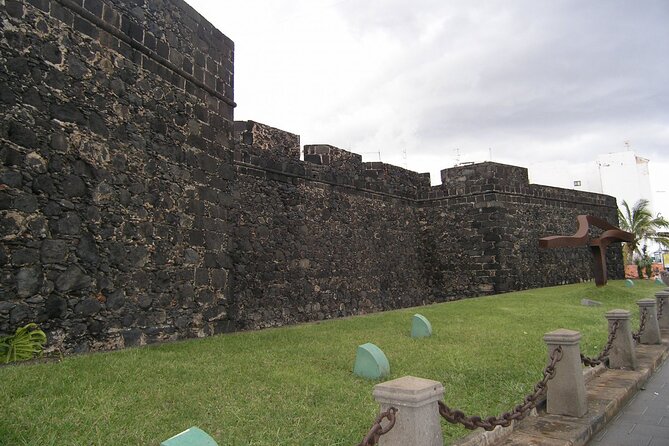
Next you’re directed toward a spot next to the Castle of the Virgin, tied to a recurring cultural event. The description says there’s a representation called Dialogue every 5 years between the ship’s nave and the castle. The promoters are described as descendants of sailors, shipbuilders, and collectors of maritime objects, taking the Nao Santa María (Columbus’s ship) as an example. That detail gives the story a maritime backbone.
Inside this area is the Naval Museum, with materials portraying local maritime life: maps, marine charts, and ship models built in the city’s shipyards. Importantly for your planning: you can access the museum at the end by paying €4. The museum itself isn’t included in the free admissions.
Then the tour continues to Real Castillo de Santa Catalina, described as an ancient defensive system made of multiple bastions, walls, and portals controlling access from the north and south. In front of you, pay attention to the entrance: it has a curvilinear pediment topped with the coat of arms of the Kings Catholics.
The fortress layout is also described: a quadrangular plant with diamond-tipped corners. It was declared a Historical Monument Artistic by decree and is described as repelling pirate attacks and privateers from France and England, with examples named such as patapalo and LeClercq.
This is one of those stops where architecture becomes a story of survival. It’s not just “pretty stone.” It’s a reminder that the island watched the sea like a scoreboard.
This stop is about 10 minutes with free entry to what the tour includes, but remember the Naval Museum is the paid optional add-on.
Balcones de la avenida Marítima: Portuguese-style double balconies and trade winds
To close, you head to Balcones de la avenida Marítima. These balconies are described as painted and photographed by artists and photographers from around the world, and that artistic attention isn’t random. The wood balconies are presented as the best set of “outcrops” of the Canary Islands—an unusual way to describe a collection of viewpoints, but it fits: these façades are built to look out.
The balconies are known for their “double balconies” with Lusitanian influence, compared to Portuguese adufas. Function matters here too. These wooden balcony designs are described as a ventilation resource that takes advantage of the trade winds that bathe the coast.
And yes, there’s a quirky practical detail in the description: some balcony structures include a covering board at their extremes that served a toilet function, with water falling directly into the ocean. That’s not the kind of thing you need to linger on, but it does explain why seaside architecture often blends comfort with survival needs.
This final stop runs about 10 minutes, and it’s the right kind of ending—visual, atmospheric, and very La Palma.
Price and value: what you’re paying for (and what costs extra)
The listed price is $2,894 for an experience around 2 hours, with free tickets for the included stops and a maximum group size of 40. That pricing is high enough that I’d treat it like a package deal: the value comes from (1) the concentration of important city-center stops in a short walk, and (2) avoiding paid admission for the main sights.
Here’s the math-friendly part for you: the only explicitly stated paid add-on is the Naval Museum, which costs €4 if you want to enter at the end. Everything else is described with free admission tickets.
So the “cost vs. payoff” question becomes simple: do you care about maritime history enough to pay the €4 for the museum? If yes, you’ll likely feel you used your time well. If no, the tour still covers a lot of architecture and cultural nodes for a short, coherent walk.
Who this tour suits best
This one is a good fit if you want:
- A focused city-center introduction to Santa Cruz de La Palma in about 2 hours
- Free access to major heritage stops, including the church interiors and civic buildings
- Architecture and cultural context more than beach time
It’s also a smart choice if you like small-city guiding. The group cap of 40 suggests you won’t be swallowed by a crowd.
If you’re visiting with limited time and want a route that gives you multiple “anchor points” (plazas, civic building, church, fortress, and balconies), this makes it easy to plan the rest of your day.
Should you book Hello La Palma’s Santa Cruz de La Palma tour?
Yes, I’d book it if you want an efficient way to understand how Santa Cruz de La Palma “works”—from civic democracy claims and Renaissance façades to a church where multiple art styles layer together, plus sea power in defensive stone. The free admissions at the stops help keep it budget-friendly once you’re on the walk.
I’d hesitate only if the $2,894 price doesn’t match what you think you’re buying (for example, you’re expecting something that feels more like a low-cost walking tour). If you do book, take advantage of the optional Naval Museum only if it genuinely interests you.
FAQ
How long is the Santa Cruz de La Palma historical tour?
The duration is approximately 2 hours.
What time does the tour start?
The tour starts at 11:00 am.
Where do I meet the group?
The start meeting point is C. Anselmo Pérez de Brito, 14, 38700 Santa Cruz de la Palma.
Where does the tour end?
The tour ends at Balcones de la Avenida Marítima, Av. Marítima, 44, 38700 Santa Cruz de la Palma.
Is the Naval Museum included in the price?
No. You can access the Naval Museum at the end of the tour by paying €4.
Are admission tickets included for the main sights?
Yes. Tickets are free for the listed tour stops.
Is this tour ticketed digitally?
Yes, you’ll receive a mobile ticket.
What’s the maximum group size?
The tour has a maximum of 40 travelers.
Is the tour allowed with service animals?
Yes, service animals are allowed.
What happens if the weather is bad?
The experience requires good weather. If it’s canceled due to poor weather, you’ll be offered a different date or a full refund.
What is the cancellation policy?
You can cancel for free up to 24 hours in advance for a full refund. Canceling less than 24 hours before the experience’s start time isn’t refundable.